


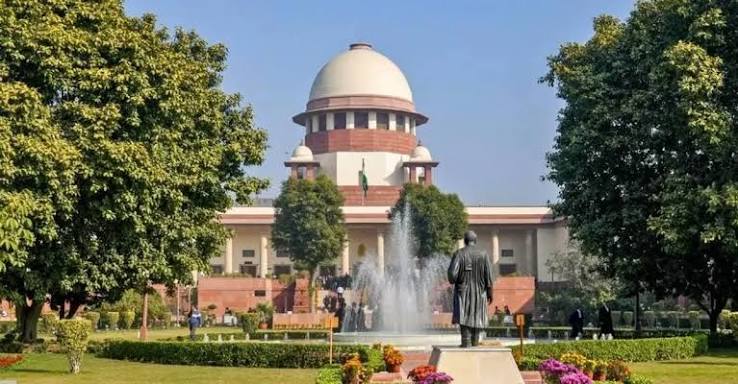
Once again, the Supreme Court has strongly reprimanded the administration for the huge difference between the MRP and retail prices of medicines. The bench of Justice Vikram Nath and Sandeep Mehta asked why a medicine available to retailers for Rs 15 costs Rs 250 for the people. What is the answer to this loot? The discussion was about the price of saline. In fact, the Supreme Court is currently awaiting a decision on two petitions regarding the high prices of medicines and action against doctors who deliberately do not prescribe cheaper alternative generic medicines. This is the reason why the administration has received this strong reprimand. Of course, Additional Solicitor General Aishwarya Bhati, representing the administration, argued in defense of these high drug prices. He argued that the pharmaceutical market has become increasingly competitive. To sustain the survival and growth of the country’s pharmaceutical industry, prices must be maintained. He explained that the trade margin on cancer drugs has now been reduced to 30 percent. This new measure will save patients ₹2,500 crore, but the bench was not satisfied. While the Solicitor General maintained that the government does not want to control the pharmaceutical system and that every sector in the private sector has the freedom to do business, he also argued that drug prices in India are among the lowest in the world. However, the court was not satisfied. The common man is also not satisfied because if drug prices are high in the world, consider the per capita income levels there. Despite the slogans of economic progress in our country and the declaration of becoming the fourth most powerful economic power in the world, we lag far behind in terms of per capita income. We rank 11th in Asia on the Happiness Index. In such a situation, why are people expected to pay such high prices? The court also said that drug prices are low compared to the rest of the world. Should companies be allowed to act arbitrarily? Should a cancer injection costing ₹11,000 be sold for ₹1.30 lakh? The court’s harsh comments are certainly appropriate. The court stated that poor patients lack bargaining power. Why shouldn’t every drug be considered generic? Why is there a delay in imposing price limits on medicines? Don’t weigh patients’ lives against business. In the last hearing, the court cited the example of saline costing ₹11 being sold for ₹270. Now, the argument of a 30 percent trade margin on cancer drugs has emerged. This has satisfied neither the court nor the common man. The Supreme Court bluntly asked, “The entire system seems to be helping pharmaceutical companies. Why is this happening?” Generally, in countries that boast progressive, modern, and welfare initiatives, the medical sector is governmentowned. Medical care is available there at nominal prices, which is why patients in Australia, Canada, or the United States complain about lack of immediate care. Some patients come to India for immediate treatment. Their greater financial capacity has not only allowed the private medical sector to flourish in India, but it has also become increasingly expensive, becoming beyond the reach of the average person. The only solution is to develop the government sector. Looking at the country’s healthcare system, it seems that much work remains to be done in this area.
SC Reprimanded Govt Again
Banks Must Compensate Digital Arrest Victims if Due Diligence Fails: Supreme Court