


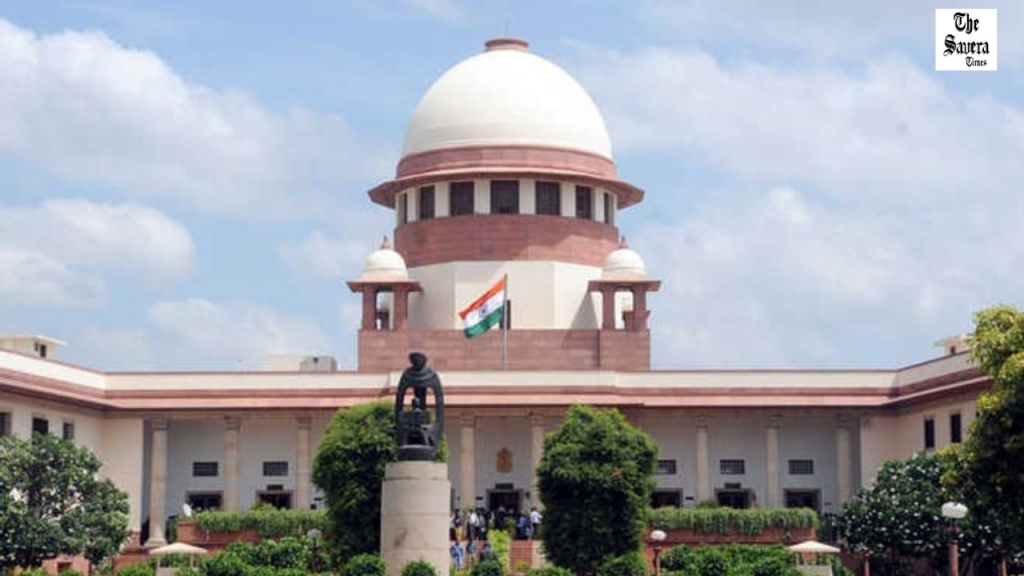
The Supreme Court of India on Wednesday agreed to list for hearing a petition challenging the newly notified University Grants Commission (UGC) ‘Promotion of Equity in Higher Education Institutions’ Regulations, 2026 on grounds of alleged caste discrimination concerns. The plea will be heard by a bench headed by Chief Justice Surya Kant.
Basis of the Petition
The petition, filed by advocate Vineet Jindal and others, argues that Regulation 3(c) of the 2026 rules which defines “caste‑based discrimination” as discrimination only against members of the Scheduled Castes (SC), Scheduled Tribes (ST), and Other Backward Classes (OBC) is “non‑inclusionary” and excludes individuals from the general (non‑reserved) category from accessing institutional grievance redressal mechanisms and protections.
Controversial Equity Rules
The updated UGC equity regulations, notified on January 13, 2026, seek to replace the 2012 framework and mandate that all higher educational institutions constitute equity committees and equal opportunity centers to handle discrimination complaints and promote inclusion. These bodies must comprise members from reserved categories, persons with disabilities, and women.
Protests have erupted at various campuses and student organizations have called for a rollback of the regulations, arguing that the current definition denies access to grievance mechanisms for some students.
Arguments and Legal Claims
The petition contends that restricting caste‑based discrimination protection exclusively to SC, ST, and OBC categories:
-
Violates fundamental rights under Articles 14 (right to equality), 15 (prohibition of discrimination), and 21 (right to life and personal liberty) of the Constitution.
-
Creates a hierarchy of protection, leaving out general‑category individuals who may face caste‑based bias.
-
Seeks either striking down of Regulation 3(c) or a directive to adopt a caste‑neutral and constitutionally compliant definition.
The plea also requests that the UGC’s grievance redressal mechanisms such as Equity Helplines and ombudsperson systems be made accessible to all, pending reconsideration of the definition.
Wider Reaction and Debate
The new UGC rules have sparked widespread debate nationwide. While some stakeholders welcome enhanced protections, critics argue the current wording could result in reverse discrimination or exclusion of deserving individuals from relief mechanisms.
The case is expected to test the constitutional balance between affirmative action aimed at historically disadvantaged groups and the broader principles of equal protection for all individuals facing discrimination.