


Ancient India is one of the civilisations that gifted humanity an invaluable scientific and technological heritage. The origins of modern engineering can be traced to the excellent urban planning, drainage systems, and sophisticated metallurgical skills developed by the Indus Valley Civilization (33001300 BCE). The earliest examples of agricultural technology, metallurgy, and astronomical calculations are found in the Vedic Age. These innovations later laid the foundation for a well-organized scientific tradition. From the Rigveda to Aryabhata, Sushruta, Charaka, Varahamihira, and Bhaskaracharya, this tradition of knowledge continued to evolve. In ancient times, the famous Indian universities of Nalanda, Vikramshila, and Takshashila spread knowledge in philosophy, astronomy, mathematics, and medicine. Aryabhata’s Aryabhatiya (499 CE) gave formulas for trigonometry, the heliocentric theory, and the Earth’s circumference (39,968 km). Bhaskaracharya’s Lilavati laid the foundation of algebra, while Brahmagupta formulated the rules for negative numbers. The Sushruta Samhita is the first medical text on surgery, plastic surgery, and cataract surgery. The Charaka Samhita is an encyclopedia of internal disorders. Nagarjuna’s Rasashastra teaches methods for preparing medicines. In astronomy, the Surya Siddhanta accurately calculates eclipses and planetary movements. Va r ahami h i r a ’ s Panchasiddhantika synthesized five astronomical systems. The Iron Pillar of Delhi (400 CE) is an unmatched example of rust-free steel metallurgy. The path of the sun, wind direction, and balance of the five elements form the basis of Vastu Shastra. Relevance of Ancient Indian Science in Present-Day Education In the 21st century, while Artificial Intelligence like ChatGPT and Generative AI, private space flights, immersive technologies like AR and VR, smartphones, 5G, social media, drones, humanoid robots, gaming, machine learning, and 3D printing have impacted almost every area of human life, this century is also grappling with environmental crises, climate change, mental health issues, and a lack of ethical values. This is not only a matter of serious reflection, but also a question about the very existence of human life today. Such a situation compels us to reconsider our ancient Indian science and technology. Ayurveda and Holistic Health Education Ayurveda specifically focuses on the preservation of human life, animals, and plants. Ayurveda is a traditional system of Indian medicine that includes knowledge related to both mind and body. Ayurveda is the complete science of a healthy lifestyle. Its main principle is: “Swasthasya swasthya rakshanam, aturasya vikar prashamanam cha”. This means: Protect the health of a healthy person and cure the disease of the sick. Its relevance remains equally important in the 21st century. Ayurvedic education emphasizes Dinacharya, which includes waking up during Brahma Muhurta, exercise, bathing, and contemplation. This education makes students disciplined and healthy. Ritucharya includes the six seasons of the year — Shishir, Vasant, Grishma, Varsha, Sharad, and Hemant — which help in balancing the doshas. For example, during summer, Pitta and Vata energies increase in the body. Hence, one should consume sweet and cold foods like fruits. Adequate water intake is necessary to maintain hydration levels. In ancient India, diet was also based on science. It teaches the proper intake of the six tastes (Shadrasa: sweet, sour, salty, pungent, bitter, astringent) to balance the doshas. The Charaka Samhita states: “Roga sarve mandagnau” — meaning weak digestion is the root cause of all diseases. Therefore, food should be consumed in moderation according to one’s digestive power. Ayurveda also describes mental health. It uses the three gunas — Sattva, Rajas, and Tamas — to describe mental nature. This promotes mental balance and personality development. Today, millions of people suffer from lifestyle diseases like diabetes, hypertension, obesity, and heart disease, which have taken epidemic proportions and are putting serious pressure on the public health system. India has the second-highest number of adults with diabetes globally. In the present scenario, education based on Ayurvedic principles has become extremely important for a healthy lifestyle. Ayurveda addresses these lifestyle diseases like obesity, hypertension, and diabetes through dosha balance using Dinacharya, Ritucharya, and Trayopastambha. Today, Ayurveda has both global and national recognition. 80-90 per cent of the world’s population depends on traditional systems of medicine like Ayurveda, and the World Health Organization (WHO) considers these systems essential for healthcare. The establishment of the WHO Global Centre for Traditional Medicine in India is proof of Ayurveda’s contribution in contemporary epidemics. Since 2017, the AYUSH departments of AIIMS institutions like AIIMS Rishikesh have been treating lifestyle disorders by integrating contemporary medicine with Ayurveda based on Tridosha principles. Since 2017, the All India Institute of Ayurveda in New Delhi has been fully operational, promoting education and research on the AIIMS model. The National Institute of Ayurveda and other organizations are institutionalizing these efforts.
Science and Technology in Ancient India
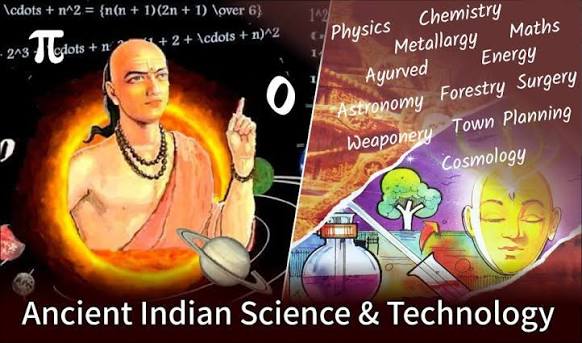
Science and Technology in Ancient India