


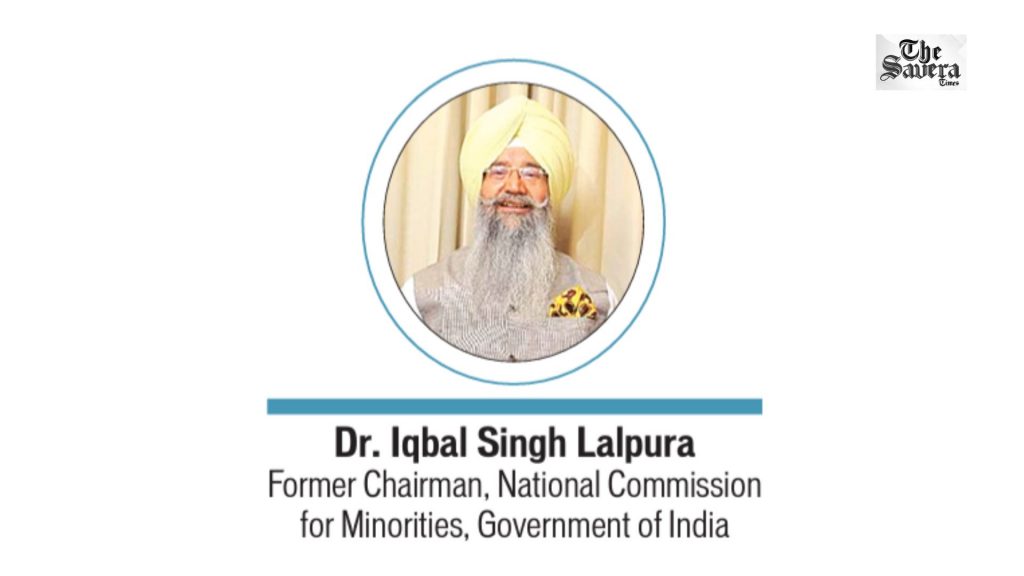
India is the world’s largest democracy and the sanctity of its electoral process is a matter of national importance. Every citizen who is legally entitled to vote must be able to exercise that right freely and fairly. At the same time, an equally important principle is that electoral rolls must contain the names of genuine and eligible voters and must not contain the names of those who are dead, permanently shifted, duplicated or otherwise ineligible. The Special Intensive Revision, or SIR, of electoral rolls has therefore become a matter of intense political debate. The Opposition has alleged that the exercise amounts to “vote chori” and that large numbers of genuine voters are being removed from electoral rolls. Such allegations are serious. But precisely because they are serious, the country deserves evidence rather than slogans. The first question that the Opposition must answer is simple: Where are the genuine voters whose names have actually been deleted? If millions of genuine citizens have been deprived of their voting rights, their names, addresses, EPIC numbers, polling stations and the reasons for their deletion should be placed before the public. The Election Commission has provided mechanisms through which electoral rolls can be examined and claims and objections can be submitted. In the Bihar SIR exercise, for example, lists of electors whose enumeration forms were not received or who were reported as deceased, permanently migrated or untraceable were shared at the booth level with political parties, while the draft electoral roll was also made available for public scrutiny. This is where the political argument must move from the street to the record. If an Opposition party claims that a particular village has lost 500 genuine voters, let it produce the names of those 500 voters. If it claims that a particular community has been targeted, let it identify the affected voters and demonstrate the pattern. There is also a fundamental misunderstanding in some of the political rhetoric surrounding the process. The Chief Election Commissioner does not personally sit down and delete individual voters from electoral rolls. The electoral roll is prepared through an established administrative mechanism involving officials at different levels. At the field level, Booth Level Officers undertake verification, while Electoral Registration Officers, Assistant Electoral Registration Officers, District Election Officers and Chief Electoral Officers have defined responsibilities in the process. Political parties themselves are stakeholders in the exercise and can appoint Booth Level Agents. Therefore, the slogan that the Chief Election Commissioner can simply “steal votes” does not adequately describe how electoral rolls are actually prepared. If there is a deliberate conspiracy at the administrative level, it should be possible to identify the officials, the instructions, the affected voters and the documentary trail. An allegation of institutional wrongdoing cannot become a substitute for demonstrating institutional wrongdoing. Another important question concerns Form 6. Is there any direction in Form 6 to delete the names of a particular class, caste, religion or political group of voters? The answer is no. The Election Commission’s voter services portal clearly identifies Form 6 as the application for inclusion of a name in the electoral roll, while Form 7 is used for objection to proposed inclusion or for deletion from the existing electoral roll. Form 8 deals with correction and updating of entries. This distinction is important because political debate should not deliberately confuse the public about the purpose of statutory forms. There is no provision in the electoral system that says the names of Hindus, Sikhs, Muslims, Dalits, OBCs, women, farmers, labourers or supporters of a particular political party should be deleted. Eligibility is determined by law, not by political preference. Article 326 of the Constitution provides the basic framework of adult suffrage, and the Election Commission has repeatedly stated that its objective is that no eligible voter should be left out and no ineligible person should be included. The next question is whether SIR is being conducted for the first time in the history of Indian elections. Again, the answer is no. The Election Commission itself records that the last Intensive Revision in Bihar before the 2025 exercise had been conducted in 2003. Intensive revision is therefore not an invention of the present political moment. Indeed, the Bihar exercise provides an important example of why both sides of the argument need to be heard. According to the Election Commission, the electoral roll contained approximately 7.89 crore electors at the beginning of the 2025 SIR. About 65 lakh electors were not included in the draft list; subsequently, eligible electors were able to submit claims, and more than 21.53 lakh eligible electors were added to the draft list. The final roll published on 30 September 2025 contained approximately 7.42 crore electors. figures demonstrate that the process cannot simply be described as “deletion” without explaining what happened at every stage. A name absent from a draft roll is not necessarily a permanently disenfranchised citizen. There are claims, objections, hearings, corrections and appeals. That does not mean that every action of an election official should be accepted blindly. If a genuine voter has been wrongly excluded, that is a serious matter and the Election Commission must correct it promptly. An elderly citizen, a migrant worker, a family that has shifted temporarily, a person whose documentation has a discrepancy or a citizen whose enumeration form was not received should not lose the right to vote merely because of an administrative error. But there is an equal responsibility on political parties. Every recognised political party has an organisational structure reaching the polling-station level. If the Opposition believes that large numbers of genuine voters have been removed, its Booth Level Agents should be among the first to identify them. The present political agitation raises another uncomfortable question. If the issue is genuinely about protecting the voting rights of citizens, why should the debate repeatedly descend into confrontation with the police and attempts to break barricades? Peaceful protest is an important democratic right. Political leaders have every right to question the Election Commission, demand explanations and mobilise public opinion. A photograph of a leader fighting with police may generate headlines, but it does not establish that a single genuine vote has been illegally deleted. A slogan may energise supporters, but it cannot replace a voter list. A press conference may make an allegation, but it cannot substitute for documentary evidence. The Opposition should therefore be challenged respectfully but firmly: Show us the genuine voters. Show us their names. Show us their polling stations. Show us the old roll and the revised roll. Show us the reason for deletion. At the same time, the Election Commission should not respond merely with assertions of its own correctness. A constitutional institution derives its credibility not only from its legal authority but also from public confidence. It should proactively publish accessible data, explain the reasons for major exclusions, facilitate claims and objections, and ensure that genuine voters are not left without an effective remedy. Transparency will strengthen the Commission rather than weaken it. The real danger to democracy lies at both extremes: blindly trusting every administrative action on one side and declaring every electoral revision to be “vote theft” on the other. Neither approach serves the citizen. India’s democratic institutions are larger than any political party and more important than any individual election. The Election Commission must be held accountable wherever there is evidence of error or wrongdoing. The Opposition has every right to agitate. It does not, however, have the right to convert an allegation into an established fact merely by repeating it. The strongest democratic agitation is not the one that produces the loudest slogan or the most dramatic confrontation with the police. It is the one that produces the strongest evidence. The question before the nation is therefore very straightforward: Where are the genuine voters whose names were deliberately deleted, and what is the evidence that their deletion was politically motivated? Let the Opposition produce the evidence, let the Election Commission answer every genuine case, and let the people decide. That is how a mature democracy should function. Former Chairman, National Commission for Minorities, Government of India
Where Is the Evidence of Genuine Voters Being Deleted?
Where Is the Evidence of Genuine Voters Being Deleted?