


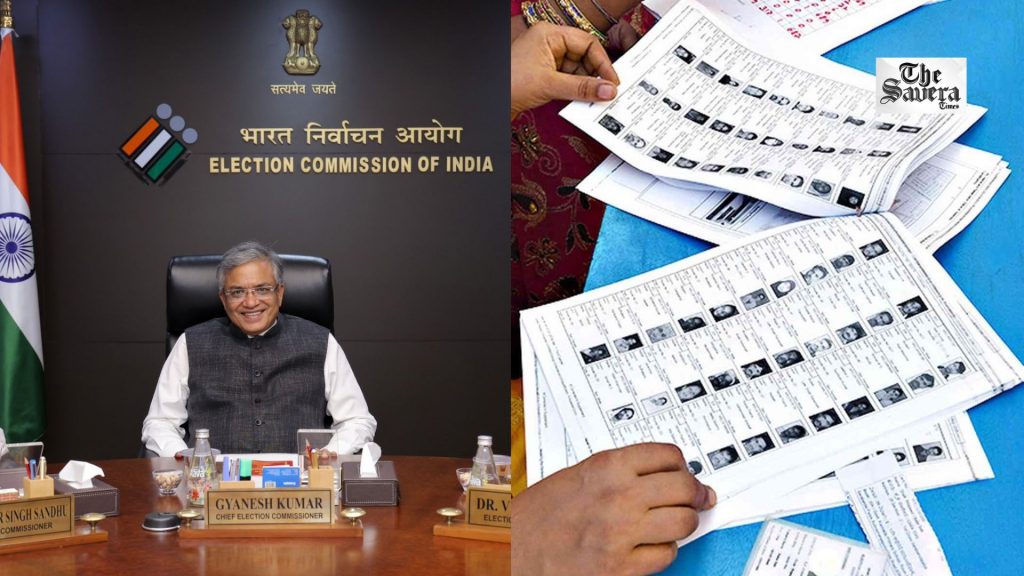
The argument over SIR cannot be reduced to numbers deleted or added. At stake is something more fundamental — whether India can clean up its electoral rolls without weakening the citizen’s confidence in the process.
Few things in a democracy are as mundane, and yet as consequential, as a voter list. It is, after all, only a database of names and addresses. But for the citizen, being on that list is the gateway to the most basic act of democracy — the right to vote.
This is why the increasingly heated debate around the Election Commission of India’s Special Intensive Revision (SIR) deserves a little more perspective than it has received. There are two competing narratives. One presents SIR as an exercise in mass exclusion.
The other treats every question raised about it as an attack on the Election Commission. Neither is particularly helpful. Electoral rolls do need cleaning. People die. Families migrate.
Voters move from one constituency to another. Duplicate registrations remain. Addresses become outdated. In a country as large and mobile as India, the idea that electoral rolls can simply be carried forward indefinitely is plainly untenable. The experience of Bihar illustrates the problem. The last intensive revision there had taken place in 2003.
In the exercise that began in June 2025, around 20 lakh deceased electors, 28 lakh people who had permanently migrated, seven lakh duplicate enrolments and one lakh untraceable electors were identified. These are not insignificant numbers. They make the case for periodic verification rather persuasively. But this is only half the argument.
The test of an electoral revision is not simply how many inaccurate entries it removes. It is also how effectively it protects the legitimate voter who, because of migration, poverty, inadequate documentation, an administrative error or simple lack of awareness, finds his or her name under question.
That distinction is important in understanding the controversy over the reported 13 crore draft deletions across 30 states and Union Territories. A draft deletion is not necessarily a disenfranchised voter.
The category includes those who are dead, permanently migrated, duplicated or yet to be verified. But large numbers inevitably create anxiety. And democratic institutions cannot answer anxiety merely by saying that the procedure is technically correct.
They have to make the procedure visible, accessible and credible. There are encouraging features in the present system. Booth Level Officers can visit voters who have received notices, collect their documents and upload them, instead of requiring every citizen to make repeated visits to government offices. Hearings can be held online. An adult family member can represent a voter.
Special camps and help desks have been created for workers, the poor and other vulnerable groups. Political parties themselves have Booth Level Agents who can scrutinise the rolls alongside election officials. These safeguards matter far more than they might appear to. electoral rolls are simply too large to be made credible through centralised verification alone.
Their reliability ultimately depends on thousands of small interactions — between the BLO and the household, between political parties and election officials, and between a citizen who finds an error and an administration willing to correct it. There is another number that deserves greater attention in the present debate. Between June 2025 and October 2026, 2.37 crore Gen-Z voters were added to the rolls — roughly 16 lakh a month.
That hardly fits a simple story of an electoral system engaged only in deleting voters. But neither should additions be used to dismiss concerns about wrongful exclusions. A democracy should be capable of holding both propositions at once: electoral rolls must be cleaned, and no genuine voter should face unreasonable difficulty in remaining on them.
The Supreme Court’s intervention offers another useful distinction. The legal authority of the Election Commission to undertake an intensive revision is one question. Whether every administrative decision taken during that exercise meets the required standards of law, fairness and institutional procedure is another. The two should not be confused.
This distinction also matters for the Election Commission itself. The Commission occupies an unusual place in India’s constitutional architecture. It conducts elections in which the stakes for political parties could hardly be higher. It will therefore be criticised — sometimes fairly, sometimes politically and sometimes without adequate evidence. Its response cannot be defensiveness. The stronger response is radical procedural clarity. Publish more data. Explain deletions constituency by constituency. Make the reasons for exclusion intelligible to ordinary voters.
Ensure that claims and objections are disposed of quickly. Where technology is used, subject it to credible independent scrutiny. Where disagreements arise within the Commission, institutional procedure should be beyond doubt.
Transparency does not weaken an institution. For a constitutional body, it is often the strongest defence available. Political parties, too, have responsibilities.
They cannot simultaneously participate in the revision through lakhs of Booth Level Agents and then treat the entire exercise as if it were taking place behind closed doors. If genuine voters are being wrongly excluded, parties should identify them, assist them in filing claims and place verifiable evidence in the public domain. The argument over SIR therefore needs to move beyond the binary of “cleaning the rolls” versus “saving democracy”.
India needs clean electoral rolls. It also needs citizens to believe that those rolls have been prepared fairly. One cannot be sacrificed for the other. The Election Commission’s task is not merely to produce an accurate database. It is to ensure that an eligible citizen does not have to fight the state to remain a voter.
And those questioning the exercise have an equal responsibility to distinguish between a genuine case of disenfranchisement and the legitimate removal of a dead, migrated or duplicate entry. In the end, the credibility of an election begins much before the first vote is cast. It begins with a citizen looking at the electoral roll and finding his or her name there — and trusting the process that put it there.