


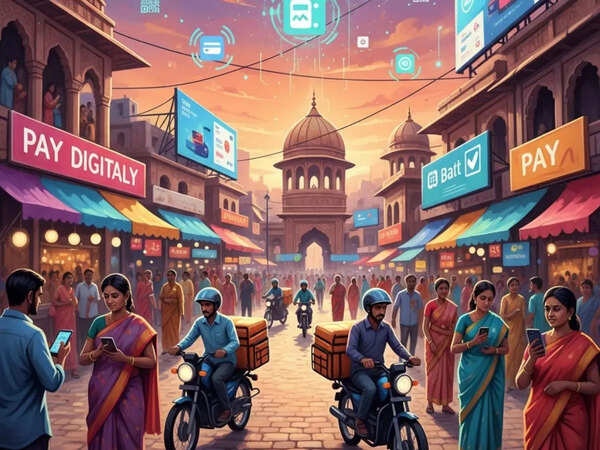
The holy days of Navratri are currently underway. Dussehra and Diwali are near. This is followed by the sacred festivals of Guruparva and Christmas. Therefore, the period leading up to the end of the year is considered a time of holy festivals. Traders generally say that the entire year’s earnings are made during this season. But at this time, the period of inflation and price rise is scaring traders. The impact of El Niño has further increased this fear. The Reserve Bank’s monetary policy also states that the repo rate will increase to control inflation. Traders are worried, wondering whether the festive season will be dull this time? Will the recession intensify? But Indians, who consider festivals their life, do not stop.
Reports from the first six days of Navratri indicate that sales are 18 times higher than normal. Orders have also increased by 654 percent. People are willing to spend two and a half times more on each order. Furthermore, this isn’t just happening in major cities; smaller towns are also leading the way. New economic data confirms that purchasing and demand from rural areas has increased more than ever before. To further increase this, merchants have organized sales.
The festive season attractions have been announced and the cashback on the amount invested is already getting four times. Some more figures are that if there is a sale on normal days, then the average sale is Rs 1100 per day but on festive days the average sale is Rs 2639. The items for which orders are coming more than double as compared to normal days include men’s ethnic wear, television, branded t-shirts, tablets, laptops, desktops, beauty care products, sports footwear and watches.
Compared to the country’s metropolises, Delhi, Mumbai, and Kolkata, even smaller cities are reporting 8-8 times the sales growth. Sales are also booming in Hyderabad, Bengaluru, and Patna. Relatively smaller cities like Bhubaneswar, Pune, Patna, Lucknow, and Jaipur are also reporting 7-8 times the orders. The bottom line is that it’s impossible to predict where the Indian consumer will turn, ignoring monetary policy objectives. During some festivals, Indians’ religious and other family-oriented celebrations can turn the tables. So, these are the figures that are surprising economic experts in this country of the rich, where the poor reside.