


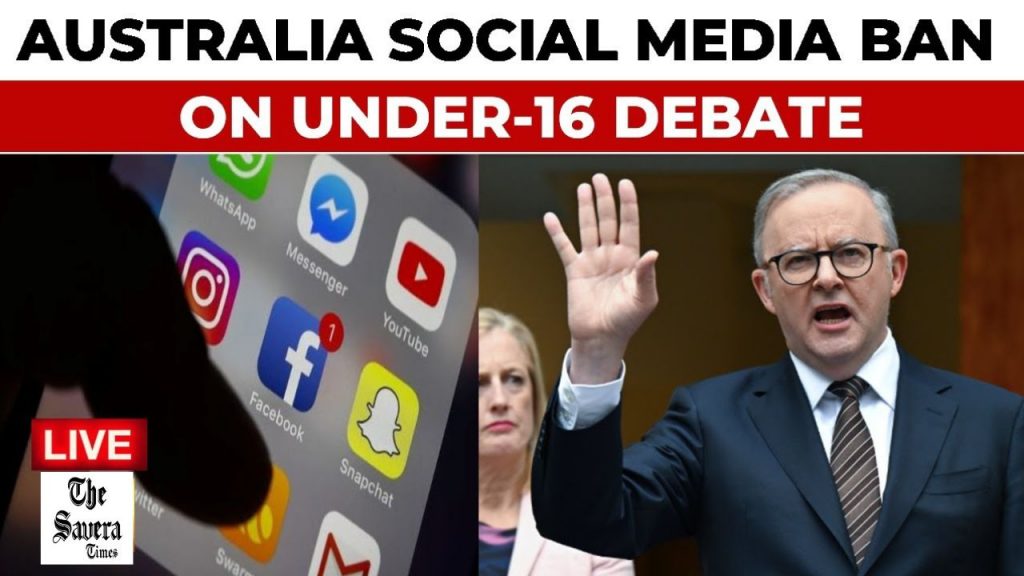
From 10 December 2025, Australia has implemented a world-first law banning children under the age of 16 from having social media accounts. The legislation, called the Online Safety Amendment (social media Minimum Age) Act 2024, updates the existing Online Safety Act to require social media platforms to verify users’ ages and prevent under-16s from creating accounts.
AUSTRALIA JUST BANNED SOCIAL MEDIA
Australia has officially banned social media for under-16s — starting TODAY.
Facial scans. Behaviour tracking. Data profiling.
And the government is celebrating it.Albanese says his “pride has never been greater”…
because Australia is now… pic.twitter.com/qH5cUGXaag— George Mamalis (@georgieAM) December 10, 2025
Platforms Affected
Major social media platforms must comply, including Facebook, Instagram, TikTok, Snapchat, X (formerly Twitter), YouTube, Reddit, Twitch, Kick, and Threads. Messaging-only or education-focused apps are exempt from the ban. Platforms are legally responsible for enforcing the law; parents and children face no fines or legal penalties.
Enforcement and Penalties
Social media companies are required to take “reasonable steps,” such as implementing age-verification tools, to prevent minors from signing up. Non-compliance could result in fines of up to AUD 49.5 million (≈ USD 33 million). While platforms are responsible for enforcement, the law does not penalize users under 16 who attempt to bypass restrictions.
Purpose of the Ban
The government says the ban aims to protect children from cyberbullying, exposure to harmful content, addictive algorithms, and online exploitation. Supporters see it as prioritizing children’s well-being over social media profit models. Critics, however, argue that enforcement may be technically difficult and could drive teens to unregulated online spaces, potentially creating new risks.
Challenges and Concerns
Age verification at scale is a major technical and ethical challenge. Experts warn that minors might still access unsafe content through workarounds, and the law raises questions about free expression, digital literacy, and equitable access to information for teenagers.