


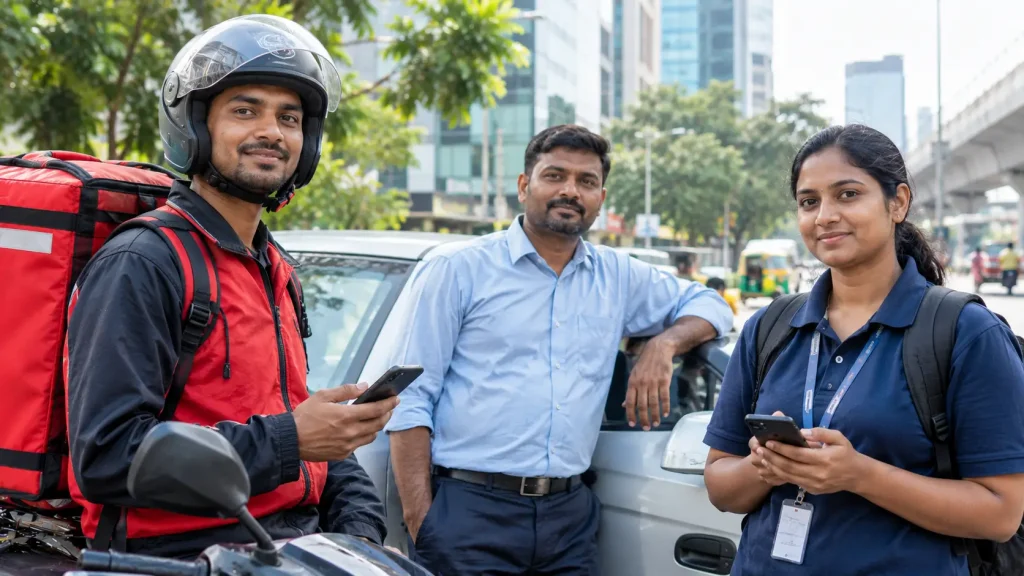
Finally, the Centre has notified the constitution of the National Social Security Boards for Unorganised Workers and Gig and Platform Workers to strengthen the social security framework for workers in the informal workforce.
Established under the Code on Social Security, the boards will recommend and monitor welfare schemes for unorganised workers, gig workers and platform workers.
The boards will be headed by the Union Minister for Labour and Employment and comprise representatives of the Central and state governments, aggregator companies, employers, civil society organisations, workers’ unions and gig and platform worker associations.
The boards will recommend suitable social security schemes for different categories of workers and advise the Central government on matters arising out of the administration of the Code.
They will also monitor social welfare schemes administered by the Centre for these workers, review record-keeping functions performed at the state level and examine expenditure from the fund and account.
Apart from that, the boards will meet at least thrice a year and follow rules of procedure prescribed by the Central government for the conduct of their meetings.
The boards, further, would play a role in bridging the social security gap for millions of gig and platform workers alongside traditional unorganised workers.
The Code on Social Security provides a statutory framework for social security measures for unorganised workers, gig workers and platform workers.
Earlier in September, industry, workers, senior government officials and experts said that the new Labour Codes marks shift from a controlcentred regulatory approach to one based on collaboration between government
Chandra Bhushan Kumar, Secretary, Labour Ministry, had highlighted rationalisation through consolidation of laws, reduced provisions, digitalisation of compliance, eportals and uniform return filing, along with greater uniformity in the definition of wages.
Gig Workers Under Labour Codes in India
Gig workers, defined under the Code on Social Security, 2020 as individuals performing work outside traditional employer-employee relationships (e.g., freelancers, delivery partners, ride-hailing drivers), receive landmark recognition in India’s new labour codes.
For the first time, the Code— effective from 21 November 2025 as part of the four consolidated labour codes— extends social security to gig and platform workers. This includes potential benefits like life and disability cover, accident insurance, health and maternity support, old-age protection, and provident schemes.
Aggregators (e.g., Swiggy, Zomato, Uber) must contribute 1-2% of turnover (capped) to a dedicated Social Security Fund.
Recent draft rules (notified December 2025, feedback ongoing) propose eligibility after 90 days engagement with one aggregator or 120 days across multiple in a financial year. Registration via Aadhaar-linked portals (e.g., e-Shram) ensures portability. While full schemes await final notifications (targeted April 2026), these reforms mark a shift towards inclusive protection for India’s growing gig economy, balancing flexibility with welfare.
The Ministry of Labour and Employment launched the e-Shram portal on 26 August 2021 to build a comprehensive National Database of Unorganised Workers (NDUW) including platform workers, migrant workers, agriculture workers etc.
The e-Shram portal is meant to register and support the unorganised workers by providing them a Universal Account Number (UAN) on a selfdeclaration basis.
As of 3 August 2025, more than 30.98 crore unorganised workers have registered, including over 3.37 lakh platform and gig workers. The portal has recorded the highest number of registrations from Uttar Pradesh (8.39 crore), followed by Bihar (3.00 crore) and West Bengal (2.64 crore). These numbers reflect the unorganised workforce in these states and the government’s efforts to register and support workers across the country.