


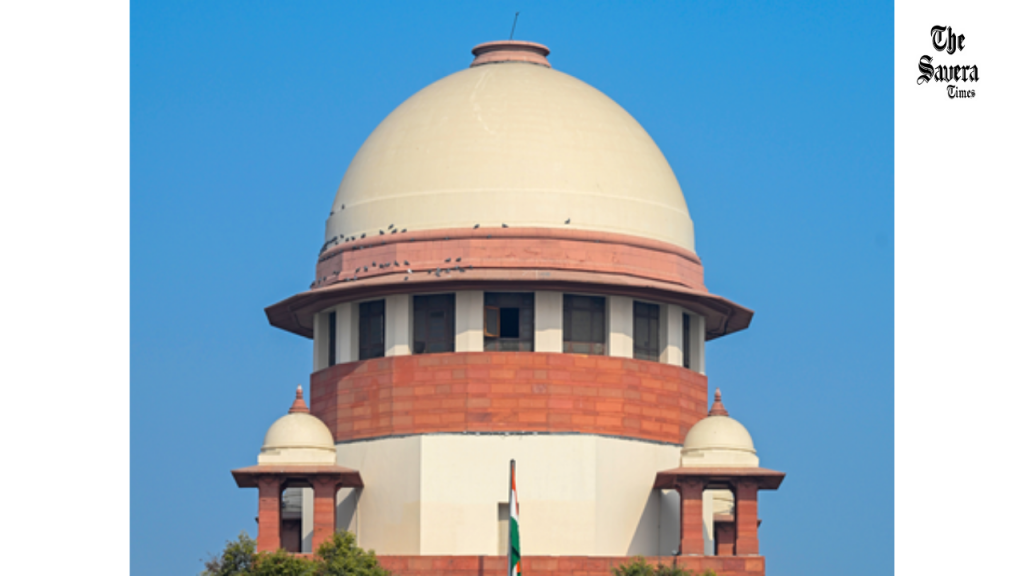
India’s judicial system is often hailed as the fourth and most influential pillar of democracy. However, despite the citizenry’s unwavering faith in the justice system, there is one common grievance shared by everyone—from the common man to the elite—that obtaining justice from the courts is an agonizingly delayed process.
Adjournments pile up endlessly, and people’s aspirations for justice remain deferred for decades. Previously, “Lok Adalats” were established to resolve disputes through mediation; however, these courts failed to expedite the machinery of justice, and people frequently rejected their verdicts, subsequently reverting to the conventional court system.
Now, however, the Supreme Court has issued fresh directives, laying down specific guidelines regarding the timeframe for delivering verdicts. The Supreme Court has mandated that special courts be established—both at the Central and State levels—to ensure the time-bound disposal of pending cases.
A bench comprising Chief Justice Surya Kant and Justice Joymalya Bagchi directed that special courts be constituted under Section 11 of the NIA Act; these courts are to exclusively hear pending cases and must not be assigned any other litigation. The bench is currently considering the establishment of special courts for pending cases by exercising its “suo motu” powers.
The Supreme Court has directed that if a High Court has ten or more pending trials under its jurisdiction, one special court must be constituted. For more than 15 pending trials, two special courts should be established; and for over 25 cases, three special courts must be set up. The bench emphasized that special courts dedicated to pending cases are essential and must be established within one month.
A clear directive has been issued stating that trials in these courts must be conducted on a day-to-day basis, and the presiding officers must ensure the completion of at least one trial every month.
During the hearing, the Solicitor General informed the Court that notices regarding the establishment of such courts had previously been issued to 17 states; of these, special courts have already been constituted in five states. In Delhi as well, such a special court is expected to commence operations within a few days. To facilitate the functioning of these courts, the Chief Justices of the respective High Courts are required to consult with the State governments and ensure the provision of adequate infrastructure and space.
The Supreme Court has directed the states to submit details regarding pending cases, with the assistance of the Registrar General of their respective High Courts. Once this information is received, the establishment of special courts should be considered. The Chief Justice opined that such a task could only be accomplished by developing a new framework characterized by improved coordination among various agencies