


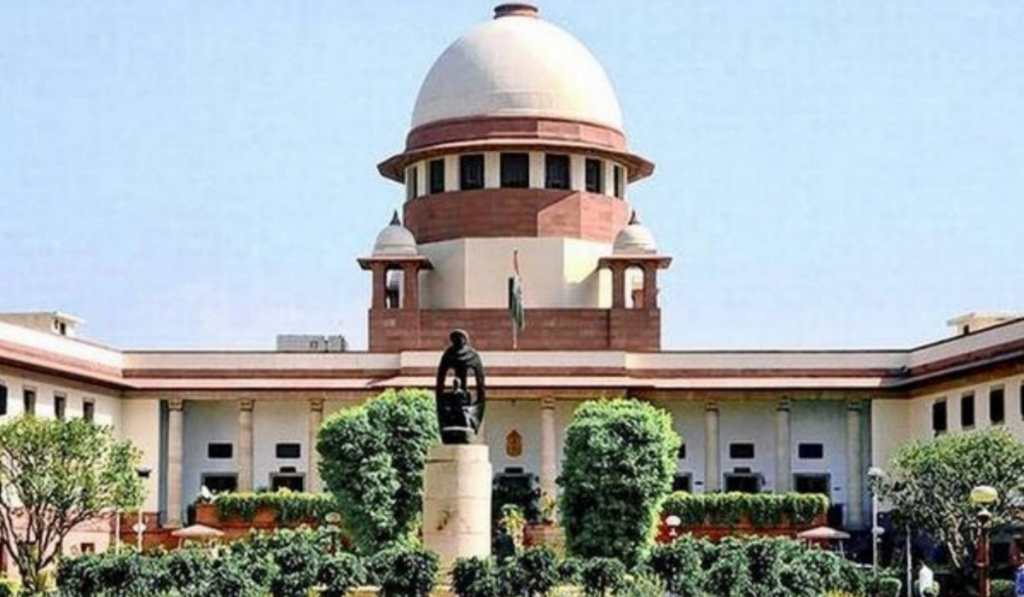
New Delhi: The Supreme Court on Tuesday took a serious view of the alleged assault on female journalists by police personnel covering protests in the capital Delhi. The court directed a senior Delhi Police officer to be present during the hearing on Thursday and explain the matter.
A bench comprising Chief Justice of India (CJI) Surya Kant, Justice Joymalya Bagchi, and Justice V. Mohana issued the direction after senior advocate Indira Jaising mentioned the matter. Jaising referred to a petition filed by the Network of Women in Media, India (NWMI) seeking to ensure the safety of journalists, especially women journalists, covering protests.
The bench said, “We want a senior officer to be present and explain the matter.”
Case of alleged mistreatment of journalists on October 10 and 11
This case relates to alleged mistreatment of journalists while covering protests against Chief Election Commissioner (CEC) Gyanesh Kumar. It is alleged that on October 10 and 11, journalists were allegedly harassed, detained, and obstructed by police personnel.
Senior advocate Gopal Sankaranarayanan also referred to a separate contempt petition. It alleged that the police violated the Supreme Court’s October 10 order by assaulting journalists.
The Supreme Court had directed authorities not to obstruct the work of journalists and lawyers
On October 10, the Supreme Court had directed authorities not to obstruct lawyers, journalists, and other professionals in the discharge of their duties.
A bench of Justices Joymalya Bagchi and V. Mohana issued this direction while hearing contempt petitions filed over restrictions imposed prior to the proposed protests.
The court also directed authorities to ensure normal operation of metro and railway services, maintain uninterrupted internet connectivity, and allow public movement. However, this exemption was subject to traffic rules and public order requirements.
Supreme Court Directives on Detention and Restrictions
The Supreme Court also stated that no one should be detained without following the procedure prescribed by law. The court specifically mentioned peaceful and unarmed gatherings held outside areas where prohibitory orders under Section 163 of the Indian Penal Code (BNSS) were in effect.
The court has now directed a senior Delhi Police officer to appear at Thursday’s hearing to explain the allegations of alleged misconduct against female journalists.