


India recorded 536 heatwave days and more than 44,000 heatstroke cases in the summer of 2024. Between 2020 and 2024, the country officially reported 294 deaths of workers cleaning sewers and septic tanks, a fatality roughly every six days. These figures only hint at the underlying reality: the burden falls overwhelmingly on Dalit workers who face extreme heat, hazardous work and little protection.
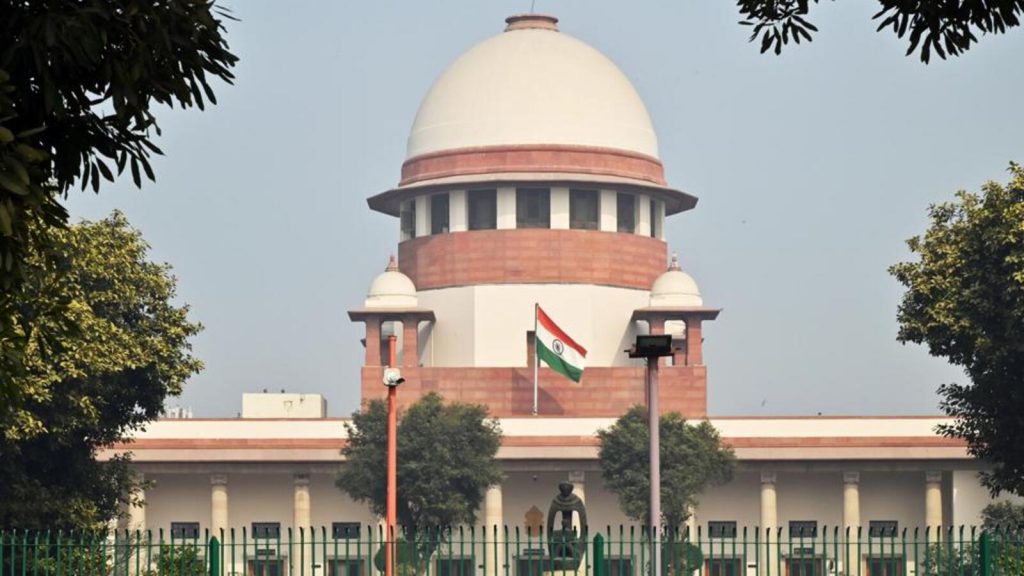
Against this backdrop, the Supreme Court Centre for Research and Planning has released its Report on Judicial Conceptions of Caste. The document arrives at a crucial moment for public institutions. It offers a detailed account of caste as an entrenched structure of social power and provides climate policymakers with a framework to understand injustices such as thermal inequality, where marginalised communities bear the greatest exposure to extreme temperatures without adequate safeguards.
The Centre has previously published handbooks on gender stereotypes and disability rights, establishing an institutional method for examining how law and language reinforce bias. The new Report applies the same approach to caste, showing how official language often masks structural discrimination. Terms such as poverty, merit, informality and vulnerability present social conditions as neutral facts rather than products of hierarchy. When national climate plans describe heat-affected groups as informal workers or slum residents without examining why these groups are placed in harm’s way, the policy framework repeats the very erasure the Report identifies.
A central contribution of the document is its account of the judicial evolution of substantive equality, a principle advanced by Justice Chandrachud. The doctrine holds that treating unequals alike constitutes discrimination and that targeted measures are necessary for genuine equality. This standard raises concerns about current Heat Action Plans, which adopt uniform protocols across states despite evidence that SC and ST workers face 150 per cent higher heat exposure due to occupational patterns shaped by caste. A one-size-fits-all framework cannot claim neutrality when caste determines vulnerability.
The Report also gives institutional legitimacy to caste-conscious climate policy. It demonstrates that neutrality is not an absence of bias but a policy choice that often reinforces existing hierarchies. India’s 2020 labour code sets heat protection standards only for dock workers, leaving millions of informal workers outside the regulatory framework. Dalit workers, who make up a large part of this workforce, carry the greatest risk. This omission is not a technical lapse but a structural failure that the Report’s analytical tools can help correct.
The document further highlights how courts have historically used poverty as a broad category that obscures caste. Such patterns are visible in climate governance as well. Relief systems based on formal land ownership exclude landless Dalit communities, replicating the same institutional blind spots the Report critiques. Its methodology, already applied to gender and disability, can guide similar reviews in climate law, including the landmark Ranjitsinh judgment, which recognised climate protection as a fundamental right but did not address caste-linked vulnerability.
A major barrier is the absence of caste-disaggregated climate data. The Report shows that this is not a technical omission but a political choice with serious consequences. Integrating caste census data into heat mapping, occupational risk assessments and water access studies would allow policy design that reflects ground realities.
The Supreme Court has now provided a constitutional blueprint. The question is whether public institutions will use it to build climate policies that recognise and address the systemic exposure faced by Dalit communities, who continue to confront lethal heat, unsafe work and persistent exclusion.