


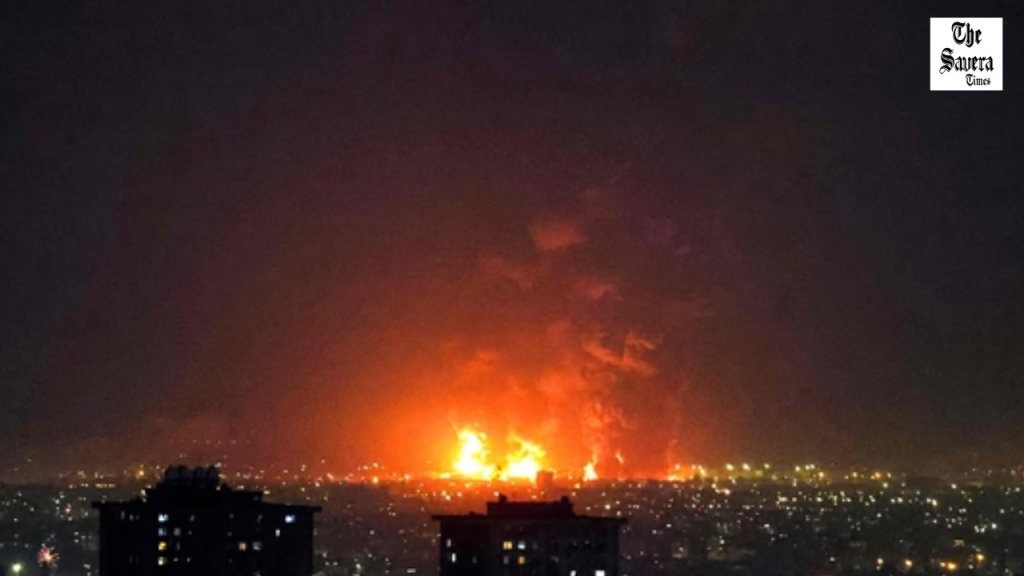
A major oil storage facility in Tehran was engulfed in flames after fresh Israeli airstrikes, marking a sharp escalation in the ongoing conflict involving Iran, Israel and the United States. The attack targeted fuel depots in the Iranian capital that Israeli officials claimed were used to support military logistics.
Large fires and thick plumes of smoke were seen rising above the city skyline following the strikes. Iranian media confirmed that the oil depot in southern Tehran was hit but reported that the nearby refinery infrastructure remained largely intact.
The strikes are part of a broader campaign by Israel and its allies against Iranian military infrastructure, which began in late February and has since expanded across the Middle East.
Saudi Arabia intercepts wave of drones
As the conflict intensifies, Saudi Arabia reported intercepting 14 drones launched amid the escalating confrontation. Saudi air defences were activated to protect critical infrastructure and urban areas, including energy facilities that have become key targets during the conflict.
Regional governments across the Gulf have been on high alert due to the growing risk of missile and drone attacks. Several countries including Bahrain, Qatar and Kuwait have reported intercepting Iranian missiles and drones in recent days.
Earlier in the conflict, Iranian drones targeted Saudi Arabia’s Ras Tanura oil refinery, briefly disrupting operations and contributing to volatility in global oil markets.
Iran retaliates with missile strikes
Iran has responded to the Israeli strikes with a series of missile and drone attacks targeting Israeli territory and strategic facilities across the region. Iranian state media reported that missiles were launched toward Israel’s Haifa refinery, a key energy installation.
The exchange of attacks has expanded beyond the immediate battlefield. Missile strikes, drone launches and explosions have been reported in several countries including Iraq, Lebanon and Gulf states, raising fears that the conflict could spread further across the Middle East.
Officials say that thousands of civilians have been displaced and major cities such as Tehran and parts of Lebanon have experienced repeated air raid warnings and bombardments.
Trump issues fresh warning to Tehran
US President Donald Trump issued a strong warning to Iran amid the escalating conflict, saying the country will face severe military action if hostilities continue. He claimed that the Iranian military’s command structure has been severely weakened following multiple strikes by the US and Israel.
Trump also warned that additional Iranian leaders and military assets could be targeted in future operations. The United States has provided military support and strategic coordination for Israeli operations during the conflict.
At the same time, Washington has been monitoring attacks on its bases and diplomatic facilities across the region, including incidents involving rocket and drone strikes.
Regional tensions and diplomatic pressure
The conflict has placed Gulf nations in a difficult position, as several countries fear being drawn directly into the confrontation. Saudi Arabia has warned Tehran not to attack its territory and signalled that it could retaliate if further strikes occur.
Meanwhile, Iran’s leadership has attempted to ease tensions with neighbouring countries. Iranian President Masoud Pezeshkian apologised for attacks that struck regional territories, even as military operations continued.
International organisations and world leaders have urged all parties to exercise restraint, warning that a wider regional war could have devastating humanitarian and economic consequences.
Global impact and rising concerns
The conflict has already disrupted global energy markets and shipping routes across the Middle East. Oil prices have surged amid fears of damage to key energy infrastructure and supply routes in the Gulf region.
Security analysts warn that continued strikes on oil facilities, military bases and urban centres could deepen the crisis and draw more countries into the conflict.
As fighting continues, the international community is closely monitoring developments, with diplomatic efforts underway to prevent further escalation in one of the most volatile regions of the world.