


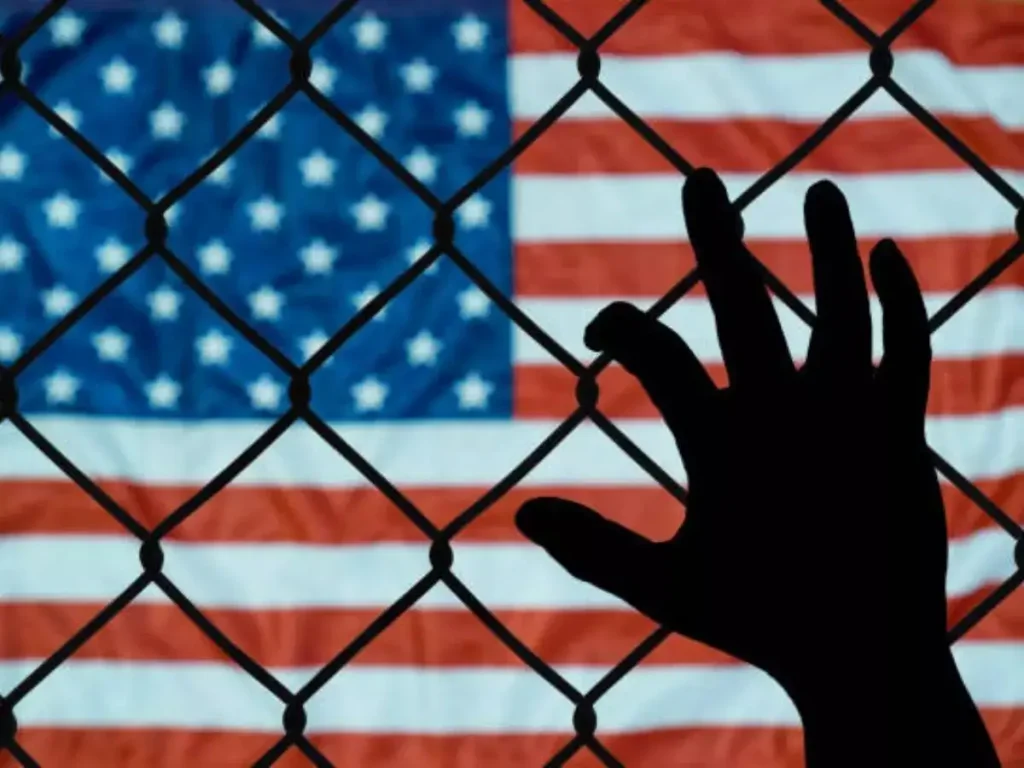
In recent years, the word “Dunki”—once just slang in Punjab’s border towns for illegal migration— has become a symbol of shattered dreams. Behind the cinematic glamour and whispered promises of a “better life abroad,” lies a dark underbelly of deceit, exploitation, and organized crime. The recent sanctions announced by the U.S. Department of the Treasury against the Bhardwaj Human Smuggling Organization (HSO) throw open a window into how thousands of gullible Indians have been trapped in one of the world’s most sophisticated human trafficking networks.
The Mirage of a Foreign Dream
For countless Indians— especially from Punjab, Haryana, and Gujarat—the dream of reaching “America” or “Canada” is a deeply emotional one. It’s not just about money; it’s about respect, opportunity, and escape from rural stagnation. Agents exploit this aspiration with surgical precision. They promise “guaranteed entry” through Latin America, arrange forged documents, and paint a picture of success waiting just beyond the Rio Grande. Families sell ancestral land, mortgage homes, or borrow lakhs to pay these “travel facilitators.” But what they don’t realize is that many of these operations are run by transnational criminal cartels, not travel agents.
The Cancun Connection
The U.S. Treasury’s October 30, 2025 press release reads like a crime novel. The Bhardwaj Human Smuggling Organization, run by Vikrant Bhardwaj—a dual Indian Mexican national—was sanctioned for smuggling thousands of people into the U.S. from Asia, the Middle East, and beyond. The group operated out of Cancun, Mexico, using yachts, hotels, and a web of shell companies to move people and money across continents. The Bhardwaj HSO even ran marinas and transport firms to ferry undocumented migrants to the U.S.-Mexico border via the TapachulaCancun-Mexicali route.
Their operations were intertwined with the notorious Sinaloa Cartel—a reminder that the “Dunki route” is not merely a human issue but part of a sprawling criminal economy involving drugs, bribery, and money laundering. The Treasury also identified Bhardwaj’s wife, Indu Rani, and several companies in India, Mexico, and the UAE— including Veena Shivani Estates Pvt. Ltd., Michigantap Hospitality Pvt. Ltd., and VVN Buildcon Pvt. Ltd.—as entities that helped launder the proceeds of this global trafficking network.
The Victims: Hopeful, Desperate, Forgotten
Most victims of the Dunki pipeline are not hardened adventurers—they’re ordinary men and women from small Indian towns. They are students, farmers’ sons, or unemployed youth who see no future at home. They enter this network believing they’re buying a ticket to freedom, but what they get instead is fear, debt, and detention. Many are stranded in jungles in Latin America, extorted by local gangs, or detained in U.S. immigration facilities. Some never make it out alive. Their families, back in India, are left with shame, crushing debt, and no answers.
The Global Criminal Economy
The Bhardwaj HSO’s exposure underscores a brutal reality: human smuggling has evolved into a corporate-scale business. The OFAC’s list of designated entities reads like an international conglomerate— with construction firms, s u p e r m a r k e t s , y a c h t companies, and real estate developers all serving as fronts for a massive money laundering apparatus. According to U.S. authorities, each illegal passage fetched “thousands of dollars per person,” generating millions in illicit revenue annually. Indian law enforcement has yet to meaningfully crack down on the domestic nodes of this network, even as the U.S. and Mexico coordinate their sanctions and investigations.
The Way Forward: From Denial to Action
The Dunki phenomenon thrives because of silence— both societal and o�cial. While U.S. agencies use financial sanctions and intelligence coordination to dismantle smuggling rings, India’s response has largely been reactive. The victims’ families are often blamed rather than supported, and local agents continue to operate with impunity. What is needed is a twopronged approach: first, a full-fledged crackdown on recruiters and financial conduits within India; and second, a public awareness campaign to expose the lies behind “safe migration packages.” The Indian government must work with international partners like OFAC, DEA, and Homeland Security Investigations to share intelligence and track illicit financial flows.
Conclusion: A Wake-Up Call
The Bhardwaj HSO case is not an isolated episode— it’s a symptom of a much deeper malaise. It exposes how the Dunki system has become industrialized, with Indian citizens being sold as “commodities” in a global marketplace of crime.As sanctions bite and networks unravel, one hopes that this case serves as a wake-up call—for policymakers, for law enforcement, and for the countless families who still believe the illegal route to America is a shortcut to happiness. Because in truth, the Dunki dream is nothing but a cruel illusion—crafted by criminals, paid for by the desperate, and sustained by silence.