


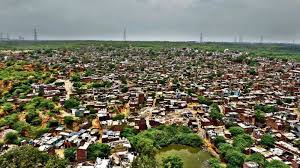
Hidden behind the hum of India’s largest railway stations are micro-villages that few commuters ever see. Populations of families—often spanning generations—live inside or adjacent to rail yards, maintaining tracks, assisting with loading, and surviving on informal labor. These micro-communities are invisible to the city above, yet they form the backbone of operations that move millions of people and goods every day.
Residents live in temporary shacks, converted freight containers, and even abandoned maintenance sheds. Children grow up playing among rail lines, and elders share knowledge about track maintenance, signaling, and logistics. Many families have been associated with a single rail yard for decades, making them repositories of operational memory that formal training systems rarely capture.
Life inside these villages is precarious. Safety risks are constant: moving trains, exposure to chemicals, and unregulated electrical lines are daily hazards. Access to healthcare, sanitation, and schooling is minimal. Yet residents develop intricate social systems, informal schools, and community kitchens to survive. Stories of self-policed zones, cooperative problem-solving, and shared labor reflect resilience and ingenuity in extreme conditions.
Economically, residents participate in both formal and informal labor. Some are officially employed by Indian Railways, while others work as porters, loaders, or cleaners under temporary arrangements. Many rely on small-scale informal enterprises within rail yards—selling snacks to passengers, repairing carts, or providing services to travelers. These activities are largely invisible to urban planners and policymakers.
Culturally, rail yard micro-villages preserve distinct traditions. Rituals around festivals, weddings, and funerals incorporate the rhythm of trains—children’s games mimic signaling patterns, and songs about locomotives are passed down orally. Residents develop unique relationships with the mechanical landscape, blending survival with adaptation.