


Mahesh Ganguly
South Asia stands at a critical inflection point in water diplomacy as the Ganga Water treaty (GWT) is set to expire in December 2026. Signed on December 12, 1996, by then Indian Prime Minister H D Deve Gowda and Bangladesh Prime Minister Sheikh Hasina, the framework established a dry-season water sharing mechanism based on flow measurements at the Farakka Barrage — a strategic control structure located in West Bengal, barely 18 kilometres from the Bangladesh border.
For decades, this agreement has been treated primarily as a geo-political bargain over allocation. But today, the larger challenge is no longer simply “who gets how much water” — it is whether the Ganga can remain sustainable at all.
For its time, the 1996 treaty was widely seen as a stabilising breakthrough. It came after years of friction that escalated sharply following India’s commissioning of the Farakka Barrage in 1975, which Dhaka argued worsened downstream scarcity during lean months. Earlier interim arrangements in the late 1970s and 1980s failed to offer durable solutions. Yet, the 1996 treaty has never fully escaped political and public tensions.
The civil society and policy voices of Bangladesh have frequently stressed that the country has not consistently received its “fair-share” during most of the critical lean-season periods — pointing to structural weaknesses in the treaty’s water-sharing formula that does not always guarantee promised volumes.
On the Indian side, growing upstream demand for irrigation, hydropower, drinking water supply and industrial use has strengthened the domestic development imperative to retain more water. But for a lower riparian country like Bangladesh, excessive upstream withdrawals reduce the volume of water reaching Farakka, shrinking overall downstream water availability and accelerating salinity intrusion in the delta — damaging fisheries, agriculture, and riverine livelihoods.
As the treaty nears its deadline, both sides have indicated a willingness to revisit the agreement’s terms. But framing the debate only through the lens of fairness and allocation misses the deeper crisis now unfolding — a rapidly shifting hydrological regime driven by climate change.
The Ganga basin, especially the lower and the delta region is among the worst-hit river systems and scientific assessments suggest that the basin is increasingly experiencing climate extremes — intensified lean-season scarcity in some years and sudden high-flow episodes in others, driven by changing rainfall patterns and accelerating Himalayan glacier retreat.
Erratic monsoon behaviour is overwhelming embankments, reshaping river channels, and triggering intensified flooding, bank erosion, and causing significant land loss in the lower delta. Higher temperatures and altered precipitation patterns are producing significant hydrological imbalances, making water management far more unpredictable.
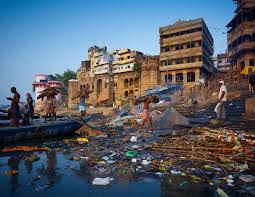
Looking ahead, studies warn that by the 2050s the basin could witness substantial changes in river flow patterns. Pollution further compounds this crisis, particularly along the Indian stretch of the river, where rapid industrialisation and urbanisation have significantly increased the pollutant load. During lean seasons, reduced flow lowers dissolved oxygen and weakens the river’s self-purification capacity. Industrial discharge introduces heavy metals such as lead, cadmium, and chromium, while agricultural runoff adds nitrates and chemical residues, raising concentrations of zinc and copper that bioaccumulate and disrupt microbial processes essential for river health — altering sediment transport.
Adding to this toxic burden is the growing threat of microplastic pollution — discharging approximately 0.12 million tons annually and reportedly the key contributor in undermining the region’s blue-carbon capacity by weakening the mangrove ecosystem’s ability to sequester CO2 — thereby deepening climate vulnerability in the delta.