


On the morning of December 10, 1996, Dr Jill Bolte Taylor woke up with a sharp pain behind her left eye. She was only thirty-seven. She was also a Harvard-trained neuroanatomist.
A blood vessel had burst in the left hemisphere of her brain. In four hours, she had lost her ability to walk, talk, read, write, and remember parts of her past. The part of the brain that gave her language, sequence, personal history and intellectual control had been devastated.
In her book, My Stroke of Insight: A Brain Scientist’s Personal Journey, she speaks about her tortuous journey of eight years where through extreme mental work, she rebuilt herself. She writes:
The brain, injured but not finished, began to find new routes.
Some neurologists opine that for stroke patients, most recovery occurs within the first six months post-stroke, leaving little hope for further improvement. However, Bolte discovered the opposite. She advises:
“Don’t accept timetables for recovery, have hope in the brain’s plasticity and ability to be repaired, and appreciate the value of sleep in the healing process.”
This is the miracle that modern neuroscience calls neuroplasticity.
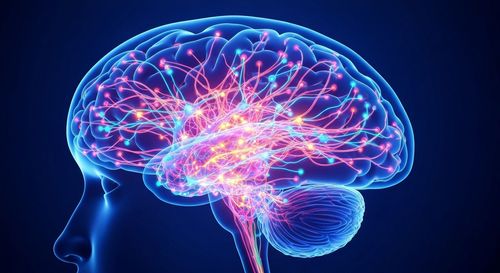
The brain is not a fixed machine. It is a living, adaptive, self-modifying organ. It weakens through neglect. It strengthens through repetition. It reorganises after injury. It is sculpted by practice, attention, emotion, environment and meaning.
THE MIND AS FRIEND OR ENEMY
The Bhagavad Gita gives one of the most precise spiritual formulations of the nature of the neuroplastic mind. In Chapter 6, verse 5 Krishna tells Arjuna:
“Let a man lift himself by himself; let him not degrade himself. For the self alone is the friend of the self, and the self alone is the enemy of the self.”
The next verse deepens the teaching:
For one who has conquered the mind, the mind is a friend; for one who has not, it behaves as an enemy.
SAMSKARA AND NEURAL PATHWAYS
Indian thought has a word for the impressions left by repeated thought and action: samskara. Every action, every emotion, every desire, every fear leaves a subtle groove in the inner instrument. These grooves do not merely remain as memory. They become tendencies and begin to shape perception.
A person does not see the world as it is. He sees it through his samskaras.
Neuroscience gives this ancient insight a biological companion. Repeated activation strengthens patterns of connectivity. The popular phrase often used is: neurons that fire together wire together.
This is why spiritual practice cannot be an occasional sentiment. A single moment of peace is beautiful. But a repeated practice of peace becomes character.
The scriptures understood this. Japa. Simran. Seva. Dhyana. Swadhyaya. Satsang. Tapas. They were technologies of transformation.
In Sikh spirituality, Sacred Repetition is deep remembrance. The ordinary mind scatters itself into anxiety, comparison, ambition and fear. However, when the tongue repeats Waheguru, when the breath slows, when the heart listens, a different rhythm enters consciousness.
Research on “OM” chanting has shown patterns of deactivation in limbic regions associated with emotional arousal.
PRACTICE AND DETACHMENT: PATANJALI’S FORMULA
Patanjali’s Yoga Sutras state with austere clarity:
“Abhyasa-vairagyabhyam tan-nirodhah.”
(The fluctuations of the mind are stilled by practice and detachment.)
This may be one of the finest spiritual descriptions of neuroplasticity ever written. Practice builds the new pathway. Detachment starves the old one.
If anger arises and one immediately expresses it, the anger circuit is strengthened. If anger arises and one observes it, breathes through it, refuses to identify with it, and lets it pass, the old circuit is weakened. If this is done repeatedly, the mind learns a new possibility. Between stimulus and response, a sacred interval opens.
This is the beginning of freedom.
The same is true of fear, addiction, jealousy and self-pity. Every time the mind repeats an old reaction, it votes for the old self. Every time it pauses, remembers, reframes and returns to awareness, it votes for a new self.
Patanjali understood that inner transformation is achieved through abhyasa, or sustained practice, and vairagya, non-clinging.
MEDITATION AND THE CHANGING BRAIN
Modern research now supports the transformative power of meditation. In 2005, Sara Lazar and colleagues reported that experienced meditators showed increased cortical thickness in brain regions associated with attention, sensory processing and interoception. In 2011, Britta Hölzel and colleagues found that an eight-week mindfulness-based stress reduction programme was associated with changes in grey matter concentration in regions involved in learning, memory, emotion regulation, self-referential processing and perspective-taking.
These findings must be read carefully. Meditation is not a magic pill. Not every study is equally strong. Not every practitioner changes in the same way. But the direction of the evidence is important. Mental training can leave physical traces in the brain.
DHAMMAPADA AND THE ARCHITECTURE OF THOUGHT
The Dhammapada opens with a sentence of extraordinary psychological power:
“Mind precedes all mental states. Mind is their chief; they are all mind-wrought.”
If one speaks or acts with an impure mind, suffering follows; if one speaks or acts with a pure mind, happiness follows.
This is the law of inner causation. Thought is not harmless vapour. It authors your destiny.
A bitter thought, entertained repeatedly, eventually becomes a bitter nervous system. A sacred thought, returned to repeatedly, eventually becomes a refuge.
The Buddha’s insight was that thoughts should be observed. Once observed, they can be accepted or discarded. It means that the mind can be trained to accept only those thoughts that it wants to. The mind can foster its destiny!
Modern cognitive therapy, mindfulness-based interventions etc. enshrine a similar principle. We can change our relationship with thought. We can see the thought as a thought, not as truth itself. That small gap is the doorway to neuroplasticity.
There is, however, a warning. Neuroplasticity is morally neutral. Doomscrolling also rewires the brain. Pornography also rewires the brain. Jealousy, gossip, greed and resentment also become grooves. This is why the scriptures are so concerned with sangat, food, speech, company, thought and remembrance. They understood that the human being is porous.
What we repeatedly consume, we slowly become.
Every thought is a chisel. Every repetition is a vote for the person we are becoming.
A FORTY-DAY PRACTICE
The reader may begin with a simple forty-day experiment. Choose one quality: gratitude, forgiveness, courage, compassion, stillness or surrender. Each morning, sit quietly for five minutes. Breathe slowly. Repeat a sacred word, mantra or line from scripture. Example: Waheguru or OM. Then write three sentences:
What am I grateful for?
Whom must I forgive?
What quality shall I strengthen today?
During the day, practise one conscious act aligned with that quality. At night, ask: Which pathway did I strengthen today?
Notice the change in you. Because the mind can be trained. The heart can be purified and the soul can rise.
Parneet Sachdev, IRS is the Chairman of Real Estate Regulatory Authority and a leading author.