


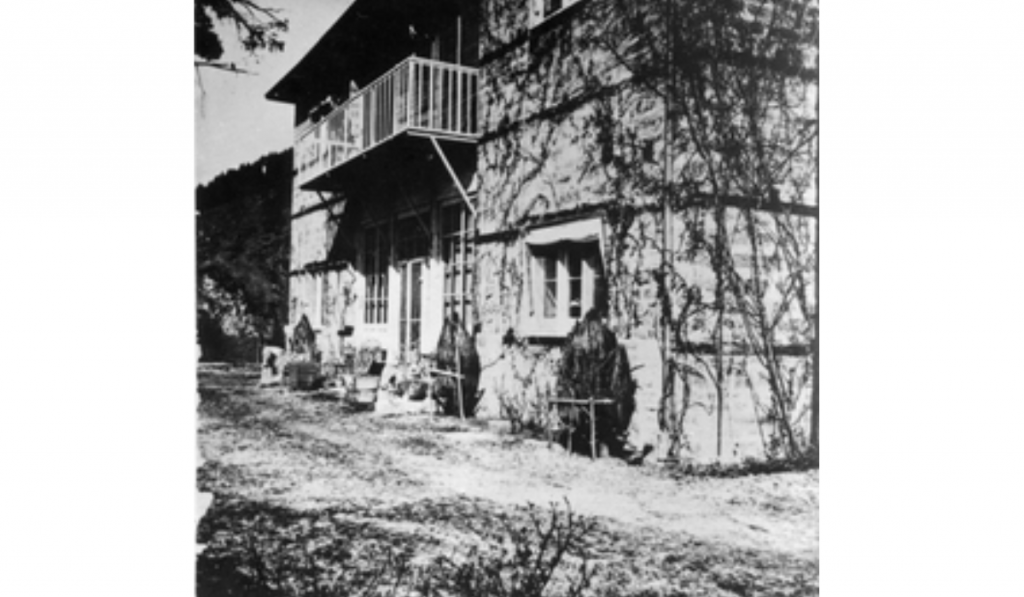
In January 1971, Roger and Carolyn Perron moved with their five daughters into a sprawling eighteenth-century farmhouse in the quiet rural town of Harrisville, Rhode Island. The house stood on nearly 200 acres of isolated land. Built in the 1730s, the structure appeared idyllic: an old-world home where their children could grow amidst nature and freedom. Then the disturbances began. Brooms would disappear from their usual locations and later be found leaning against walls in different rooms. Kitchen utensils moved inexplicably. Small piles of dirt appeared in freshly cleaned areas. Carolyn often reported hearing faint whispers when no one else was nearby. Sometimes she felt as though someone was standing directly behind her. The daughters began waking at night terrified by strange sounds echoing through the corridors. Doors opened on their own. Beds shook violently. One child claimed she saw a woman floating in the hallway. All symptoms of poltergeist infestation for a paranormal investigator! Carolyn Perron later recounted that she researched the history of the property and discovered that over generations, the land had reportedly witnessed suicides, unexplained deaths, drownings and violent tragedies. Eventually, the Perrons contacted famed paranormal investigators Ed and Lorraine Warren, whose later involvement transformed the case into one of the most discussed haunting stories in American popular culture. For Carolyn, the discovery intensified her conviction that the house somehow retained the emotional residue of past suffering. The family repeatedly described the house as emotionally oppressive, as though the accumulated grief, fear had somehow saturated the environment itself. Carolyn Perron would later write: “The house seemed alive. It knew we were there.” INDIAN SCRIPTURES PROVIDE INSIGHT The Garuda Purana suggests that environments shaped by tamasic conduct attract disturbed subtle influences. It also states that homes that have experienced anger, cruelty and spiritual neglect become vulnerable to “restless energies.” It says “Those who always delight in wrong deeds, who turn away from righteous deeds, go from misery to misery and from fear to fear.” — Garuda Purana, Preta Khanda, Chapter 4 Ancient Indian thought repeatedly suggested that places repeatedly shaped by violence, deceit and suffering gradually acquire an atmosphere of unrest. There is also a striking Biblical reference from Gospel of Matthew 12:43–45: “When an impure spirit comes out of a person, it goes through arid places seeking rest and does not find it.” Homes are more than physical shelters. They become repositories of memory, emotion, conflict, prayer, joy and suffering. A house silently witnesses births, betrayals, illnesses, arguments, reconciliations and deaths. Over time, walls seem to absorb the psychological weather of those who inhabit them. Increasingly, scientists, psychologists and spiritual thinkers are asking a fascinating question: do places somehow remember human emotions? Ancient civilizations believed they could. Indian spiritual traditions have long held that places absorb the subtle vibrations of those who inhabit them. Temples were not merely buildings. They were carefully consecrated spaces designed to hold and radiate a particular state of consciousness. Through mantras, meditation, ritual and sacred geometry, ancient architects sought to create environments capable of elevating the human mind. The Atharva Veda contains hymns invoking peace not merely for individuals but for homes, lands and directions themselves. Human beings do not exist separately from their environments. Consciousness and place continuously influence one another. Whether one calls it haunting, emotional imprinting, environmental psychology or karmic residue, the underlying intuition remains remarkably ancient: places remember. LIVING THE KARMA OF THE PLACE But Indian spirituality goes even further. It suggests that one does not merely choose a house. One also lives the karma associated with that place. Across India, elders often remark: “Every house has its destiny.” A house is not merely concrete and steel. It becomes a repository of intentions, suffering, ambition, love, illness, prayer and memory accumulated over years, sometimes generations. There are homes where repeated financial disasters occur despite capable occupants. There are houses where relationships consistently collapse. And there are places where opportunities, prosperity and emotional harmony seem to emerge naturally. THE TSUNAMI MIRACLE After the devastating 2011 tsunami in Japan, several survivors recounted how delays, failed transactions or unexpected financial obstacles had prevented them from moving into coastal homes they had desperately wanted to purchase. Entire neighbourhoods were later destroyed. What initially appeared as disappointment eventually became deliverance. Most people have experienced this phenomenon. Certain places feel heavy. Others feel healing.
ENVIRONMENTAL PSYCHOLOGY Environmental psychology, a rapidly growing discipline, has demonstrated that surroundings affect stress levels, emotional regulation, cognitive performance and even physical healing. Researchers at Texas A&M University found that some spaces inexplicably increase cortisol, the body’s primary stress hormone. Neuroscience now confirms that the human brain constantly absorbs subtle environmental cues: lighting, colour, sound frequency and emotional associations linked to a place. A home repeatedly marked by conflict, shouting, anxiety or grief can condition the nervous system into chronic vigilance. Conversely, spaces associated with warmth, prayer, music and safety gradually reinforce calm neural pathways. Carl Jung, the Swiss psychiatrist believed that places become psychologically charged through repeated human experience. Spaces begin to carry emotional resonance because they interact with deep layers of the collective unconscious. History offers many examples of places whose emotional atmosphere appears to transcend ordinary explanation. Visitors to the former Nazi concentration camp at Auschwitz frequently report overwhelming feelings of grief and oppression even before learning details of its history. Survivors and psychologists alike have spoken of the “emotional weight” of such places. Similarly, many who visit ancient pilgrimage sites such as Bodh Gaya or Golden Temple describe profound inner quietude that seems disproportionate to mere architecture.
THE IMPORTANCE OF SURRENDER Humanity across cultures has persistently sensed that places carry subtle psychological and spiritual momentum. This is precisely why spiritual traditions repeatedly warn against obsessive attachment to a particular property. People often pray desperately: “I must get this house at any cost.” Yet what if the emotional or karmic history associated with that place is incompatible with their deeper journey? What if another house, unseen today, would prove far more harmonious for their life? The Isha Upanishad offers a remarkable insight: “Everything in this universe belongs to the Divine. Therefore, enjoy through renunciation; do not covet what belongs to another.” Families narrowly miss buying houses later discovered to be structurally unsafe. Others avoid neighbourhoods that subsequently descend into violence or severe environmental distress. Human beings see only fragments of time. The larger architecture of consequences often remains invisible. This is why surrender occupies such an important place in spiritual philosophy. Sikh spirituality expresses a similar truth through the line: “Whatever pleases You is the only good done.” This is not fatalism. It is humility before a reality larger than immediate human perception. Modern life has increasingly ignored this wisdom. Settlements are being developed on graveyards on places that have been battlegrounds; much against ancient Vastu systems. Traditional Indian homes often contained courtyards, prayer spaces, sacred symbols and areas intentionally designed for silence and family connection. Almost every culture developed rituals for entering a new home: griha pravesh in India, blessings by priests in Christianity, purification rituals in East Asia and mezuzah traditions in Judaism. Such practices reset the emotional field of a dwelling and align it with sacred intention. Anger leaves traces. So does compassion. Constant fear alters the atmosphere of a home. Repeated prayer alters it too. And sometimes, long before we understand a place, that place has already begun shaping us. Pray for a home, certainly. Ask the Divine not merely for property, but for peace. For sometimes, what we passionately crave may carry a karma we cannot yet perceive. And sometimes, what we lose is quietly saving us.