


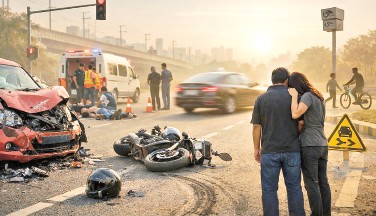
Roads are meant to connect us, yet they often become sites of tragedy. Every year, thousands of lives are lost in traffic accidents, many of which are preventable. In India alone, road accidents claim over 150,000 lives annually, leaving families shattered and communities grieving. While governments implement stricter traffic laws, build safer roads, and run awareness campaigns, the most crucial factor in reducing these deaths remains in the hands of drivers themselves. Every motorist has a responsibility to drive slowly, stay alert, and respect traffic rules to protect not only their lives but also the lives of others.
Speeding is one of the leading causes of accidents worldwide. A vehicle traveling at high speed reduces the driver’s reaction time, making it harder to respond to sudden obstacles or changes in traffic conditions. Even a difference of 10–20 km/h can determine whether a collision occurs or a life is saved. Excessive speed not only increases the risk of accidents but also amplifies the severity of injuries when collisions happen. Studies show that a pedestrian hit at 50 km/h has a 50 percent chance of survival, while at 30 km/h, the chances rise to over 90 percent. This stark contrast highlights the life-saving importance of reducing speed.
But speeding is not the only risk. Reckless driving, drunk driving, distracted driving, and ignoring traffic signals are all behaviors that endanger lives. A single moment of distraction — checking a phone, adjusting the radio, or even glancing at the scenery — can result in accidents that no emergency response can reverse. The government has introduced penalties, fines, and campaigns to deter such behavior, but the effectiveness depends on citizens’ willingness to follow the rules. Public cooperation is essential for these policies to translate into real-life safety.
Safe driving is not just a personal responsibility; it is a social duty. Every time a driver adheres to speed limits, maintains a safe distance, and stays alert, they contribute to reducing road accidents and fatalities. Parents, teachers, and community leaders play an important role in spreading this message. Educating young drivers early about the consequences of reckless driving fosters a culture of caution and awareness, shaping the next generation of responsible motorists.
Government campaigns such as “Safe Roads, Safe Lives” and “Slow Down to Save Lives” emphasize that road safety is a shared responsibility. Traffic police enforcement, installation of speed cameras, and stricter licensing procedures are important steps, but they cannot succeed without citizens’ active participation. By respecting speed limits, wearing seat belts, and following road rules, drivers help authorities achieve the larger goal of safer roads for everyone.
Urbanization and the rapid increase in vehicles have made India’s roads busier than ever. Pedestrians, cyclists, motorcyclists, and cars now share limited space, making careful driving essential. Reducing speed is not a limitation but a choice that increases reaction time, allows drivers to anticipate hazards, and minimizes the impact of collisions. For professional drivers and transport companies, slower driving also means fewer accidents, reduced maintenance costs, and safer journeys for employees and passengers.
The human and economic costs of road accidents are enormous. Beyond the immediate loss of life, accidents impose a heavy burden on healthcare systems, emergency services, and families. Victims may face permanent disabilities, lost income, and lifelong trauma. By choosing to drive safely, citizens actively reduce these societal costs and support government efforts to build safer, more efficient transport systems.Technology and infrastructure improvements can assist, but they cannot replace responsible driving. Seat belts, airbags, crash barriers, and advanced braking systems are important, yet they are only effective if drivers act prudently. Government programs that improve road design, provide better signage, and enforce traffic laws create the framework for safety — but the final decision rests with each driver.
In the end, safe driving is a simple yet powerful way to save lives. It is a civic duty that protects families, communities, and the broader society. Every vehicle on the road presents a shared responsibility: to act with caution, patience, and respect. By slowing down, avoiding distractions, and following rules, drivers directly contribute to reducing road accidents and supporting government efforts to create safer roads for all.
The choice is clear. Driving responsibly is not just about avoiding fines or accidents; it is about valuing human life. By making conscious decisions behind the wheel, citizens become partners in the nation’s pursuit of safer roads. A few seconds of caution, a modest reduction in speed, or a moment of attention can mean the difference between life and death. In this partnership between drivers and government, every mindful choice matters — and every life saved is a victory.