


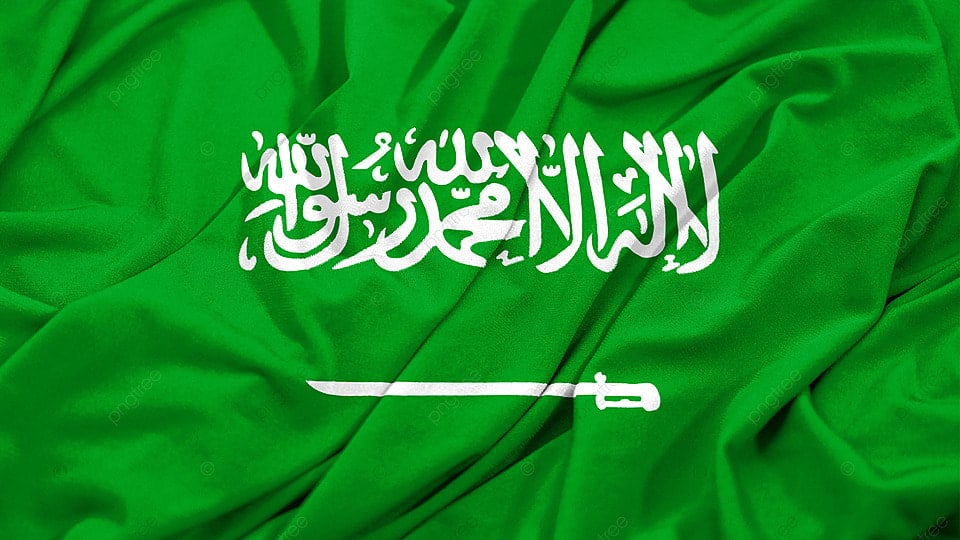
On November 2, 1964, Saudi Arabia witnessed a blood less coup that ended the reign of King Saud bin Abdulaziz Al Saud, marking a decisive shift in the kingdom’s modern political history. The transition, while devoid of violence, reshaped the country’s leadership structure and set the stage for a new era of reform under King Faisal bin Abdulaziz. King Saud had ascended the throne in 1953 after the death of his father, King Abdulaziz, the founder of modern Saudi Arabia.
However, his rule was soon plagued by mounting financial troubles and growing dissatisfaction within the royal family. His extravagant lifestyle, unchecked spending, and mismanagement of state finances created deep economic strain, pushing the oil-rich kingdom toward rising debt. The situation worsened as influential members of the royal family began q u e s t i o n i n g S a u d ’s leadership. His halfbrother, Crown Prince Faisal, emerged as a capable and pragmatic alternative. Faisal had already assumed several key government functions, including control of foreign policy and internal administration, as the king’s capacity to govern weakened.
By the early 1960s, Faisal’s influence had grown significantly, and he was widely seen as the de facto leader of the state. The political standoff between Saud and Faisal escalated into a broader power struggle that involved senior princes, religious scholars, and the armed forces. Saudi Arabia’s powerful ulema, or council of religious leaders, played a crucial role in resolving the crisis. With growing consensus that Saud’s leadership had become untenable, the ulema issued a formal decree endorsing his removal from the throne. On November 2, 1964, King Saud formally abdicated in favour of Crown Prince Faisal. The transfer of power was executed smoothly, symbolising a carefully m a n a g e d i n t e r n a l transition rather than a military takeover. Faisal’s rise to power marked the beginning of a new phase in Saudi governance.
King Faisal initiated a series of political, social, and economic reforms aimed at modernising the kingdom while preserving its religious f o u n d a t i o n s . H e streamlined government operations, restructured the administration, and introduced new systems of education that incorporated both religious and modern curricula. His leadership also transformed Saudi Arabia’s foreign policy, establishing the nation as a central player in the Arab and Islamic world. Faisal was instrumental in strengthening the country’s position within the Organization of the Petroleum Exporting Countries (OPEC) and used oil diplomacy to influence global affairs. While Faisal’s reign m o d e r n i s e d S a u d i Arabia’s institutions, he maintained a careful balance between progress and tradition. His policies laid the foundation for the kingdom’s longterm development and established the royal family’s enduring political stability. The same date also holds significance for a completely different r e a s o n i n g l o b a l technological history.
On November 2, 1936, the British Broadcasting C o r p o rat i o n ( B B C ) launched the world’s first regular highdefinition television service. Broadcasting from Alexandra Palace in London, this event marked the birth of modern television and set a benchmark for future broadcasting technology. At the time, the term “high-definition” had a very different meaning from today’s standards. It referred to transmissions with at least 240 lines of resolution, a remarkable improvement over earlier experimental broadcasts that were often blurred and inconsistent. The BBC began its service using two competing systems: John Logie Baird’s 240- line mechanical system and the Marconi-EMI 405- line electronic system. The two systems were tested on alternate weeks to determine which produced better image quality.
By early 1937, the BBC settled on the 405- line Marconi-EMI system, which offered clearer and more stable images. This decision established the 405-line format as the new global benchmark for television broadcasting and laid the groundwork for the rapid expansion of the medium. The first official broadcast took place at 3 p.m. on November 2, 1936. Postmaster General Major GC Tryon delivered the inaugural address, followed by a live variety performance. Singer Adele Dixon performed “Television Comes to London,” marking the start of a new cultural era. The programming included a mix of news, plays, and entertainment a c t s d e s i g n e d t o demonstrate the potential of the new technology. At the time, television ownership was extremely rare.
Only around 400 households in the London area possessed sets capable of receiving the BBC’s high-definition broadcasts. Nonetheless, the launch captured worldwide attention and inspired broadcasters and engineers to explore the possibilities of television as a mass communication tool. The BBC’s pioneering t e l e v i s i o n s e r v i c e continued until 1939, when it was suspended at the outbreak of World War II. The decision was made to prevent the television signal from being used as a navigational aid by enemy aircraft. The service resumed in 1946 after the war, ushering in a period of rapid growth that saw television become an integral part of postwar British life.
Beyond these milestones, November 2 has also witnessed several other notable events in history. In 1889, North Dakota and South Dakota were admitted to the United States as the 39th and 40th states, respectively, expanding the American union. Sixty years later, in 1949, the Netherlands and the Republic of Indonesia signed the H a g u e A g r e e m e n t , marking a critical step toward Indonesia’s full independence after years of colonial rule. Another major event took place on this day in 2000, when the first resident crew arrived at the International Space Station (ISS).
This moment marked the beginning of continuous human habitation in space, as astronauts from around the world began living and working aboard the ISS, conducting e x p e r i m e n t s a n d advancing international cooperation in space exploration. F r o m p o l i t i c a l t r a n s f o r m a t i o n s a n d t e c h n o l o g i c a l b r e a k t h r o u g h s t o milestones in space and diplomacy, November 2 stands out as a day that has repeatedly shaped the course of modern history. Whether through a peaceful royal transition in Saudi Arabia, the dawn of global television broadcasting, or humanity’s enduring presence beyond Earth, this date continues to reflect the diverse and interconnected progress of human civilisation.