


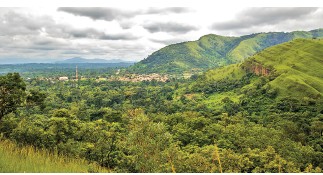
A new study has found that African forests and woody savannas, long regarded as major carbon sinks, have shifted into becoming net carbon sources. The findings mark a significant change in the continent’s ecological role and raise concerns about the future of global climate stability. The research, published in the journal Scientific Reports, is based on high resolution satellite derived biomass maps and provides the first continent wide assessment of aboveground woody biomass changes over a decade.
According to the study, Africa’s aboveground biomass steadily increased between 2007 and 2010, with gains of around 439 teragrammes per year. However, this trend reversed sharply after 2010. From 2010 to 2015, aboveground biomass declined by 132 teragrammes per year, and the loss continued at 41 teragrammes per year between 2015 and 2017. These figures show a clear transition from a carbon absorbing landscape to one releasing more carbon into the atmosphere than it captures.
Africa plays a major role in the global carbon cycle. Its ecosystems contribute roughly 20 per cent of global carbon removals through terrestrial net primary production. At the same time, the continent accounts for 40 per cent of the world’s biomass burning emissions and 20 per cent of emissions from deforestation and forest degradation. Scientists noted that carbon is removed from the atmosphere during photosynthesis, while emissions occur when forests are cleared, burned or degraded. Increasing pressure from agriculture, fuelwood collection and shifting cultivation continues to accelerate forest loss.
The study identifies tropical moist broadleaf forests as the areas most affected by the decline. The sharpest losses occurred in the Democratic Republic of Congo, Madagascar and parts of West Africa, where large scale deforestation and degradation have intensified over the last decade. The researchers estimate that the continent is losing about 106 billion kilogrammes of forest biomass annually, an amount comparable to the weight of 106 million cars.
These results align with rising forest loss rates reported by the United Nations Food and Agriculture Organization. FAO statistics show that annual harvested roundwood increased from 277 million cubic metres in 1961 to 768 million cubic metres in 2017, confirming a persistent trend of expanding resource extraction. Although some savanna regions saw biomass gains, likely due to shrub encroachment, these increases were not enough to counter large scale forest losses across the continent.
The study’s authors stressed that the shift from carbon sink to carbon source has serious implications for global climate goals. They said the findings highlight the urgent need for effective policies to halt deforestation in line with the Glasgow Leaders Declaration, which aims to close the global emissions gap. The continued decline in biomass suggests that Africa’s natural carbon absorption capacity is weakening at a time when the world is depending heavily on intact ecosystems to absorb greenhouse gases.
Heiko Balzter, senior author and director of the Institute for Environmental Futures at the University of Leicester, said the results should serve as a warning for international climate policy. He said that if Africa’s forests no longer absorb carbon, the rest of the world will have to make even deeper emissions cuts to keep global warming below the 2 degree Celsius threshold set under the Paris Agreement. Balzter added that climate finance must be strengthened, particularly for the Tropical Forests Forever Facility, to stop deforestation.
The researchers cautioned that the long term outcome will depend on how effectively African countries manage their forests and natural resources. Strong governance, sustainable land use practices and adequate financial support will be crucial to reversing current trends. They also warned that countries revising their Nationally Determined Contributions under the Paris Agreement will need to adopt more ambitious targets to compensate for the loss of natural carbon sinks.
Without immediate and coordinated action to curb forest loss, Africa risks losing one of its most valuable ecological assets. The study concludes that the continued decline in biomass threatens the continent’s ability to regulate climate and protect biodiversity, with far reaching consequences for the global climate system.