


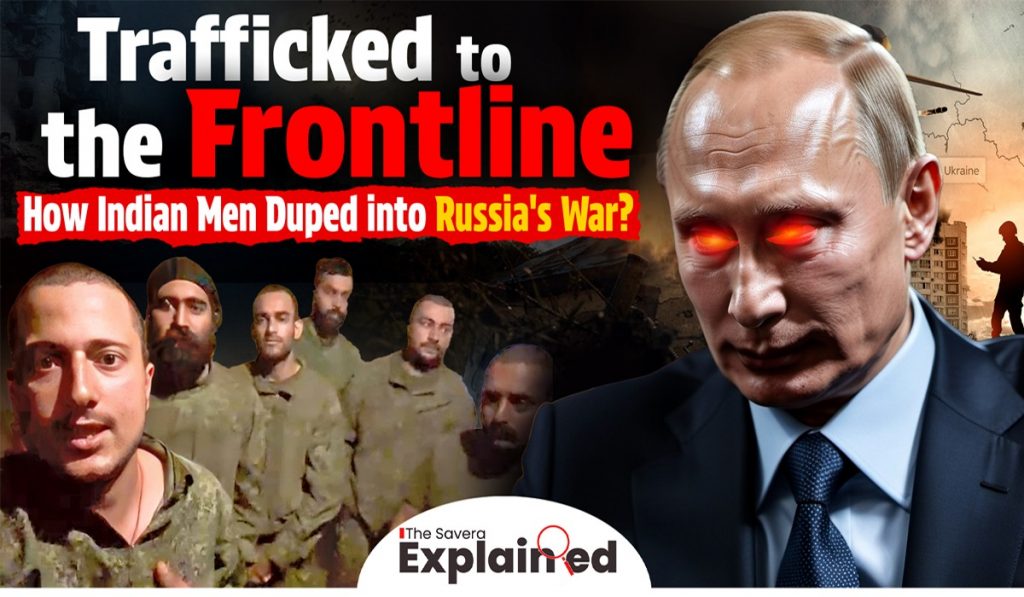
New Delhi: In September 2025, heart-wrenching videos emerged from the Russia-Ukraine war frontlines. Young Indian men, clad in Russian military fatigues, plead for rescue: “We’re forced to fight. Please save us.”
These men, primarily from Punjab, Haryana, and Jammu, aren’t soldiers by choice—they’re victims of a sinister human trafficking network.
Lured by promises of jobs or student visas, they’re now trapped in a war zone. This article uncovers how this racket operates, the human toll, and India’s response.
The Deceptive Recruitment: A Deadly Trap
Agents target vulnerable youth in rural India, exploiting high unemployment rates—20% in Punjab alone. The bait? Lucrative jobs in Moscow (e.g., security or factory work) or “easy” student visas. Victims pay ₹5-10 lakhs, only to face a grim reality in Russia:
-
Seized Documents: Passports and visas are confiscated upon arrival.
-
Forced Contracts: Men are coerced into signing Russian military contracts they can’t read, under threats of jail or deportation.
-
No Escape: They’re sent to training camps, then deployed to Ukraine’s frontlines like Donbas—without combat training.
Insight: Russia’s troop shortages since the 2022 Ukraine invasion fuel this scheme. Agents exploit desperation, sending untrained men into combat with no regard for their safety.
Voices from the Trenches: Survivor Stories
At least nine Indian men have shared desperate SOS videos, revealing the horrors they face:
-
Samarjeet Singh, 22, Ludhiana: “Nine of us are on the frontline. We’re mistreated—no food, no rest. Agents promised jobs, not war.”
-
Buta Singh: Reports deaths in his group, saying, “We fear every shell. We came for work, not this.”
-
Ankit Jangra, 23, Fatehabad, Haryana: A former KFC worker on a student visa, he says, “Russian soldiers point guns at us: ‘Kill or die—no return.’” Twelve others from his village, including Vijay Poonia, are trapped.
Families claim agents siphon off “death benefits”—up to ₹30 lakhs per casualty—leaving survivors empty-handed. Key Stats (as of September 2025):
-
126 Indian men trapped in Russia
-
15 missing, presumed dead or captured
-
At least 9 confirmed deaths since 2022
Fact: Congress MLA Pargat Singh estimates 126 trapped youth, calling it a “full-blown trafficking network.”
India’s Response: Diplomacy and Crackdowns
The Indian government has taken action:
-
MEA Advisory: On September 11, 2025, the Ministry of External Affairs warned citizens against dubious overseas offers, calling them “fraught with danger.”
-
Diplomatic Efforts: MEA spokesperson Randhir Jaiswal confirmed engagement with Russian authorities in Delhi and Moscow. PM Narendra Modi raised the issue during his 2024 Russia visit, demanding an end to forced recruitment.
-
CBI Action: The Central Bureau of Investigation arrested 19 agents by mid-2024, with four nabbed in May 2024 for luring 30+ men. Probes target the entire network, from local recruiters to Russian handlers.
Challenge: Repatriation is slow—only a few returned in 2024, often after media outcry. Families, backed by leaders like Pargat Singh, protest government “negligence.”
The Bigger Picture: A Global Crisis
This isn’t just an Indian tragedy—it’s human trafficking weaponized by war. Russia denies forced conscription, claiming “voluntary contracts,” but evidence suggests otherwise: seized documents, coerced signatures, and zero training. The war’s stalemate drives demand—Russia needs 30,000 recruits monthly, pulling in Indians alongside Nepalis and Cubans as “cannon fodder.”
For families, the cost is devastating: lost loved ones, drained savings, and betrayed trust. The rise in cases reflects Russia’s desperate manpower needs as the conflict grinds on.
How to Stay Safe
If you or someone you know is considering overseas job offers:
-
Verify Legitimacy: Check with the Ministry of External Affairs (MEA) website: mea.gov.in.
-
Report Suspicious Offers: Contact local police or the CBI helpline: 1800-103-0604.
-
Spread Awareness: Share this article to protect others from falling prey.