


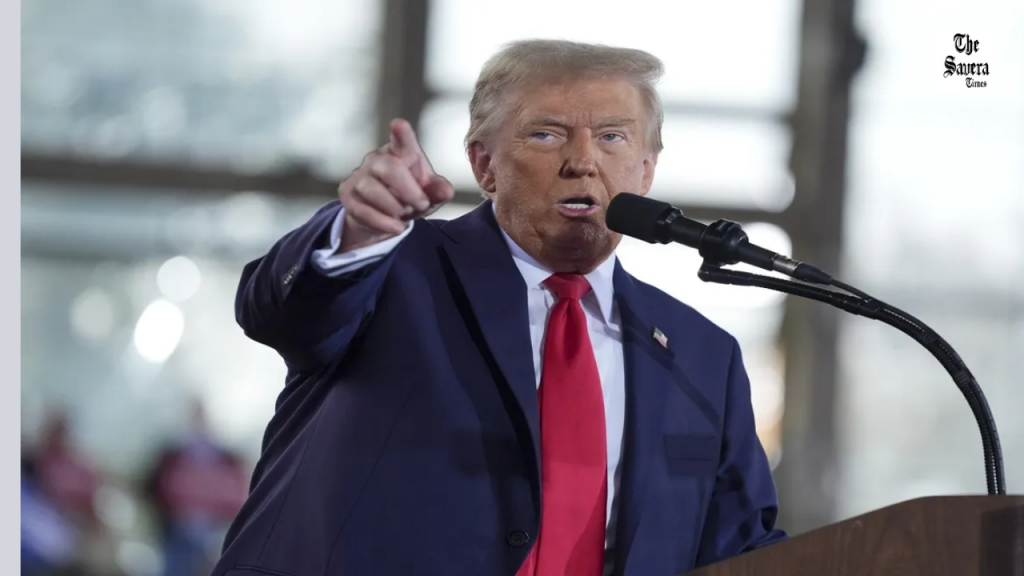
Former U.S. President Donald Trump has sharply criticized Canada for rejecting the United States proposed “Golden Dome” missile defense system over Greenland — warning Ottawa that siding with China could have serious consequences. Trump accused Canada of undermining North American security by opposing the Arctic defense initiative, even though he said the system would also protect Canada.
In a post on his social media platform Truth Social, Trump wrote that Canada had voted “in favor of doing business with China, who will ‘eat them up’ within the first year!” — a remark that quickly drew attention amid escalating diplomatic tension between the long‑time allies.
What Is the ‘Golden Dome’ Missile Defense System?
The so‑called Golden Dome refers to a proposed high‑tech missile defense shield designed to cover North America from advanced missile threats, with Greenland playing a strategic role due to its northern location. Trump has repeatedly emphasized the importance of deploying such a system to bolster continental defense and intercept potential airborne threats at early stages.
While Trump argues the Golden Dome would enhance collective security, the project has been costly and controversial, with critics pointing to massive potential expenses and feasibility challenges. Opponents in Canada and elsewhere have also raised concerns about militarizing the Arctic region and the geopolitical implications of such an expansive defense initiative.
Diplomatic Tensions Escalate After Davos Remarks
Trump’s criticism followed comments by Canadian Prime Minister Mark Carney at the World Economic Forum in Davos, where Carney spoke about the changing global order and warned against coercive tactics by larger powers. Trump took direct aim at Carney, saying Canada has benefited from U.S. security and economic backing and should be grateful for American protection — statements that have added strain to U.S.–Canada relations.
On social media, Trump insisted that the Golden Dome would “protect Canada” and suggested Ottawa was misguided to priorities trade deals with China instead of strategic defense cooperation with the United States.
Canada’s Response and Trade Ties with China
Canada has been seeking to diversify its economic partnerships, strengthening trade ties with China. Recent agreements between Ottawa and Beijing have seen tariff reductions on Chinese electric vehicles and relaxed duties on Canadian agricultural exports — moves that Trump has criticized as undermining Ottawa’s relationship with Washington.
In response, Canadian officials have pushed back against Trump’s characterization. Prime Minister Carney and other leaders have emphasized Canada’s sovereignty and independent foreign policy, asserting that the country does not “live because of the United States,” but thrives as a sovereign nation with its own strategic interests.
Broader Implications for U.S.–Canada Relations
The dispute highlights broader tensions between the United States and Canada over defense, trade, and geopolitical alignment in an era of intensifying rivalry with China. Analysts say the rift underscores changing global dynamics and the challenges middle powers like Canada face in balancing strategic alliances with economic opportunities.
As the debate around the Golden Dome continues and both sides trade sharp rhetoric, diplomats will be watching to see how this dispute influences broader cooperation between the two neighboring countries