


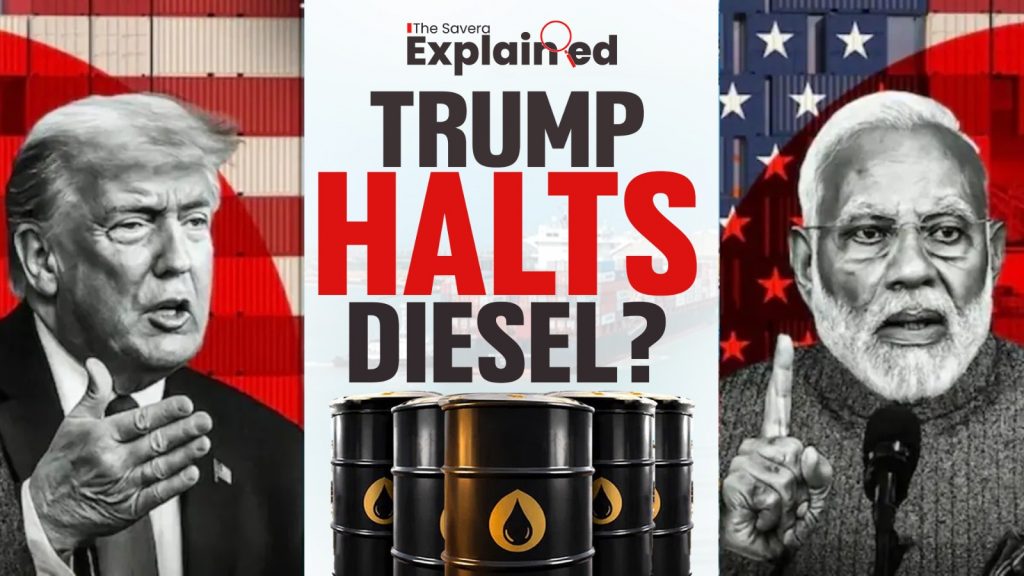
Imagine the world’s biggest diesel exporter turning off its export taps. That is the concern after US President Donald Trump said he is “very seriously” considering a ban on American diesel exports. But this is still a proposal, not an enacted ban.
Why is Trump considering it?
The immediate reason is rising US fuel prices ahead of the November midterm elections. The US exports around 1.3 million barrels of diesel and other distillates a day, much of it from Gulf Coast refineries. Trump’s argument is simple: keep more fuel at home, increase domestic supply and reduce prices.
However, Energy Secretary Chris Wright has warned that an outright ban could backfire. US refineries produce diesel and gasoline together. If refiners cannot sell surplus diesel abroad and storage fills up, they may have to cut overall refining. That could reduce gasoline and jet-fuel supplies too. The White House is also considering voluntary limits and red-dyed diesel.
Europe and Latin America: The immediate shock
The biggest impact would be outside the US. Europe is already facing a tight fuel market. Britain relied on the US for about 31 per cent of its diesel imports in 2025. The EU has urged Washington to maintain diesel flows.
Latin America is also exposed. Mexico, Brazil and Chile are among major buyers of US diesel. Mexico depends heavily on Gulf Coast refined products. If American cargoes disappear, buyers would compete for supplies from India, the Middle East, Asia and other exporters. That could push up diesel prices, freight costs and inflation.
What does it mean for India?
India is both a major crude importer and refined-fuel exporter. Indian refineries can send more diesel to markets facing shortages. A ban could improve Indian export demand and refining margins.
But there is another side. India imports roughly 85 per cent of its crude oil needs. If a global diesel shortage pushes crude and fuel prices higher, India’s import bill rises. That can put pressure on the rupee, the current account and domestic inflation. On September 29, Brent crude was around $107 a barrel and the rupee had fallen past 96 to the dollar.
The Russia factor — and India-US ties
This is where the issue becomes especially sensitive for India-US relations. Indian refiners have relied heavily on discounted Russian crude since 2022. Reuters reported that Russian crude supplies to India are already tightening, with Chinese buyers competing for cargoes.
At the same time, Washington has moved toward tougher measures against countries buying Russian energy. India has warned that such measures could affect bilateral ties, while New Delhi stresses energy security.
A US diesel ban could create an unusual contradiction. Europe, which wants to reduce dependence on Russia, may need more diesel from Indian refineries processing Russian crude. That could increase pressure on Washington and New Delhi over energy trade.
What happens next?
The key question is whether Washington chooses a ban, restrictions, voluntary measures or tax relief. Analysts warn that a blanket ban could initially push more diesel into the US market, but later force refiners to cut output and raise other fuel prices. For India, the result could be mixed: more opportunities to export diesel, but also higher crude costs and greater diplomatic pressure over Russian oil.
The consequences would depend on duration and how quickly other refiners replace the missing American cargoes.
In short, a US diesel export ban would not remain a domestic US policy. It could reshape fuel flows to Europe and Latin America, create opportunities for Indian refiners, raise India’s energy costs, and add another difficult issue to an already complicated India-US economic relationship.