


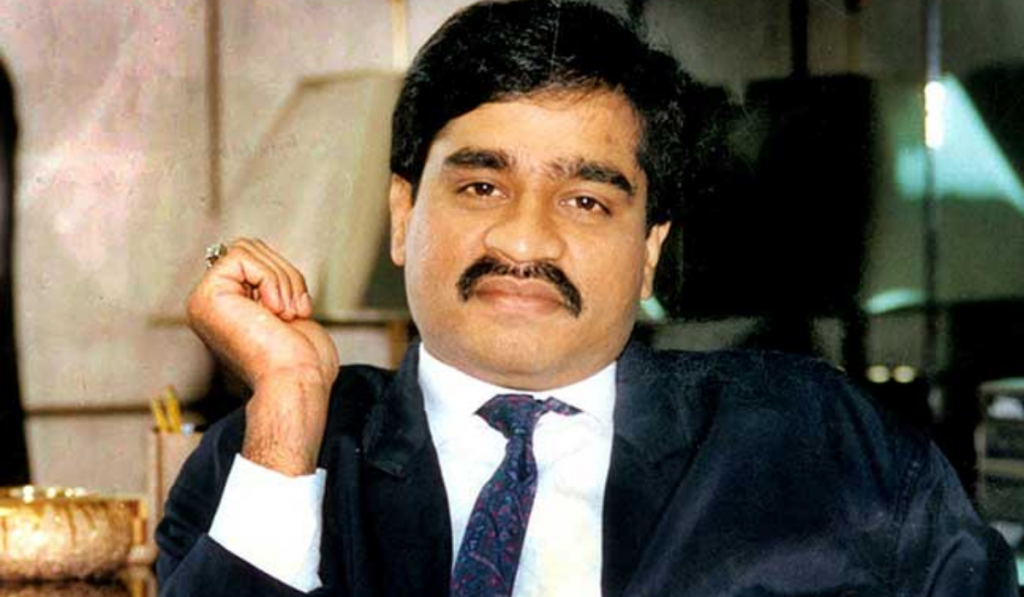
New Delhi: India has objected to serious factual errors in the report of a United Nations (UN) Special Rapporteur on terrorism and human rights. India stated that such inaccurate information could damage the credibility of the global body and that accountability must be fixed.
Special Rapporteur Ben Saul, in his report released in July, stated that Dawood Ibrahim, one of India’s most wanted terrorists, lives in India. India dismissed this claim as false, stating that Dawood had left India long ago and is still a wanted criminal under Indian law.
India points out serious errors in the report
Raghu Puri, First Secretary of India’s Permanent Mission to the United Nations, reacting to the matter, said, “I would like to correct this fact for the record.”
He said that Dawood Ibrahim fled India long before he was included on the UN list in 2003. According to Puri, he was listed while living in another country at the time due to his links to al-Qaeda and Osama bin Laden.
He stated that Dawood remains a wanted criminal in India. Citing information on the UN list, Puri stated that he resides in the same country where Osama bin Laden was tracked down and killed. He was referring to the Pakistani city of Abbottabad, where Osama bin Laden was killed in a US operation.
Questions raised over the omission of the 1993 terrorist attacks
Puri stated that the report mentions that the UN Security Council listed the D-Company chief in 2003 for his links to al-Qaeda.
He stated, “If this is read in isolation, it presents a completely different picture of the actual situation.”
According to Puri, D-Company and its chief, Dawood Ibrahim, have been wanted in India since 1993 in connection with terrorist attacks. He stated that this fact is clearly documented in the official statement of reasons for listing Dawood under the UN’s 1267 sanctions regime.
India expressed displeasure over the report’s omission of this crucial fact. Puri stated that such negligence by special mandate holders seriously damages the UN’s image.
He also alleged bias in various parts of the report and urged the relevant office to maintain the highest standards of impartiality and integrity.
Accusing Pakistan of promoting terrorism
Puri stated that countries supporting terrorism are using human rights and the counter-terrorism regime to justify their misdeeds.
India has long raised with the international community that the al-Qaeda leaders who planned and directed the September 11, 2001, attacks in the United States met not in a remote border area, but in a secure compound located in a populated and well-guarded area of Pakistan.
India alleges that many terrorists wanted by India, including those involved in the 26/11 Mumbai terror attacks, have been living in Pakistan for decades. According to India, Pakistani authorities have often taken only symbolic action, especially when the international community pressured them to stop financial aid to Pakistan.
India reiterates its stance on Jammu and Kashmir and Ladakh
Reacting to the statement made by Pakistan’s representative at the United Nations against India, Puri described it as “mere propaganda” aimed at achieving limited political gains.
He said, “Jammu and Kashmir and Ladakh are integral parts of India and have always been and will remain so. I would not like to add any further importance to the statement made by the Pakistani representative.”
India once again clarified that terrorism cannot be justified under any circumstances and expected international organizations to prioritize facts, objectivity, and accountability when preparing reports.