


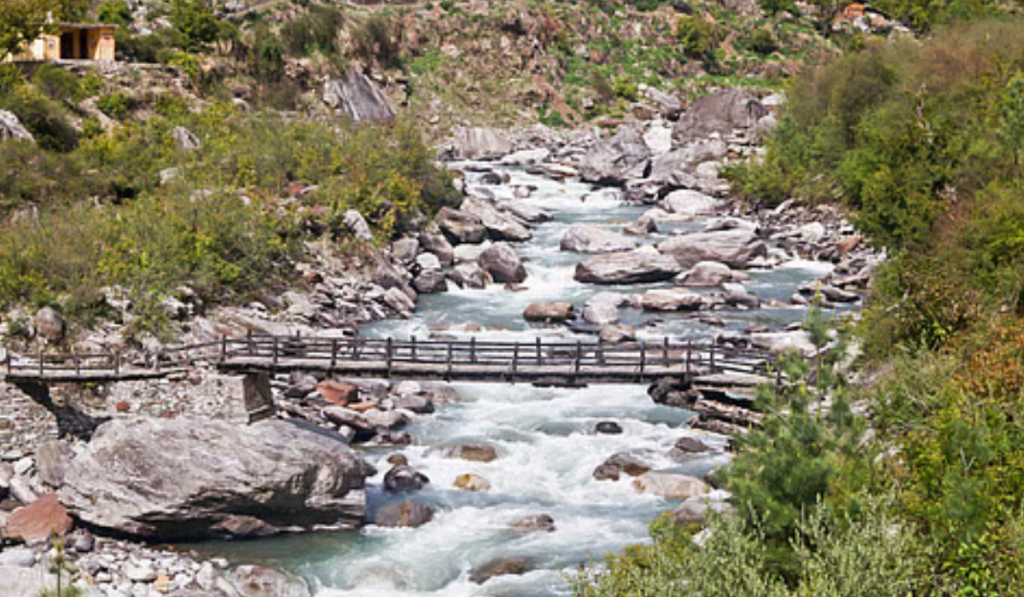
The chief ministers of Uttar Pradesh, Uttarakhand, Himachal Pradesh, Rajasthan, Delhi and Haryana signed an agreement on September 15, 2026 on the long-pending Kishau Multipurpose Project in the Yamuna basin. The agreement was signed in the presence of Union Home Minister Amit Shah and Union Jal Shakti Minister C R Patil. According to the Union Home Ministry, this is the tenth water dispute taken up for resolution during the Narendra Modi government’s tenure. But environmentalists and grassroots activists say the project poses serious risks and needs closer scrutiny. Experts have raised concerns over seismic vulnerability, outdated displacement data and the absence of publicly available environmental and physical impact studies. According to the Home Ministry, the project is based on a May 12, 1994 agreement, which said separate agreements would be signed for each storage project in the Yamuna basin. Under this framework, an in-principle agreement was reached between the six states on June 16, 2026, and has now been formally signed. The Kishau project has been declared a national project. About 90 per cent of its financial burden will be borne by the central government, while the remaining 10 per cent will be shared among the participating states in line with the 1994 agreement. A key arrangement has also been reached under which Himachal Pradesh’s share of water will be allocated to Delhi and Rajasthan. In return, the two states will share the cost of Himachal Pradesh’s share of the electricity component. Media reports have put the estimated cost of the project at between Rs 15,000 crore and Rs 15,624 crore, though the Home Ministry’s statement on the agreement did not directly mention the cost. Dam on Tons River The project involves construction of a 232.6 metre-high concrete gravity dam on the Tons River, which flows along the border of Uttarakhand and Himachal Pradesh. According to the government, the project will have a water storage capacity of 1,562 million cubic metres, irrigate 97,000 hectares of land and generate 1,476 million units of hydropower. It has also said Delhi will be the biggest beneficiary. The government has claimed that 25 per cent of the Yamuna’s water will become available as environmental flow through the project, helping the river and contributing to Yamuna cleaning efforts. Himanshu Thakkar, a water expert with the South Asia Network on Dams, Rivers and People, objected to the project and said the Himalayan region was unstable and highly seismic. “This multipurpose project is actually dangerous because the entire Himalayan region falls in an unstable and highly seismic zone. If a dam of this height is built there, even a small earthquake could cause significant damage in the future,” he said. He said the project could increase risks already emerging from climate change. Thakkar also called the government’s claims on Yamuna cleaning and water supply misleading. “The claim that this dam will clean the Yamuna River is misleading. A separate, dedicated programme is needed for cleaning and rejuvenating the Yamuna, not simply trying to dilute the pollution by blocking the river’s water,” he said. He argued that the concerned states should focus more on rainwater harvesting to meet their water needs. Displacement concerns Mansi Ashar, a researcher with Himdhara Environmental Research and Action Collective, said a 2014 field study indicated that the impact of the Kishau dam would not be limited to the submergence area. She said the project would affect agriculture, animal husbandry, forests, fisheries and local livelihoods in the Tons River valley. Ginger and tomato cultivation, in particular, would be badly affected, she said. According to Ashar, the proposed submergence area is about 2,950 hectares, including 512 hectares of agricultural land and 2,438 hectares of forest. Estimates at the time suggested about 5,498 people from 701 families would be affected. She said the irrigated and fertile land in the area supports three to four crops a year, while forests and the river are vital to the local economy. Ashar said the available data on displacement and affected families was old and had not been fully verified at the field level. The actual impact, she said, could therefore be higher. Experts said the project’s Environmental Impact Assessment, feasibility report and physical impact assessment reports should be properly conducted and released publicly. They said that while the agreement had been signed, these studies should be made public before the project takes shape, so that the true scale of its impacts can be assessed. According to a ministerial statement dated June 16, 2026, after consensus was reached among states, the project was to be placed before the Union Cabinet for approval. The September 15 statement on the formal signing of the agreement did not say whether Cabinet approval had been received. This means the consent of the six states and the agreement mark a political and financial milestone. But Cabinet approval, forest land transfer, environmental clearance and a detailed rehabilitation plan remain critical steps. No public timeline has been given for these processes.
Unanswered Questions Over Kishau Water Agreement
Unanswered Questions Over Kishau Water Agreement