


DOES THE DIVINE PROTECT THERIGHTEOUS
Parneet Sachdev
Chairman of Real Estate Regulatory Authority and a leading author
A young parent lies awake wondering how to protect a child from a world that feels increasingly unpredictable. A middle-aged man worries about keeping his job in an economy where companies can disappear overnight. A student fears disappointing parents or failing an exam that seems to decide an entire future. A widow fears the silence of an empty home. Even the seemingly confident—professionals, leaders, public figures—quietly fear being replaced, being forgotten. And because society is built of these millions of personal tremors, there is a deep longing to be free from worry, free from the weight of imagined futures.
Caught within the prison of this insecurity, many resort to immorality and crime to somehow preserve their existing lives, unaware that they have within themselves a simple method to invoke protection.
THE POWER OF RIGHTEOUSNESS
In the Zafarnāma, Guru Gobind Singh employs a metaphor that threads through Persian, Sikh and Sufi imagination:
“Huma rakasesayahayadbazer.
Baro dastdaradnazaghe daler”
-Verse 16
(“He who shelters beneath the shadow of the Huma cannot be harmed by the scheming crow”)
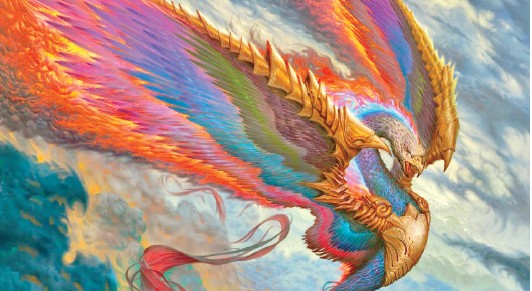
The Huma—sometimes called the Humā or Homā—is a mythical Persian bird celebrated in classical works such as Firdausi’s Shahnameh (c. 10th century). In Persian lore, the Huma never descends to earth; its shadow falling upon a person is said to confer kingship and divine favour (Avery, Classical Persian Mythology, 2007). The crow, by contrast, is a long-standing metaphor in Persian poetics for deceit and small-minded scheming. Guru Gobind Singh’s choice of imagery therefore communicates a principle central to his Divine thought:
Righteousness is not merely a moral stance but an existential protection.
This theme finds deep echoes in the Bhagavad Gita. When Arjuna falters on the battlefield, Krishna reminds him that dharma protects those who protect dharma.
“For those who are ever devoted to Me and worship Me with love, I provide what they lack and preserve what they have”
(Bhagavad Gita 9:22, trans. Sargeant, 2009).
The Gita’s central metaphysicsthat alignment with righteousness creates its own field of protectionmirrors the Huma’s shadow. It does not promise the absence of suffering; rather, it promises the triumph of inner resilience over outer turbulence. It also promises the unequivocal protection of the Divine to the soul of the pure.
KRISHNA BUDDHA AND JESUS
An oft-cited example occurs in the story of Krishna subduing the serpent Kaliya in the Bhagavata Purana (Book 10.16–10.17). While the community fears catastrophic harm, the young Krishna climbs onto Kaliya’s hoods, dancing with calm self-assurance. The text notes that “not a hair on Him was disturbed” (Bhagavata Purana 10.16.30, trans. Prabhupada, 1970). The danger remains real; yet dharma transforms it. Here again, the crow’s malice fails before the one touched by the Huma.
The Buddha’s awakening offers a striking parallel. During the assault of Māra under the Bodhi tree, described in the Padhāna Sutta (Sn 3.2) and later elaborated in the Lalitavistara Sutra, the Buddha sits unmoved as storms and illusions swirl around him. When Māra demands to know who bears witness to his right to enlightenment, the Buddha touches the earth in the bhūmisparśamudrā, invoking it as his witness. The SaṁyuttaNikāya recounts that Māra’s armies “vanished like dust blown by the wind” (SN 4.25, trans. Bhikkhu Bodhi, 2000). It is the perfect expression of divine protection arising not from external intervention but from inner purity. The Buddha does not resist; he remains aligned. And alignment, as Guru Gobind Singh would later write, makes one untouchable to the crow.
The Gospel narrative offers its own testimony. In the episode at Nazareth, when an enraged crowd attempts to throw Jesus off a cliff, the Gospel of Luke records a single arresting line:
“But he passed through the midst of them and went away”
(Luke 4:30, NRSV).
The implication is subtler: righteousness and surrender to divine mission shield him in a manner beyond human explanation. Similarly, during the storm on the Sea of Galilee, Jesus rebukes the winds and the waves, and “there was a great calm” (Mark 4:39, NRSV).
These stories illustrate that divine protection is not triumph over natural law, but the revelation of a deeper law.These episodes echo the logic at the heart of the Zafarnāma. Protection is not bestowed upon the righteous as compensation, it is inherent in their alignment with truth. Sikh theology describes this as living in accordance with hukam, the cosmic order, the inherent Divine power inside each one of us. Guru Gobind Singh himself embodied this principle. When he writes in the Zafarnāma, “When all peaceful means have failed, it is righteous to draw the sword” (Zafarnāma, verse 22, trans. Trilochan Singh, 1967), he is not glorifying violence but asserting that moral courage draws its power not from kings or armies but from fidelity to divine order. The Huma’s shadow symbolises spiritual protection for the moral.
The contrast with the crow remains instructive. The crow symbolises envy, manipulation and the smallness of mind that plots in shadows. Yet in every tradition, such forces fail to strike the one who stands in the radiance of the divine. The Upanishads articulate this with crystalline precision: “Weapons cannot cut the Self, fire cannot burn it, water cannot wet it, wind cannot dry it” (Bhagavad Gita 2:23—a verse lifted directly from earlier Upanishadic thought; see Katha Upanishad 2.18). These are metaphors for the indestructibility of the awakened inner self.
WHAT DOES SCIENCE SAY ABOUT THIS POWER
Modern research, too, has begun to map this phenomenon in empirical terms. Studies at the University of Pennsylvania’s Positive Psychology Center demonstrate that
“individuals with a strong sense of purpose and moral clarity show significantly higher “stress-buffering effects,” with reduced cortisol reactivity under threat“
(Seligman et al., Journal of Positive Psychology, 2013).
Neuroscience does not describe this as divine protection, yet the parallel is unmistakable:
alignment with one’s highest values creates a protective architecture around the mind.
At the level of gene expression, the story becomes even more intriguing. A 2013 study in the Proceedings of the National Academy of Sciences examined how different kinds of well-being influence immune-related genes in white blood cells. The authors distinguished between hedonic happiness (pleasure, comfort, consumption) and eudaimonic well-being (meaning, purpose, altruistic engagement). Both felt subjectively “good” to participants, but their biological signatures diverged sharply: hedonic well-being was associated with a profile biased toward inflammation and reduced antiviral responses, while eudaimonic well-being showed the opposite pattern—lower expression of pro-inflammatory genes and higher expression of genes involved in antiviral defence (Europe PMC).
More recent work, including a 2023 systematic review of spirituality, religiosity and immune parameters, concludes that spiritual engagement can be associated with beneficial modulation of immune and epigenetic processes(ResearchGate).The conclusion is unmistakable
The body appears to reward lives oriented to meaning, contribution and moral righteousness.
The Huma, then, is not merely a creature of Persian imagination. To say that “the divine within protects the righteous” is, from this perspective, to say that conscience, compassion and morality are not abstractions floating above biology; they are ways of being that reach down into the immune system.
To live under the Huma’s shadow is to live from the divinity within: to let righteousness be the defining principle of one’s life. The scriptures tell us this brings a mysterious protection. The science of our time has begun to agree.
(Views expressed are the author’s own).