


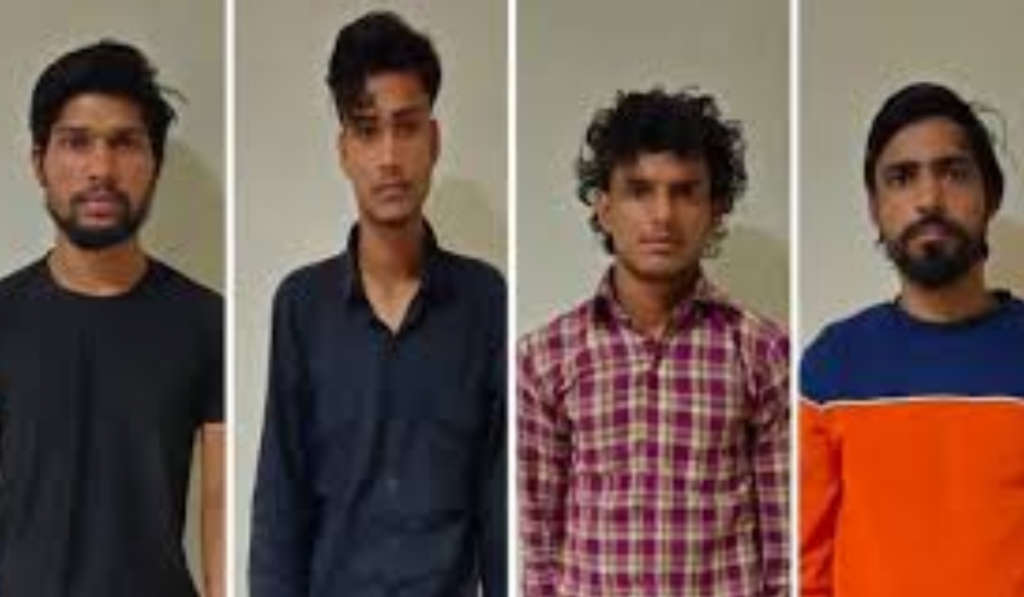
The Uttar Pradesh Anti-Terrorism Squad (ATS) arrested four suspected terrorists from Lucknow on Thursday, officials disclosed on Friday. According to the ATS, the group was planning arson attacks and aiming to spread terror in India under instructions from handlers based in Pakistan.
The accused were reportedly in contact with foreign numbers through social media platforms and were plotting bomb attacks at key locations, including railway stations, trains, and prominent institutions across the country.
Accused Identified, Materials Seized
The arrested individuals have been identified as Saqib alias Devil, Vikas Gehlawat alias Raunak, Lokesh alias Babu alias Papla Pandit, and Arbaab. Saqib is believed to be the mastermind of the group.
During the operation, officials recovered a chemical-filled container, seven mobile phones, 24 pamphlets, and Aadhaar cards. The seized mobile devices have provided crucial digital evidence, which is currently under investigation.
Foiled Plot to Target Railway Infrastructure
According to investigators, the group planned to damage railway signal systems and other infrastructure near the Lucknow railway station. Their alleged aim was to trigger a major explosion on April 2 and cause large-scale casualties.
However, acting on intelligence inputs, the ATS intervened in time and arrested the suspects before the plan could be executed.
Links to Foreign Networks and Radical Groups
The investigation revealed that Saqib, a resident of Agwanpur village in Meerut, worked as a barber and came into contact with handlers through social media. Platforms such as Telegram, Instagram, and Signal were allegedly used for secure communication with networks in Pakistan and suspicious contacts in Afghanistan.
Through these channels, the accused were exposed to radical content and recruited into anti-national activities.
Network Expansion and Recce Operations
Saqib reportedly expanded the network by involving Arbaab from his village and later recruiting Vikas Gehlawat and Lokesh from Gautam Buddha Nagar via social media.
The group conducted reconnaissance (recce) at multiple locations, including crowded areas and important institutions in cities like Ghaziabad, Aligarh, and Lucknow. Pakistani handlers allegedly shared Google locations, which the accused used to survey targets and send back video reports.
Arson Videos and Financial Links Exposed
During interrogation, officials found that the group carried out minor arson incidents, recorded videos as proof, and shared them with handlers abroad. In return, they received payments through QR codes.
Investigators also discovered that the handlers used names and affiliations linked to extremist ideologies to provoke the accused. They were part of online groups where violence and arson were encouraged.
Authorities stated that the group’s primary objective was to create fear, communal tension, and instability in society, thereby threatening the country’s internal security.