


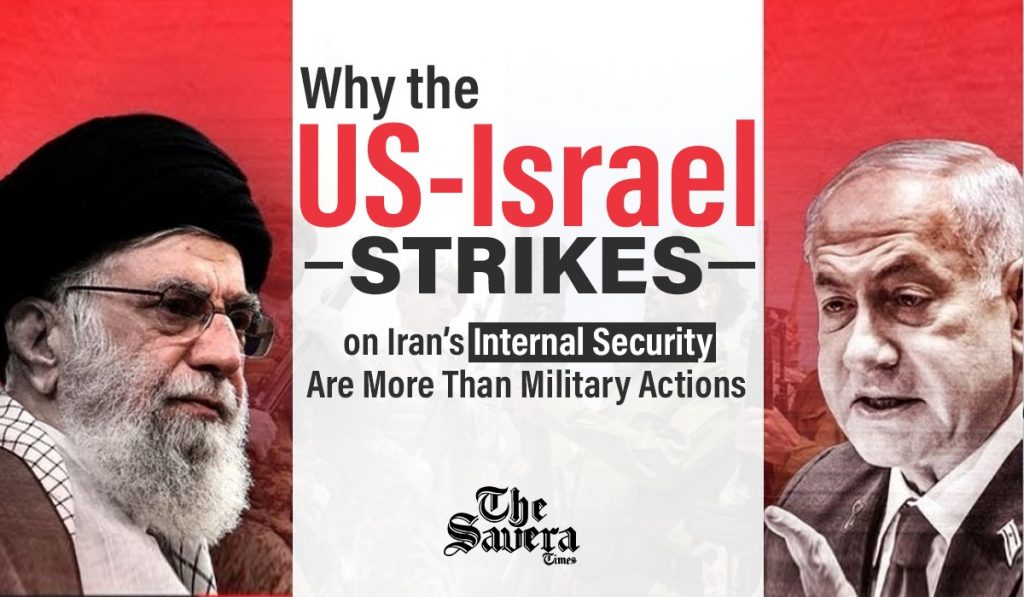
In late February and early March 2026, a dramatic escalation of military action unfolded as the United States and Israel launched coordinated airstrikes deep inside the Islamic Republic of Iran a major development in Middle Eastern geopolitics. These strikes have targeted not just conventional military assets or nuclear infrastructure, but also elements of Iran’s internal security apparatus police forces, intelligence units, and counter-dissent institutions that have historically suppressed public protest.
While the official rationale from Washington and Jerusalem initially focused on thwarting Iran’s nuclear and missile capabilities and eliminating imminent threats, a deeper strategic motivation appears to be at play: weakening the Iranian state’s internal repressive mechanisms to create space for domestic dissent and possibly fuel a popular uprising against the ruling clerical regime.
What Has Been Targeted and Why It Matters

The recent strikes have included:
-
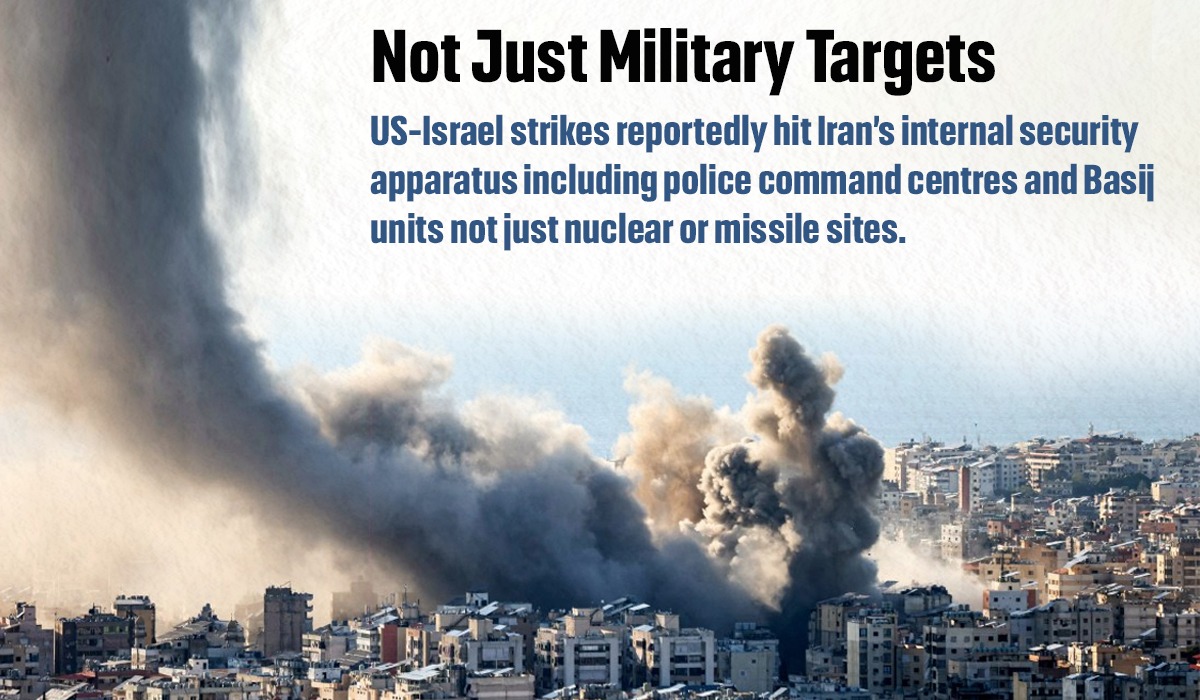
Attacks on internal security wings such as the Basij paramilitary and police command centers institutions widely perceived within Iran as tools of political repression and control.
-
Bombardment of police headquarters, internal intelligence coordination centers and command posts historically used to suppress protests.
-
Strikes on Interior Ministry facilities and key security infrastructure that once played roles in cracking down on nationwide protests in January 2026.
These targets aren’t just militarily relevant they’re politically symbolic and operationally crucial in maintaining the Iranian regime’s grip on domestic order. By degrading these units, the strikes aim to erode the regime’s ability to monitor, suppress, and control public dissent. That, in theory, could embolden opposition forces and reduce the state’s capacity to quell mass protests.
Israeli officials have openly framed parts of the military campaign as an attempt to “empower the Iranian population to overthrow the ruling ayatollah regime,” suggesting that military pressure might be a catalyst for internal revolt.
The Broader Strategic Logic — Beyond Conventional Warfare
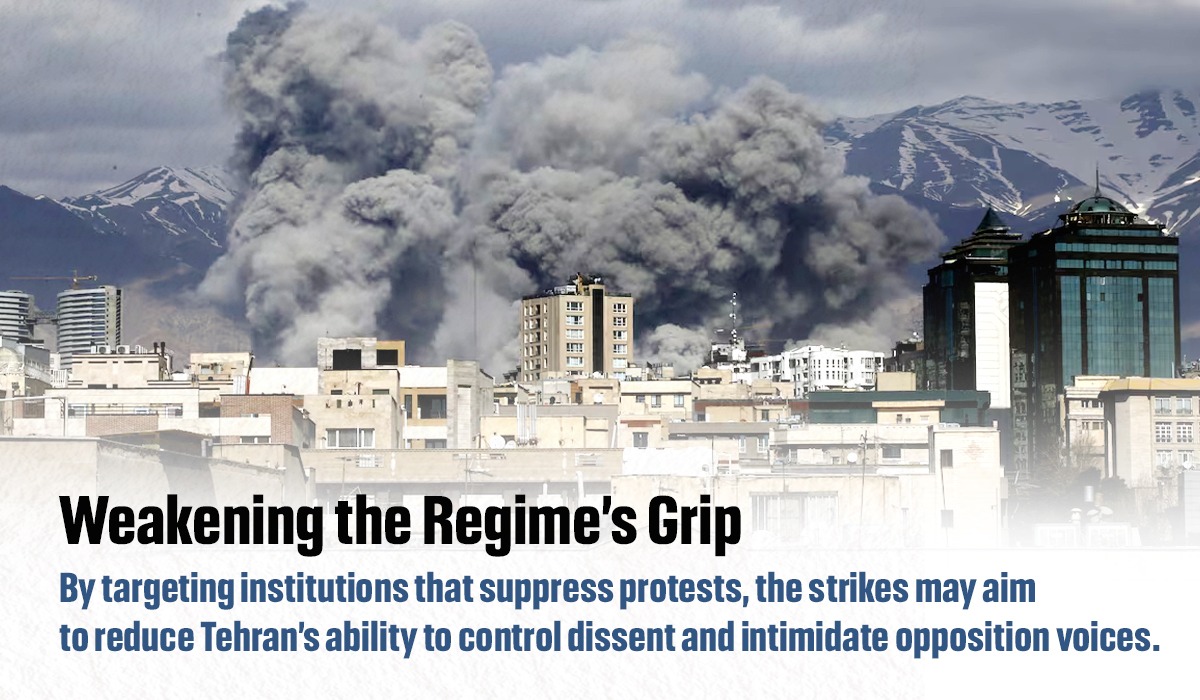
Traditionally, external military interventions focus on degrading an adversary’s battlefield capabilities or deterrent forces. But the targeting of internal security organs signals an additional and more politically complex objective: influencing internal dynamics within Iran itself.
There are several layers to this:
1. Weakening the Repressive Backbone of the Regime
Iran’s system of internal security including the Basij and IRGC-linked policing units has long been used to stifle dissent, control information flows, and intimidate opposition activists. Striking these elements undermines their operational effectiveness and sends a message that the regime’s tools of repression are not invulnerable to external force.
2. Creating Political and Psychological Space for Opposition
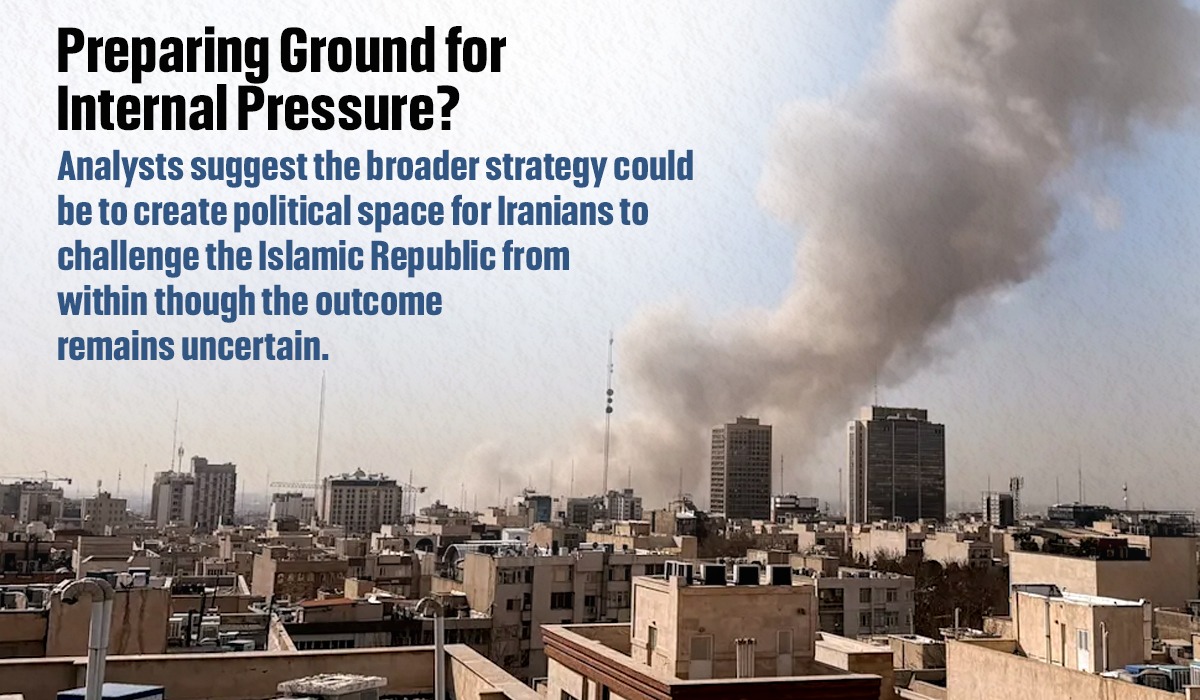
Crippling internal security serves not only a tactical military purpose, but also a psychological one. It signals to Iranians especially those who have been protesting economic hardship, social restrictions, and political repression that the state is vulnerable. In theory, this could encourage civic mobilization and signal to potential defectors within security forces that the regime’s hold is weakening.
3. Aligning with Broader Calls for Regime Change
While neither the US nor Israel has officially declared a policy of forced regime change, both governments’ statements and strategic targeting patterns suggest a desire to see a transformation in Iran’s political order. Israeli leaders have at times publicly encouraged Iranians to fight for their freedom, framing the military action as not only defensive but liberatory in nature.
Risks and Realities: Will It Work?
Despite these strategic intentions, the idea that external strikes can prepare the ground for a successful domestic revolt is fraught with difficulties:
-
Regime resilience: Iran’s theocratic state is deeply embedded, with internal security networks, Revolutionary Guard influence, and religious legitimacy structures that go beyond simple military force. Weakening some organs doesn’t guarantee collapse or mass insurrection.
-
Nationalist backlash: Foreign military intervention especially from Israel and the US could provoke nationalist sentiment that actually unites people behind the regime, as seen in past conflicts. External strikes sometimes rally populations in defense of sovereignty, even among those critical of leadership.
-
Internal leadership vacuum: With strikes also targeting political leadership centres, including facilities associated with senior decision-makers, Tehran’s political order is under strain. But whether a vacuum leads to democratic reform, civil strife, authoritarian replacement, or something entirely different is unpredictable.
Conclusion
The recent US-Israel strikes on Iran represent a multifaceted strategic operation that blends conventional military objectives with an attempt to influence internal Iranian political dynamics. By targeting the regime’s internal security apparatus beyond purely military or nuclear infrastructure Washington and Jerusalem appear to be betting that weakening the instruments of repression could help Iranian civil society press for change.
However, while this hidden strategy aims to prepare Iranians for revolt, the outcome remains highly uncertain. Deep-rooted political structures, nationalist feelings, and the unpredictable nature of foreign intervention make it far from guaranteed that such an approach will spark the regime change its architects may hope for.