


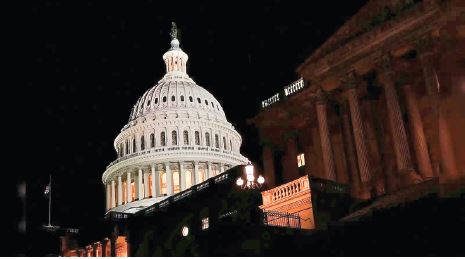
The latest shutdown of the United States government, which came into effect at midnight on Monday after lawmakers in Washington failed to resolve their funding differences, has once again disrupted federal operations and cast uncertainty over a wide range of services. While essential functions such as law enforcement, the military, and emergency services continue, hundreds of thousands of government employees have been furloughed, and several non-essential services face either closure or severe restrictions.
Among the most visible international impacts is on America’s diplomatic missions. Embassies and consulates across the world, including in India, have confirmed that while pre-scheduled appointments for passports, visas, and other immigration-related services will continue for now, operations are unlikely to run at full capacity. The United States Embassy in India stated on Wednesday through a post on X (formerly Twitter) that “scheduled passport and visa services in the United States and at U.S. Embassies and Consulates overseas will continue during the lapse in appropriations as the situation permits.” Identical messages were issued by other missions across the globe, indicating a coordinated line of communication amid the disruption.
However, officials have warned of delays. In past shutdowns, consular offices have faced mounting backlogs as staff numbers were reduced, hours were curtailed, and in some cases, new visa applications were suspended entirely. Processing times for visas and passports were among the most immediately affected areas. This time too, applicants and travelers are being cautioned that although their pre-existing appointments remain valid, new applications may not be accepted, and even approved appointments could see slower processing.
Beyond visa and immigration services, the diplomatic presence itself is operating under unusual limitations. The US Department of State has clarified that its official communication channels, especially social media accounts like X, will not be updated regularly until the government reopens. Updates will only be shared in cases involving urgent safety or security information. This means that regular news, cultural programming, and public outreach — functions that embassies routinely carry out — will temporarily pause. For those dependent on these channels for updates, particularly in countries with high visa demand like India, the reduced flow of information is likely to add to the uncertainty.
The shutdown stems from Congress’s inability to reach an agreement on federal spending, a familiar impasse in American politics. The divide between Congressional Democrats and Republicans over budget allocations and policy priorities once again proved irreconcilable before the deadline, resulting in the cessation of funding to many government departments. Without appropriations, agencies cannot legally continue non-essential work. The result is that while essential personnel remain on duty, vast numbers of federal employees have been told not to report to work. Estimates suggest that around 750,000 workers have been placed on furlough, effectively suspended without pay until the budget is passed.
For President Donald Trump, who faces both political pressure and internal challenges within his administration, the shutdown is being interpreted as both a crisis and an opportunity. Reports suggest that he may use the shutdown period to reorganize departments, fire staffers, and cut down on offices considered non-essential. However, such moves risk further straining relations with Congress, where the standoff itself reflects deep partisan rifts.
The human impact of shutdowns, while often overlooked in policy debates, is significant. Furloughed workers are left uncertain about when they will return to work or when they will receive their paychecks. Many federal employees live paycheck to paycheck, making even short shutdowns financially stressful. Past shutdowns have seen employees forced to borrow, delay bills, or rely on savings to make ends meet. This time, with the shutdown beginning in the final quarter of the year, families are particularly concerned about its effect on upcoming obligations.Internationally, the fallout is already visible in disrupted travel and unsettled business ties. For Indian students, professionals, and families seeking visas, the uncertainty is especially pressing.
The US remains one of the most sought-after destinations for higher education and employment, with tens of thousands of applications processed each year through consulates in New Delhi, Mumbai, Hyderabad, Chennai, and Kolkata. Any slowdown in processing threatens to derail timelines for universities, employers, and travelers. Immigration lawyers in India say clients are already asking whether the shutdown could delay their planned journeys or leave applications stuck mid-way.Business communities also watch closely, as reduced diplomatic activity could mean delays in trade facilitation, consular certification, and outreach programs that help businesses navigate cross-border rules. The embassy’s reduced communication capacity only adds to the challenge, as companies rely on these channels for regulatory updates and official guidance.
The shutdown also raises broader questions about governance in Washington. While shutdowns are not unprecedented, they underline the fragility of consensus-building in a polarized political climate. According to US media reports, in past episodes federal services including national parks, museums, research facilities, and certain welfare offices have been forced to suspend operations. This creates a ripple effect across communities dependent on these services, and each shutdown adds to the backlog once agencies resume work.
The timing is also significant. As the global economy navigates challenges of inflation, climate crises, and shifting geopolitical alliances, America’s ability to project stability is under scrutiny. Diplomatic partners, including India, are carefully observing how the US manages both the practical disruptions and the political messaging around this shutdown.
For now, the official assurance remains that core consular services will continue. Travelers with scheduled appointments should attend them, but must be prepared for delays in receiving processed documents. Those hoping to initiate new applications may need to wait until the government reopens or until embassies resume normal scheduling.Ultimately, the shutdown once again illustrates how political gridlock in Washington reverberates far beyond US borders. For students, workers, and businesses in countries like India, the effects are immediate and tangible. For American diplomacy, the temporary halt in communication and reduced staffing complicates engagement with partners at a crucial time. Whether the standoff in Congress ends quickly or drags on will determine just how far-reaching the consequences of this shutdown become.