


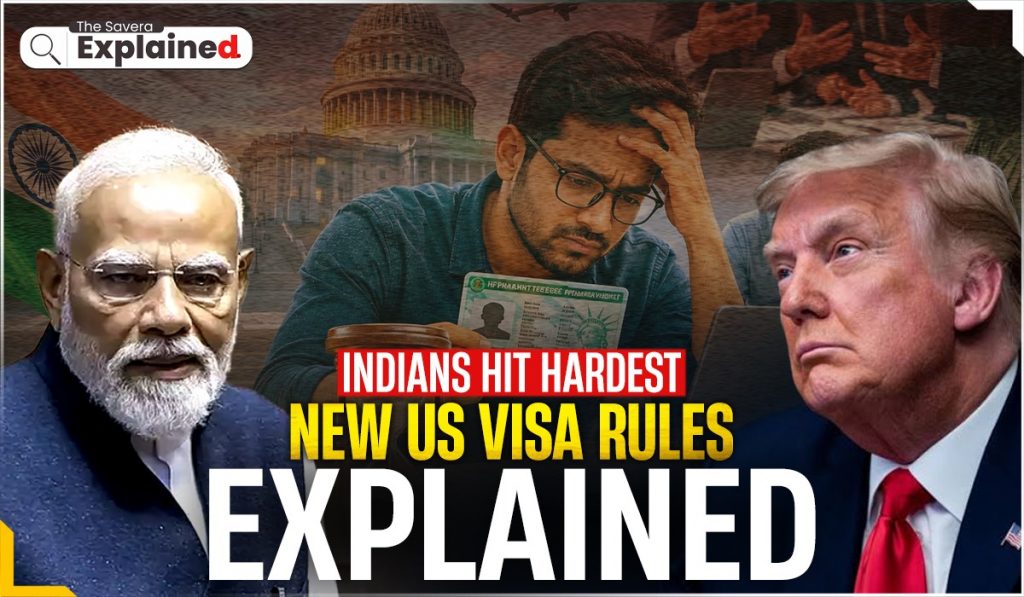
The United States is preparing one of the biggest overhauls of its legal immigration system in recent years. The Donald Trump administration has proposed changes to H-1B visas, employment-based green cards, student visas and work permits.
While these proposals are yet to become law, they could reshape the future of skilled immigration. Since Indians are the largest users of these immigration pathways, they are expected to be the most affected. So, what is changing, why is Washington doing it, and what could it mean for India-US ties?
Why Is the US Changing the Rules?
The proposed reforms are part of the Trump administration’s “America First” policy, which aims to protect American jobs, tighten oversight of employers and reduce misuse of visa programmes. Since these are regulatory changes and not Acts passed by Congress, they will first go through public consultation before becoming final.
Why Are Indians Most Affected?
India dominates almost every major US skilled immigration category. Indian professionals receive the highest number of H-1B visas, account for the largest employment-based green card backlog and are now the biggest group of international students in the US. According to the latest Open Doors Report, around 3.6 lakh Indian students studied in the US during the 2024-25 academic year.
This means even small policy changes could affect thousands of Indian families and businesses.
H-1B Rules Set to Become Tougher
The US plans to tighten rules for companies employing H-1B workers, especially those posted at third-party client locations—a model widely used by Indian IT firms.
Employers may have to provide stronger proof that workers are performing specialised jobs and remain under their supervision. Companies with past compliance violations could face stricter scrutiny.
The administration also plans to increase salary requirements and extend additional government fees to H-1B visa renewals, making foreign hiring more expensive.
Green Card Wait Could Become Harder
Indian professionals already face some of the world’s longest waits for employment-based green cards.
The US has revised its guidance on Adjustment of Status, encouraging more applicants to complete visa processing outside the country. At the same time, the EB-2 category for Indians has become unavailable for the current fiscal year, while EB-1 has also retrogressed due to high demand.
Changes are also planned for the PERM labour certification system, requiring employers to provide more evidence before sponsoring foreign workers.
Student Visas May Also Change
The administration wants to replace the current “duration of status” system for F-1 students with fixed visa periods. Students whose courses extend beyond the approved period would need to apply for extensions.
The government is also reviewing Optional Practical Training (OPT), STEM OPT and Curricular Practical Training (CPT), which help students gain work experience after graduation. Any restrictions could make the transition from education to employment more difficult.
Other Key Changes
The administration also plans to end automatic extensions for Employment Authorization Documents (EADs), affecting many H-4 visa holders, who are spouses of H-1B workers.
Other proposals include higher immigration fees, expanded biometric requirements and changes to the US citizenship examination process.
What Does It Mean for India-US Relations?
These proposals are not directed specifically at India. However, because Indians form the largest share of skilled immigrants, they are likely to face the biggest impact.
The reforms may create concerns among Indian students, professionals and IT companies. However, they are unlikely to damage the broader India-US partnership, which continues to expand in defence, trade, technology, semiconductors, artificial intelligence and the Indo-Pacific.
The Bottom Line
The proposed immigration reforms indicate that the US is moving towards stricter regulation of legal immigration. For Indians, every stage of the journey—from student visas and H-1B jobs to green cards—could become more challenging.
Most proposals are still under review and may change before becoming law. But one thing is clear: Indian professionals and students will be watching these reforms closely, as they could significantly reshape opportunities to study, work and settle in the United States.