


Sheena Sandhu: A retired civil servant
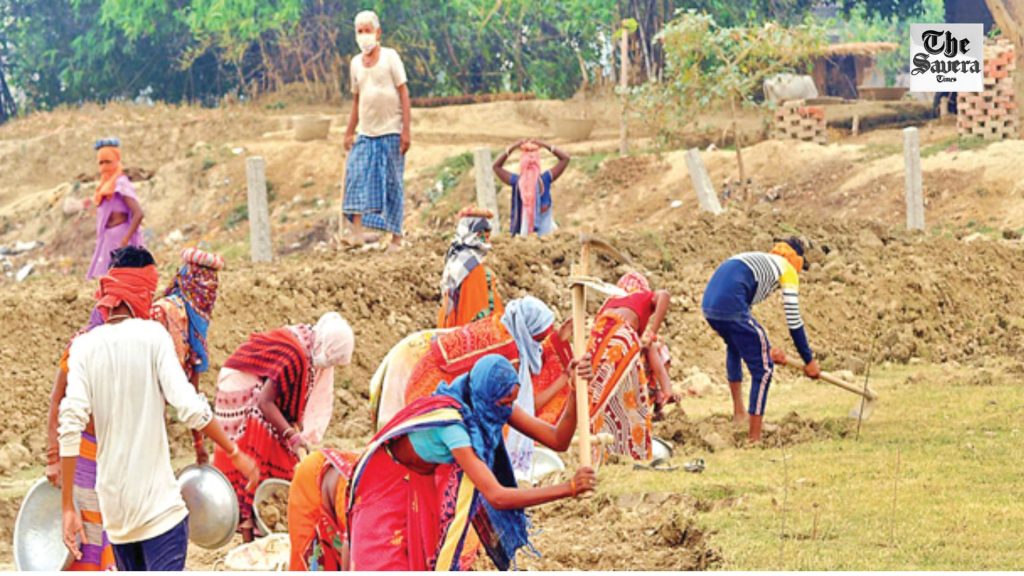
The notification of the Viksit BharatGuarantee for Rozgar and Ajeevika Mission (Gramin) Act, 2025 marks a defining moment in India’s rural policy landscape. By formally replacing the two-decade-old MGNREGA framework with a broader and more technology-driven employment architecture, the government has attempted something far more ambitious than a mere policy renaming. It seeks to redefine rural social security itself — shifting the focus from temporary relief to long-term dignity, productivity and accountability. At the heart of the new law lies the expansion of guaranteed employment from 100 to 125 days annually. On paper, an additional 25 days may appear modest. In reality, for millions of vulnerable rural households facing uncertain monsoons, fluctuating crop prices and shrinking farm incomes, it could mean a substantial rise in annual earnings and a stronger safety net during lean agricultural periods. The extension acknowledges a harsh reality: rural distress today cannot be addressed through short-term measures alone. Yet the true significance of the Act lies not merely in the number of workdays, but in the philosophy it embraces. The slogan “Rozgar Bhi, Samman Bhi” signals a welcome departure from the old welfare mindset. For the first time, several worksite facilities have been granted legal status rather than remaining administrative advisories. Access to clean drinking water, shaded rest areas and medical assistance are now enforceable guarantees. Equally important is the emphasis on women workers. The provision mandating childcare support at worksites with young children recognises the invisible burden carried by rural women and could significantly improve female participation in the workforce. The law also introduces a stronger framework for accountability. Delayed wage payments — one of the biggest criticisms of the previous system — now carries financial penalties. Workers are entitled to compensation if payments are delayed beyond the stipulated timeline. Similarly, unemployment allowance provisions place responsibility squarely on the administration if work is not provided on time. These measures are crucial because a guaranteed employment programme cannot succeed if wages remain uncertain. Technology, often viewed with suspicion in welfare systems, has been integrated carefully into the new framework. Biometric authentication and face-recognition attendance aim to reduce leakages, eliminate ghost beneficiaries and ensure direct transfers to genuine workers. Importantly, safeguards have been built to prevent exclusion during the transition process. Employment cannot be denied merely due to pending e-KYC verification, and facilitation centres are meant to assist workers unfamiliar with digital systems. Whether these safeguards are implemented sincerely will determine whether technology becomes a tool of inclusion or another bureaucratic hurdle. Another major shift is the focus on durable asset creation. Critics long argued that rural employment schemes sometimes generated temporary work without creating lasting value. The new Act attempts to address this by prioritising water conservation, rural infrastructure, livelihood assets and climate-resilient projects. If executed effectively, such works could generate secondary economic opportunities within villages and strengthen rural economies beyond wage labour. Equally pragmatic is the provision allowing states to pause works during peak sowing and harvesting seasons. This balances the interests of farmers and labourers by preventing labour shortages in agriculture while preserving workers’ employment entitlements for other periods of the year. The government’s record budgetary allocation of Rs. 95,692.31 crore for FY 2026–27 underlines the seriousness of the initiative. However, the success of the Act will ultimately depend not on legislation alone, but on implementation. Rural India has often witnessed ambitious schemes weakened by administrative delays, corruption and uneven state capacity. Still, the VB-G RAM G Act represents an important evolution in India’s social contract with its rural workforce. It recognises that rural labourers are not passive recipients of state charity, but active participants in nation-building. By combining employment security with dignity, accountability and productive asset creation, the law has the potential to transform the character of rural development itself. If implemented with honesty and efficiency, this could become one of the most consequential reforms in India’s journey toward a developed nation by 2047.