


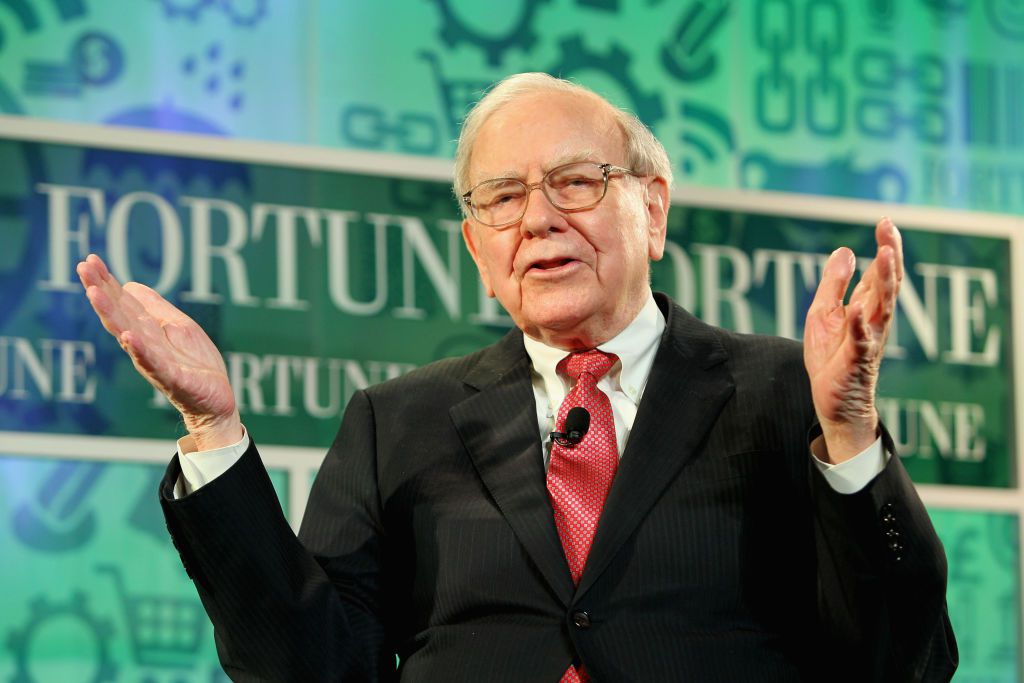
Warren Buffett, at 95, is preparing to step back from the daily responsibilities of leading Berkshire Hathaway, a company he has guided for more than six decades. From its beginnings as a struggling textile operation, Buffett transformed it into one of the world’s most valuable business conglomerates. In January next year, he will hand over operational leadership to Greg Abel while remaining chairman, continuing to provide guidance on investments and capital allocation.
Buffett’s announcement, made in his latest shareholder letter, marks both a transition and a moment of reflection. At the same time, he disclosed $1.3 billion in new charitable contributions to family foundations managed by his children. This gift is part of a philanthropic vision he set in motion nearly two decades ago, committing to gradually redirect the majority of his personal Berkshire stock to the Bill & Melinda Gates Foundation and to family institutions. Despite acknowledging the physical limitations brought by age, Buffett emphasized that his dedication to identifying worthwhile investments remains undiminished.
The transition signals the next chapter for Berkshire Hathaway, a company long shaped by Buffett’s personal thinking and public voice. Abel, who has overseen Berkshire’s non-insurance operations for several years, will take over responsibility for the annual letter and shareholder communications. Buffett will continue to offer perspectives on investments, ensuring that the company’s culture and disciplined approach endure.
Buffett’s connection to Nebraska played a formative role in shaping both his identity and his business philosophy. Born in Omaha in 1930, during a period of widespread economic hardship, he was raised in a household where finance and civic engagement were part of daily life. His father, Howard Buffett, was a stockbroker and later a member of Congress, while his mother, Leila, managed the home. Young Warren’s understanding of business grew not from formal lessons but from ordinary interactions and early entrepreneurial ventures.
His first business efforts were simple yet instructive. He sold chewing gum to neighbors, distributed soda bottles, and delivered newspapers, learning early lessons in cost tracking, scheduling, and territory management. He later invested in used pinball machines, placing them in barbershops and collecting revenue before selling the operation at a profit. By his mid-teens, disciplined saving and reinvestment had helped him accumulate several thousand dollars, a notable achievement for the era.
Buffett’s interest in the stock market began just as early. He purchased shares for himself before high school and submitted his first tax filing while still a child. After a brief period at the Wharton School, he returned to Nebraska to complete his degree. A pivotal moment came when he read Benjamin Graham’s *The Intelligent Investor*, which introduced him to the principles of value investing: evaluating stocks systematically and purchasing those priced below their intrinsic worth to minimize the risk of loss. This approach became the foundation for his long-term strategy and the enduring success of Berkshire Hathaway.
As Buffett prepares to reduce his hands-on role, the focus remains on continuity rather than change. His leadership has always emphasized disciplined investment, long-term planning, and principled management. The structure he leaves in place at Berkshire is designed to endure beyond any single individual, reflecting a rare combination of foresight and humility in corporate stewardship.
The transition is also a moment to reflect on the arc of a career that began in a small Omaha neighborhood and grew into global influence. From selling gum and newspapers to reshaping one of the world’s largest companies, Buffett’s journey underscores the power of early initiative, patient strategy, and disciplined execution. Even as he steps back from daily management, his life and work continue to offer lessons in business, philanthropy, and long-term thinking.
At 95, Warren Buffett is entering a stage defined by reflection and legacy, confident in the future of the company he built and committed to the principles that have guided him throughout a lifetime of enterprise and investment.