


Abhishek Vij
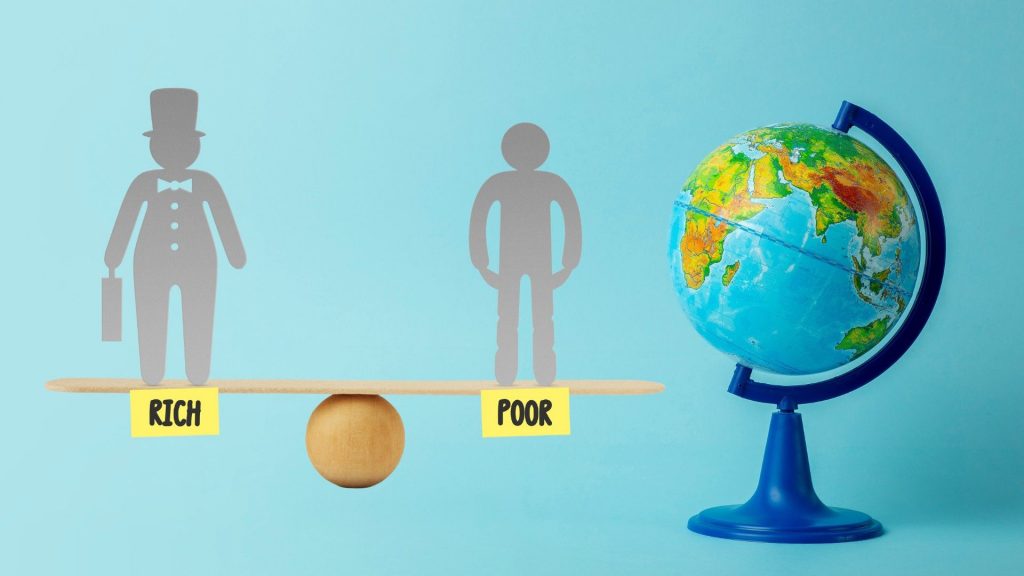
A recent authoritative report, titled the G20 Report, reveals that the wealth of the richest 1 percent of Indians has increased by 62 percent over 23 years. Economic analysts argue that the poor have been left behind by the status quo. Numerous welfare schemes were announced for them, but the fate of these welfare schemes is such that this struggle to enrich the poor, which is synonymous with socialism, has fallen prey to a culture of pity and handouts. India mirrors a global crisis: while billions worldwide starve, over 335 million Indians also go hungry.
Essential healthcare remains out of reach for most due to prohibitive costs, despite the growth of private hospitals and government promises of free treatment. Instead, average citizens see private medical care as their only option, often facing rejection due to unpaid dues.
In almost every state of India, average people are deprived of all other luxuries and end up living in poverty simply because of spend their income solely on health. Now, let’s look at the wealth of the rich. Globally, only 1% of the population has amassed 44% of the total wealth in four years through their new wealth.
In India, it is a well-known saying that 10% of the population owns 90% of the wealth, while 90% receive only 10% of the resources. The surge in farmhouses across Punjab and other states demonstrates how the wealthy exploit agriculture for tax benefits, contributing nothing to ordinary people.
Meanwhile, the richest 1% in developing countries now possess 74% of the wealth. In India, the relentless growth in inequality threatens core democratic values. Analysts say that as the wealthy move towards becoming super-rich, the likelihood of democratic decline in that country increases sevenfold. Leaders of every party are making declarations of transforming society.
The champions of this change claim to reduce corruption to zero, rein in bureaucracy, eliminate bureaucracy, and embrace socialism as wa golden principle across the country. But there’s a huge gap between their words and actions. A new complex is emerging in India: corrupt officials, directionless, greedy politicians, and the same sloppy administration, which administrators promise to improve but fail to deliver results. Unless there is a complete reform in this direction, it will be difficult to change the situation. Such expectations can only be considered a pipe dream unless they are realized in reality