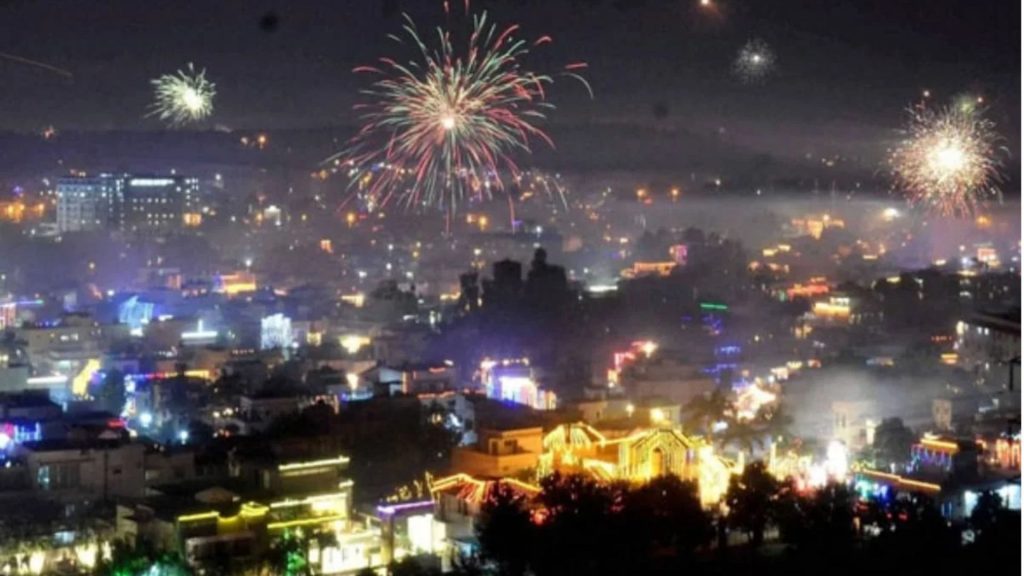
The festival of Diwali is being celebrated with great enthusiasm across the country. There is joy on the faces of the people, and the nation’s stock markets are also buzzing with excitement; indices are surging, and reports of capital gains are emerging. The impact of the economic slowdown on the markets has all but vanished. Everyone—rich or poor—is shopping according to their means. Despite government directives, firecrackers are being sold in large quantities, even though their use is permitted only for two hours in the morning and two hours in the evening. There has been an advisory to use ‘green’ (eco-friendly) firecrackers to prevent pollution and avoid potential damage to eardrums from loud explosions. Bustling crowds of shoppers can be seen in the markets dedicated to firecrackers. A wide variety of firecrackers are available in almost every market across the country. Beyond the licensed vendors, small and large shops in every neighborhood are stocked with them. Regardless of how many directives are issued, it is well understood that, as in every other year, firecrackers will be set off this year as well. Pollution will inevitably spread, leading to a suffocating atmosphere. It is certain that those suffering from respiratory issues and asthma will once again be adversely affected. Experts who monitor pollution levels note that air pollution typically rises during this period, and it is expected to intensify further on the night of Diwali. At times, government officials—mindful of the immense popularity of the festival and the deep public commitment to it—tend to relax the enforcement of regulations. Consequently, smoke and pollution levels begin to rise. Another common occurrence during this time is the return of migrant workers— who had moved from northern states to other parts of the country—to their home states. Despite the arrangements made for trains to accommodate this mass movement, heavy crowds are still a common sight. Across the nation, there is an atmosphere of joy and excitement surrounding the festival, with people exchanging gifts and wishing one another a Happy Diwali. People light lamps in their homes, shops, and offices. While one should certainly celebrate the joy of festivals and welcome Diwali in one’s own way, it is best to avoid bursting firecrackers; if you must use them, opt for ‘green’ (eco-friendly) firecrackers. Be mindful of the environmental pollution caused by bursting firecrackers and take steps to avoid contributing to it. Ensure that your actions do not cause harm to yourself or others, and take care not to invite any accidents. In fact, just before Diwali, a fire broke out on the ‘Karmabhumi Express’ train in Punjab. Smoke that originated in one general compartment spread to four others, causing panic among the passengers, some of whom began jumping off the train. Although the train was heavily crowded, fortunately, there were no major casualties, with only a few passengers sustaining minor injuries. During this Diwali season, one should wish for the well-being of all, ensuring no one comes to any harm. It is also to be hoped that the economic prosperity flourishing in the nation’s markets reaches even the person standing at the very end of the queue. It is no secret how well the directives against the use of harmful firecrackers are actually followed each year. Furthermore, the burning of crop stubble (parali) tends to increase during the Diwali period. The government launches campaigns against this practice, and significant efforts are made to raise awareness among farmers; yet, incidents of stubble burning continue to rise year after year rather than declining. Driven by a “anything goes during festivals” attitude, people often pay little heed to government restrictions—partly because they know that enforcement and vigilance tend to slacken during this time. Nevertheless, we remain hopeful that through public awareness and education, people will celebrate their festivals while remaining mindful of the environment.
Welcome Diwali, but also avoid environmental pollution