


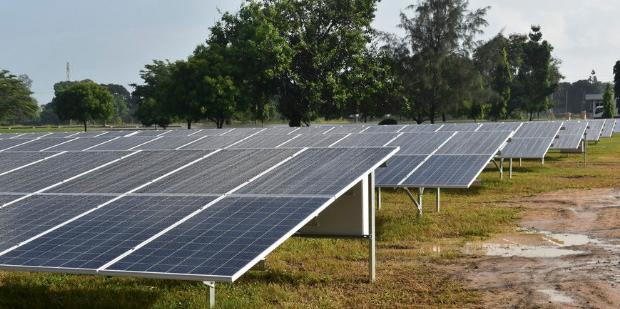
Renewable energy backed by battery storage can provide India with reliable, roundthe-clock electricity at a price below that of new coal-fired plants. The study examined a landmark 1,000-megawatt auction conducted by the Solar Energy Corporation of India, or SECI, which produced a tariff of Rs 5.25 per kilowatt-hour, fixed in nominal terms for 25 years. Researchers said the auction demonstrated that renewable energy combined with storage could deliver baseload-like power, closely matching the performance of India’s existing coal fleet without exposure to future increases in fuel prices. The study, titled “India’s Renewable Energy Breakthrough: Coal-Like Reliability at a Lower, Fixed Price,” was conducted by the India Energy Climate Center at UC Berkeley. The auction was structured to procure the largest amount of electricity during the evening, night and morning while reducing supply requirements during solar-rich midday hours. Generators are required to provide at least 90 per cent of contracted capacity during six peak hours selected by the purchaser and at least 70 per cent during the remaining non-solar hours. During solar hours, the requirement ranges from 50 to 60 per cent. Compliance will be assessed in every 15-minute block, with shortfalls attracting a penalty equivalent to 1.5 times the contract price. Researchers tested whether solar generation and battery storage could economically meet these requirements using 10 years of hourly weather data from 10 Indian states. They found that for every 1,000 MW contracted, a least-cost project at a high-quality solar location such as Rajasthan would require about three gigawatts of solar capacity and 12 gigawatt-hours of battery storage. States with different solar resources and monsoon conditions could require approximately 15 to 20 per cent more solar capacity, while the batterystorage requirement would remain close to 12 gigawatt-hours. Its proximity to the equator means seasonal variation in solar output is significantly smaller than in higherlatitude countries, such as those in Europe, where generation can fall sharply in winter. India’s main challenge is shifting abundant daytime solar into the evening and night, a task suited to mature, low-cost batteries. The auction drew bids from 16 companies. Seven developers secured capacity, with all the winning tariffs falling within a narrow range of Rs 5.25 to Rs 5.26 per unit. This price is consistent with the dramatic reductions in solar and battery costs we have seen in India.
What About Renewables Backed by Batteries
What About Renewables Backed by Batteries