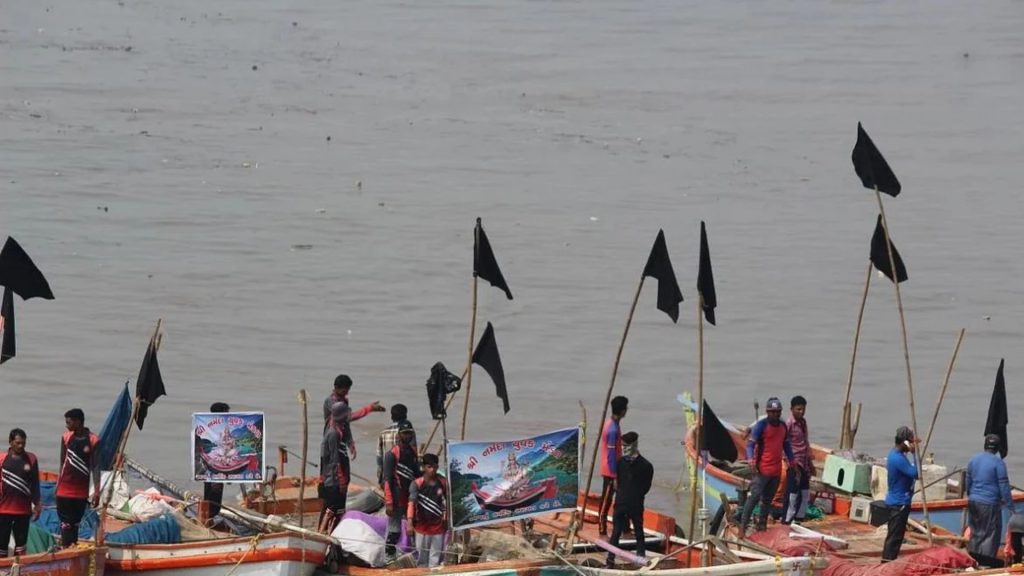
THE HILSA (Tenualosa ilisha) is more than a fish. It anchors festival meals across the Ganga-Brahmaputra-Meghna delta and sustains millions of small-scale fishers and traders. Of late, warming seas, a stressed delta and national borders that cut across its range are putting the fishery under growing pressure. A regional fisheries review finds that rivers accounted for 94 per cent of Bangladesh’s hilsa catch between 1956 and 1962, while the sea supplied just 6 per cent. Today, the balance has reversed. Data from Bangladesh’s Department of Fisheries shows about 72 per cent of the catch comes from marine waters, compared with 28 per cent from rivers and estuaries. A scientific review of the species adds that riverine catches peaked in the 1960s, while marine catches the fish rose sharply and became more common from the 1990s onwards, partly because of barriers to upstream migration. This geographical shift is reflected in the changing catch patterns. Data from the Central Marine Fisheries Research Institute, under the Indian Council of Agricultural Research, show a marked decline in hilsa landings along the West Bengal coast. Meanwhile, figures from Gujarat’s fisheries department, as reported by media, show that the state landed 14,587.72 tonnes of hilsa in 2025-26, its highest yield in four years. Gujarat’s inland catch also rose sharply, from 123.62 tonnes to 4,645.99 tonnes, with almost all of it sourced from the Narmada that flows through Bharuch district. What is pushing the fish away Hilsa is an anadromous fish that lives primarily in marine environments and migrates upstream into freshwater rivers to breed. This spawning journey relies on strict ecological thresholds. A review in Aquaculture, Fish and Fisheries places the ideal breeding temperature between 29.3°C and 30.2°C. Furthermore, estuarine research demonstrates that their spawning grounds require near-freshwater conditions, with a salinity level below 0.1 parts per thousand (ppt). Successful upstream migration also depends on deep channels, 18 to 20 metres deep, and strong river currents to guide the fish. Regional warming of climate severely disrupts these variables
When Silver Fish Vanishes