


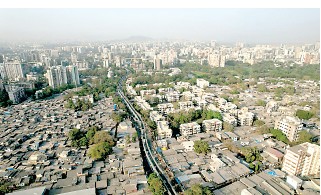
India’s future is often imagined in megacities. Policy debates revolve around Delhi, Mumbai, Bengaluru or Hyderabad, while glossy projections celebrate tech corridors and financial hubs. Yet the country’s next decade will be shaped less by these metropolitan giants and more by its hundreds of small and mid-sized cities—places rarely at the centre of national imagination but critical to India’s social and economic trajectory.
Cities like Ujjain, Alwar, Baramulla, Tirunelveli, Silchar or Chitradurga are quietly absorbing the pressures of urbanisation. They are growing not because of planned investment booms, but because villages around them are emptying out. Farmers displaced by climate stress, young people seeking education, and families priced out of metros are all converging on these towns. What emerges is neither rural nor fully urban, but a hybrid India still learning how to govern itself.
Unlike metros, small cities operate with limited institutional capacity. Municipal bodies often lack trained planners, reliable data, or financial autonomy. Urban growth here happens informally—through unplanned housing, overstretched water systems, and roads built after neighbourhoods already exist. Yet these cities rarely feature in national conversations about urban reform, even though they host a large share of India’s population growth.
Employment patterns tell a similar story. While metros attract global capital and formal-sector jobs, small cities are sustained by fragile local economies—construction, retail, transport, public services, and small manufacturing. These jobs are resilient in some ways, but vulnerable in others. A delayed payment, a failed monsoon, or a health emergency can disrupt entire households. Strengthening these local economies is not glamorous, but it is essential.
Small cities also play an overlooked social role. They are often where traditions adapt rather than disappear. Festivals are still community-run, public spaces remain shared, and social networks are dense. At the same time, these cities are not insulated from modern anxieties. Rising aspirations, exposure to social media, and limited opportunities create quiet pressures, especially among young people who feel caught between ambition and constraint.Infrastructure choices made now will determine whether these cities become engines of inclusion or sites of strain. Reliable public transport, affordable rental housing, functional healthcare, and clean water systems matter more here than showcase projects. The challenge is not building smart cities, but building cities that work.