


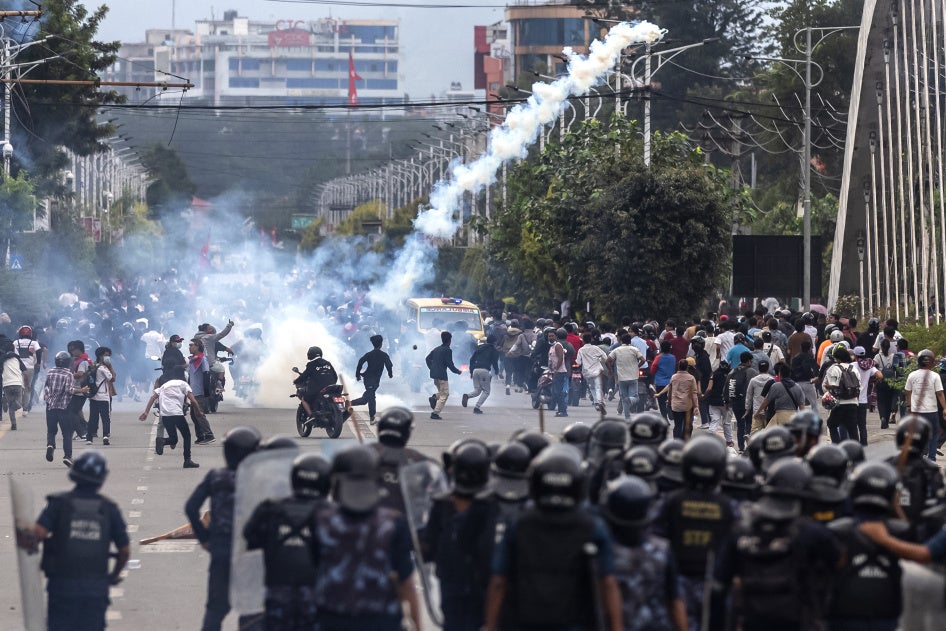
Nepal witnessed a Gen-Z movement on September 8 and 9 last year that eventually brought down the government led by then Prime Minister K P Sharma Oli. The protests also paved the way for an interim government, parliamentary elections on March 5 this year and the emergence of the Rastriya Swatantra Party (RSP), established in 2022, as the largest political party with nearly a two-thirds majority.
On the first day of the protests, the state was accused of using excessive force, resulting in the deaths of 19 people. Violent protests followed the next day, leading to widespread destruction of public and private property.
Buildings inside Singha Durbar, the country’s main administrative centre, as well as the Supreme Court, the Prime Minister’s Office, the President’s Office and several other government facilities were attacked.
Shopping centres belonging to the Bhat-Bhateni Group and hotels, including Hilton Kathmandu and Hyatt Regency Kathmandu, were also targeted with arson and vandalism. As many as 77 people lost their lives in two days in separate protest-related incidents.
For the ruling RSP, which is the biggest political beneficiary of the Gen-Z movement, September 8 is remembered as the day when young protesters, who took to the streets demanding good governance and accountability, became victims of excessive use of state force.
The RSP and the government led by the party have sought to highlight state repression and the deaths of Gen-Z protesters on the first day, while playing down the destruction of public and private property that occurred the following day.
The old political parties and their leaders, meanwhile, have focused on the destruction caused on September 9 while downplaying the Gen-Z movement’s protests against alleged corruption and misgovernance.
As the government and ruling RSP marked the first anniversary of the Gen-Z protests on Tuesday, opposition parties — including the Communist Party of Nepal (Unified Marxist-Leninist), or CPN-UML, led by former Prime Minister Oli, and the Nepali Communist Party led by former Prime Minister Pushpa Kamal Dahal — remained largely silent.
Nepali Congress President Gagan Thapa, however, issued a video message on Tuesday paying tribute to those who lost their lives during the Gen-Z movement.
On Wednesday, Oli and Dahal issued separate statements marking September 9, when the country witnessed massive destruction of public and private property, including the homes of political leaders. The estimated damage caused during the protests stands at more than NPR 84 billion.
In his statement, Oli alleged that the arson, vandalism and destruction on September 9 last year were not simply an expression of anger among young people but the result of a planned attempt to reverse the “progressive course” of democracy and the Constitution.
Oli described the attacks targeting the President’s Office, the Prime Minister’s residence, Singha Durbar, the Parliament building, the Supreme Court, political party offices, and public and private property as acts of planned destruction.
“The fact that these events occurred even after the then Prime Minister had resigned makes it clear that the tragedy of September 8 was not an impulsive or angry reaction triggered by the deaths of young people the previous day,” he said.
“Rather, it was the manifestation of a deadly plan to reverse the progressive course of nationalism, democracy and the Constitution and push the country toward authoritarianism, anarchy and geopolitical conflict.”
Oli called for a thorough investigation into the September 9 incidents. He said the truth must be brought to light about how a protest that had been permitted as a peaceful demonstration turned violent and who was responsible for it.
Accusing the authorities of attempting to arrest and prosecute the then Prime Minister and Home Minister in a retaliatory manner by holding them responsible for the incidents, Oli said a report on the role of the security agencies in the violence had also been kept secret.
He accused the authorities of granting impunity to those accused of involvement in the September 9 destruction and halting investigations and prosecution processes initiated against them, saying such actions had “institutionalised the criminalisation of politics.”