


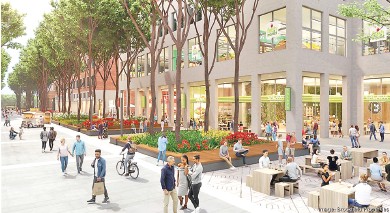
Public spaces — parks, streets, libraries, markets, and plazas — form the social backbone of cities. They are the places where daily life unfolds outside private homes and workplaces. As cities grow denser and faster, the importance of these shared spaces has become increasingly clear. Well-designed public spaces promote inclusion. They are among the few environments accessible to everyone regardless of income, age, or background. A public park offers children a place to play, elders a place to rest, and workers a place to pause.
These shared experiences foster social cohesion in otherwise fragmented urban environments. Public spaces also support mental and physical health. Access to open areas encourages walking, exercise, and outdoor activity. Exposure to greenery reduces stress and improves mood, offering relief from the pressures of urban living. Cities with accessible public spaces often report higher levels of community wellbeing.
Economically, public spaces contribute more than is often acknowledged. Vibrant streets and squares attract foot traffic, supporting local businesses and informal economies. Markets and public events create opportunities for small vendors and artists, strengthening local livelihoods.
Culturally, public spaces serve as stages for expression. Festivals, protests, performances, and everyday interactions shape collective identity. These spaces allow citizens to engage with democracy, culture, and community in visible ways. Without them, civic life becomes confined to digital platforms or private venues. The pandemic underscored their value. During periods of isolation, access to open public areas became essential for mental health and social connection. Cities that invested in pedestrian zones and open streets adapted more effectively to changing needs.
Despite their importance, public spaces face growing challenges. Commercialisation, neglect, and unequal distribution limit access, particularly in low-income neighbourhoods. Security concerns and restrictive policies can also discourage use, undermining their purpose. Urban planners increasingly recognise that public spaces are not luxuries but necessities. Designing inclusive, safe, and flexible spaces requires community participation and long-term investment. Small interventions — seating, lighting, shade, and accessibility — can dramatically improve usability.
The future of cities depends not only on infrastructure and technology, but on how people experience everyday life. Public spaces shape those experiences. They create room for connection, rest, and expression in environments defined by speed and density.
As urban populations continue to grow, protecting and expanding public spaces is essential. They are where cities become more than collections of buildings — they become places where people belong.