


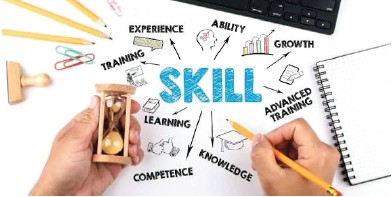
India’s education landscape is undergoing a noticeable shift. Alongside traditional degrees, skill-based education is gaining renewed importance as students, employers, and institutions recognise the gap between academic qualifications and workplace readiness.
Skill-based education focuses on practical abilities—technical skills, problem-solving, communication, and hands-on training—that can be directly applied in real-world settings. It aims to prepare learners not just for exams, but for employment and entrepreneurship.
One of the main drivers of this shift is the changing nature of work. Automation, digital platforms, and evolving industries require adaptable skills rather than static knowledge. Employers increasingly seek candidates who can perform tasks, learn quickly, and work across disciplines.
Government initiatives have played a role in promoting skill development. Training programmes in areas such as manufacturing, healthcare, information technology, logistics, and renewable energy aim to align education with industry needs. These programmes often partner with private companies to ensure relevance.
Skill-based education is also expanding access to employment for students who may not pursue conventional academic paths. Short-term certification courses, vocational training, and apprenticeship models offer alternatives to long-duration degrees. For many learners, this reduces financial burden while improving job prospects.
Institutions are beginning to integrate skill components into mainstream education. Colleges and universities now offer internships, project-based learning, industry collaborations, and practical labs. This blended approach helps students apply theoretical concepts in real-world contexts.
Another advantage of skill-based learning is its adaptability. Courses can be updated more frequently to match industry changes. This flexibility is particularly valuable in fast-evolving sectors such as technology, digital marketing, and data services.
Skill education also supports entrepreneurship. Practical training in trades, services, and digital tools enables individuals to start small businesses or work independently. This contributes to local economies and reduces reliance on formal employment alone.
However, challenges remain. Social perceptions still prioritise degrees over skills, and quality varies across training centres. Ensuring standardised certification, qualified trainers, and industry recognition is essential for long-term impact.
Despite these challenges, the growing emphasis on skills signals a pragmatic shift in how education is viewed. Success is increasingly measured not just by qualifications, but by competence and adaptability.
As India’s workforce continues to evolve, skill-based education is emerging as a bridge between learning and livelihood—one that values capability as much as credentials