


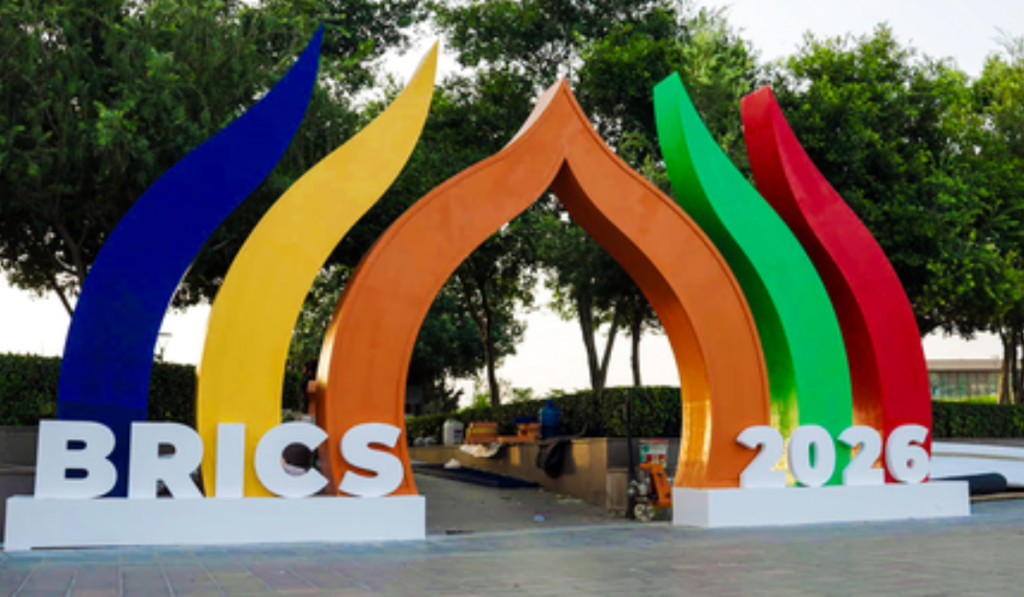
The two-day 18th BRICS summit has begun in New Delhi. At one time, the organization comprised four nations—India, Russia, China, and Brazil—but today, the number of member countries has risen to 11. These BRICS nations represent 39 percent of the global population, account for 40 percent of the world’s GDP, and hold a 26 percent share in global trade. They consume 30 percent of the world’s total oil production, and trade among these nations has grown thirteen-fold since the group’s inception, reaching $1.17 trillion in 2024. This summit holds great significance for India, given that its exports to BRICS nations stood at $82 billion in 2025–26. The event is also notable as it marks the completion of 20 years since the founding of BRICS.
India is hosting this summit for the fourth time. The conference focuses on innovation, resilience, cooperation, and sustainability. Another key highlight is the arrival of Chinese President Xi Jinping—his first visit since the Galwan clash—with whom Prime Minister Modi will hold a separate meeting. Relations between the two nations had stagnated following the 2020 military skirmish in Eastern Ladakh. Global attention is focused on whether this meeting will open a new chapter in India-China relations. Russian President Vladimir Putin and Iranian President Masoud Pezeshkian have also arrived in India. Notably, Bangladesh’s Tarique Rahman was not invited to the summit. Prime Minister Narendra Modi’s bilateral talks with various heads of state are being watched with keen interest.
Among the key expectations leading up to the summit is the question of whether the BRICS nations will launch a united, effective front against global terrorism. Secondly, the leaders of Russia and Iran are attending the summit; one wonders if any behind-the-scenes discussions might yield a decision beneficial to the world. There are also reports that these nations aim to create a new trade environment featuring digital cooperation and a new currency exchange mechanism capable of challenging the dominance of the US dollar.
It would be premature to harbor high expectations in this regard, however, as the US remains a crucial trading partner for most of these nations; consequently, no hasty steps can be taken that might disrupt trade relations with the US. Nevertheless, the significance of the BRICS summit cannot be overlooked. Collectively, these nations account for up to 30 percent of global oil and energy consumption, making them a formidable collective force. Russia has pledged to meet the oil demands of these countries by initiating oil production in the Arctic. Overall, this BRICS summit is being viewed with great seriousness. The question arises whether, in today’s changing world, the BRICS nations can present a free-trade framework underpinned by new digital capabilities.
It is worth noting that the individual trade commitments of these nations often hinder the emergence of the kind of innovations that have been announced. It remains to be seen what role China would play if a joint front against terrorism were to be formed, given that China indirectly supports Pakistan-backed terrorism. Still, one can certainly hope that the meeting between Modi and Jinping will yield something significant.