


Abhishek Vij
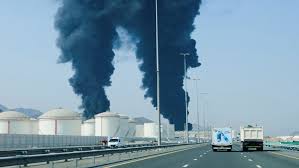
The ongoing conflict between the U.S., Israel, and Iran is becoming more ferocious by the day. The U.S. has raised a massive cloud of smoke by striking Iran’s nuclear facility in Isfahan. In retaliation, Iran has targeted an oil tanker in Dubai. Iran continues to issue warnings of attacks against U.S. bases located in the Gulf nations. On the other hand, Trump has boldly declared that the Gulf War will conclude within two to three weeks.
Trump asserts that whether or not the Strait of Hormuz remains open is not America’s responsibility; those nations that require oil should take it upon themselves to ensure the Strait is kept open. Furthermore, Trump is taking the stance that—regardless of whether a diplomatic deal is reached or not—the U.S. has, through the sheer force of its power, effectively pushed Iran back into the Stone Age. He argues that Iran no longer possesses the capability to construct a nuclear bomb—which was precisely America’s objective.
Consequently, he states, the U.S. will withdraw from the conflict within two to three weeks. This statement by Trump elicited an immediate global reaction. Crude oil prices, which had been hovering above $100 per barrel, dropped by 4 percent. Global stock markets, which had been on the verge of collapse, suddenly began to show signs of recovery. While Trump has frequently shifted his rhetoric throughout the 31-day conflict, this latest unequivocal statement may serve to reassure all those nations—worldwide—that had previously refused to align with Trump in this war. The U.S., alongside Israel, is currently fighting Iran in isolation. Meanwhile, Houthi rebels and Hezbollah militants have also reared their heads, launching attacks against Israel in solidarity with Iran.
According to analysts, the situation within the United States is evolving such that two-thirds of the population now stands opposed to the war. Hundreds of thousands of protesters have staged anti-war demonstrations not only in New York and Washington but also across 12 other countries around the globe.
Trump remains deeply displeased by the refusal of NATO member nations to participate in the conflict. He has stated that the United States spent millions of dollars on NATO nations, yet when the moment of truth arrived, they let us down. Trump has even threatened to withdraw from NATO. Major European nations, too, refused to join forces with the United States in this conflict.
These countries denied the U.S. permission to utilize their airspace. Whether it was Britain, Spain, Germany, or France—all spoke with one voice: the war must cease. The United States is currently spending an average of one billion dollars per day on this conflict.
Meanwhile, fuel and gas prices have begun to rise within the United States itself. With inflation on one hand and economic losses on the other, Trump’s popularity among the American public is on the decline. Furthermore, elections are scheduled to take place in several U.S. states by the end of this year. Consequently, Trump is being compelled to reconsider his country’s involvement in this war. Members of Trump’s cabinet have also begun to feel that, lacking full information, Trump plunged the United States into this conflict largely at Israel’s instigation. The prevailing assumption was that Iran would be neutralized within two to three weeks.
Israel and the United States have repeatedly claimed that Iran’s air force and navy have been decimated; however, Iran has demonstrated remarkable resilience. Experts suggest that Iran had been preparing for war for six months prior to the outbreak of hostilities, which enabled it to deliver such a forceful counter-response. This offers a valuable lesson: if a nation’s people possess internal unity and a spirit of self-sacrifice, even the most formidable global power cannot defeat them. Ultimately, the final outcome of this war remains to be seen and will only become clear in due course; nevertheless, signs pointing toward an end to this conflict have now begun to emerge on the global horizon.