


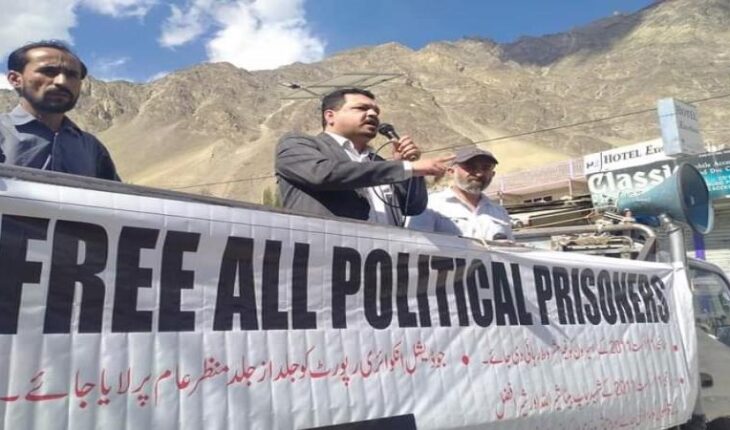
The Indian Embassy in Washington’s objection to The New York Times headline ‘Clashes Erupt in Pakistani Kashmir’ was not merely “pedantry over nomenclature”, but reflected India’s refusal to let “sloppy Western terminology” launder occupation into ownership, amid the Pakistani army’s brutality on the streets of Mirpur and other major towns of Pakistan-occupied Kashmir (PoK).
The unrest in PoK has claimed more than 50 lives and left hundreds of civilians injured over the last few days, drawing international condemnation over the human rights abuses by Pakistani forces.
On 29 July 2026, two things happened on the same day, in the same territory, and together they told the world everything it needs to know about Pakistan’s occupation of Kashmir.
In Washington, the Indian Embassy issued a terse rebuke to The New York Times for headlining a report ‘Clashes Erupt in Pakistani Kashmir.’ “There is no Pakistani Kashmir,” the Embassy wrote, “only Pakistan-occupied Kashmir.”
In Mirpur, Kotli, Rawalakot and Muzaffarabad, Pakistani security forces were, at that very hour, firing live rounds into crowds of unarmed civilians who had gathered to boycott what Islamabad was calling a democratic exercise.
The two dispatches were not unconnected. India’s correction of a newspaper’s vocabulary and the newspaper’s own reporting on a massacre were, in effect, the same story told from two vantage points — one diplomatic, one journalistic.
Both converge on an inconvenient truth that Pakistan has spent seventy-nine years trying to obscure: the people of Pakistan-occupied Kashmir (PoK) are not willing subjects of Rawalpindi’s writ. They are a population under occupation, and in July 2026 they said so with their bodies.
Every Assembly election in PoK is effectively overseen by Pakistan’s military and intelligence establishment, with the Inter-Services Intelligence (ISI) historically vetting candidates and the outcome rarely coming as a surprise in Rawalpindi.