


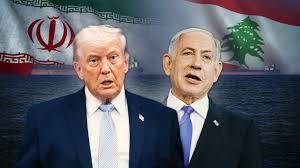
Discussions on making the ceasefire permanent are scheduled to take place today, Friday, in Pakistan’s capital, Islamabad, between representatives of the United States and Iran. Following China’s intervention and Islamabad’s initiative, the United States halted its heavy attacks. A temporary ceasefire was declared for 14 days.
Today’s meeting will focus on the future of this ceasefire. The issue is whether this ceasefire should be made permanent or ended. On the one hand, Israel has declared that Lebanon will not be included in the ceasefire. Israel has also made its intentions clear by launching a series of attacks on Lebanon. Iran has strongly opposed this.
In response, Iran reimposed a blockade on the Strait of Hormuz. The Iranian ambassador even deleted posts related to the agreement. This meant that an uncomfortable atmosphere had developed even before the talks began. Within 24 hours of the ceasefire, the ceasefire talks began to collapse. Trump also issued threatening statements that if the Strait of Hormuz was not opened, the consequences would be disastrous. In reality, the dispute now is about keeping the Strait of Hormuz unblocked for Israel and the Strait of Hormuz unblocked for the US. Iran wants to impose a $1 per barrel tax on ships passing through Hormuz.
Thus, if 20 million barrels of crude oil flow through the Strait of Hormuz every day, Iran will automatically earn $20 million.
Iran insists on including Oman in this revenue and giving it a share. We believe that ceasefire talks will be stuck on the Hormuz issue. The US wants to be made the custodian of Hormuz along with Iran. Perhaps the US also wants a share of the Hormuz revenue. Due to this bitterness, crude oil prices, which had fallen two days earlier, jumped again the next day. Stock markets are always sensitive.
When the temporary ceasefire appeared to be failing, the stock market plummeted again, wiping out millions of rupees for investors. The outcome of the ceasefire in this tense atmosphere is uncertain. It’s likely that the US will refrain from launching a major attack on Iran, as its own experience with this war has been poor due to the lack of cooperation from NATO and European countries