


Satyam Kumar
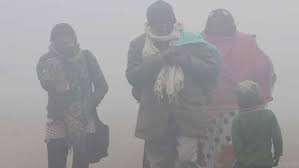
This year’s winter in Bihar has been marked by sharp and unusual swings. In the second week of January 2026, a cold wave affected 30 districts, with the India Meteorological Department (IMD) issuing warnings for dense fog and low temperatures.
But by late February and early March, temperatures rose rapidly. In some areas, the maximum temperature reached 32 degrees Celsius (°C) in February — a level experts say signals an early end to winter.
‘Winter doesn’t last anymore.’ For many residents, the shift is deeply felt.
Rajendra Jha, 94, a retired teacher from Gaighat block in Muzaffarpur district, says winters are no longer what they used to be.
“Earlier, winter would arrive properly and leave gradually. Now it begins in December and fades by the end of January,” he says. “As soon as Phalgun (February-March) begins, the heat arrives. What used to be a gentle spring breeze now feels like summer heat.”
His words echo a wider concern among older residents across north Bihar, who say the seasonal rhythm they grew up with is changing.
The effects are also being seen in people’s health. Mahavir Prasad from Patepur in Vaishali district says the sudden shifts have taken a toll on him.
“Since early February, my health has worsened. I’ve had cough, phlegm, swelling in my feet, and trouble digesting food,” he says. “It feels hot during the day and cold at night — this fluctuation has affected me badly.
Crops hit, livelihoods strained
Farmers say the warmer winter has damaged crops and disrupted work patterns. Parmanand Rai from Musrigharari in Samastipur district says late-sown crops suffered the most. “The sudden rise in temperature damaged late-sown crops like potatoes and oilseeds,” he says. “Our second potato crop, planted in late November or early December, was completely ruined.”
Where one kattha of land would earlier yield 3-4 quintals of potatoes, this year it produced only 1-1.5 quintals, which is not enough to recover cultivation costs. Mustard crops were also harvested about 20 days early, before the grains had fully developed.Prakash Ranjan from Vaishali says wheat and vegetables have also been affected. “Wheat yields could drop from 70-100 kilogrammes (kg) per kattha to 40-50 kg,” he says. “There was no fog this year, which is important for wheat. Garlic crops failed to form proper bulbs, and farmers have had to use more water.”The sudden heat in February and March disrupted the Rabi cycle, with crops like potatoes and mustard ripening too early or failing to mature properly. For many farmers, this has meant financial losses and uncertainty about the year ahead. (Courtesy: DTE)