


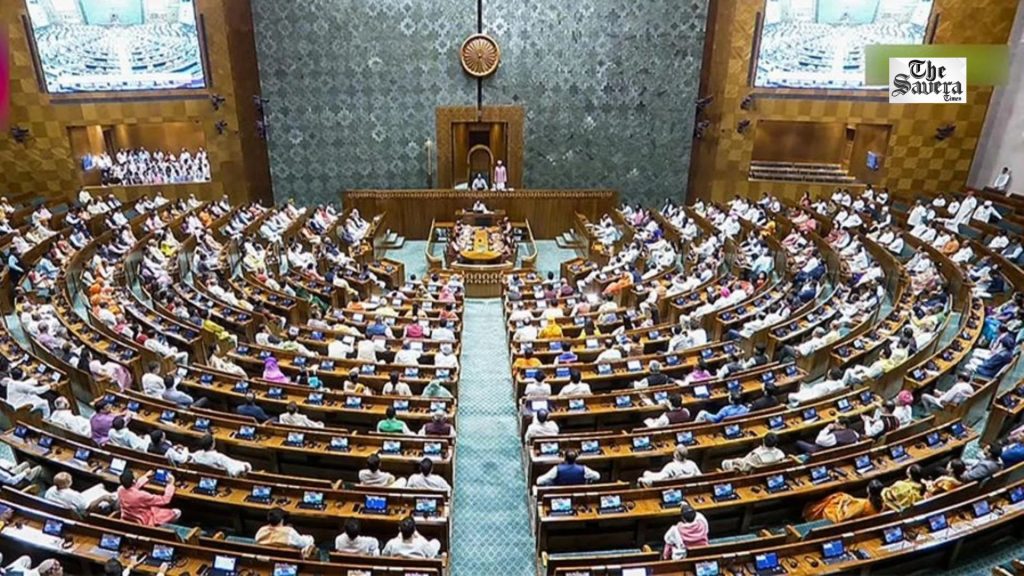
When the monsoon session of Parliament ended, it was not adjourned but postponed. Although the autumn session will now begin, since the monsoon session has only been postponed, not ended, it is speculated that the government may call a special session of Parliament before the autumn session begins and attempt to pass the Women’s Reservation and Delimitation Bill.
Assembly elections in five states are approaching. The government cannot implement the Nari Shakti Vandan Act, which provides for women’s reservation, introduced in the last special session, because a new census has not yet been conducted. It is estimated that if this reservation is to be implemented based on the new delimitation after the new census, it will be in 2029. The government may attempt to take credit for this progressive measure by calling a special session to implement it immediately.
The new census has not yet been conducted, but the government states that the increase in population has undoubtedly led to an increase in parliamentary seats. “We will propose increasing the number of seats by 50 percent in all states so that each state’s representation in the Lok Sabha remains the same.” On the other hand, the opposition disagrees with the government’s plan, even though it is willing to increase the number of seats by 50 percent for each state. The opposition is now fragmented.
The rift in opposition unity could benefit the government. The DMK is no longer eager to support the opposition. Seven Rajya Sabha MPs from the Aam Aadmi Party have joined the BJP. The government has also benefited from the split within the Trinamool Congress, with 20 Trinamool MPs joining the government. The opposition is unconvinced because in southern Indian states, where family planning has been properly implemented, population growth has not been as rapid as in northern states like Uttar Pradesh and Bihar.
The southern states argue that delimitation cannot be achieved through a single collective decision; it must be based on statewise realities. The situation has become such that the Women’s Worship Act, which was passed in 2023, is still in limbo. The opposition is unwilling to allow it to be implemented separately from the geographical delimitation process. Whether a special session of Parliament will be called will be decided only after the government calculates its strength. For now, let’s see how the guardians of democracy handle this serious issue.