Last Updated: October 12, 2026
Last Updated: October 12, 2026





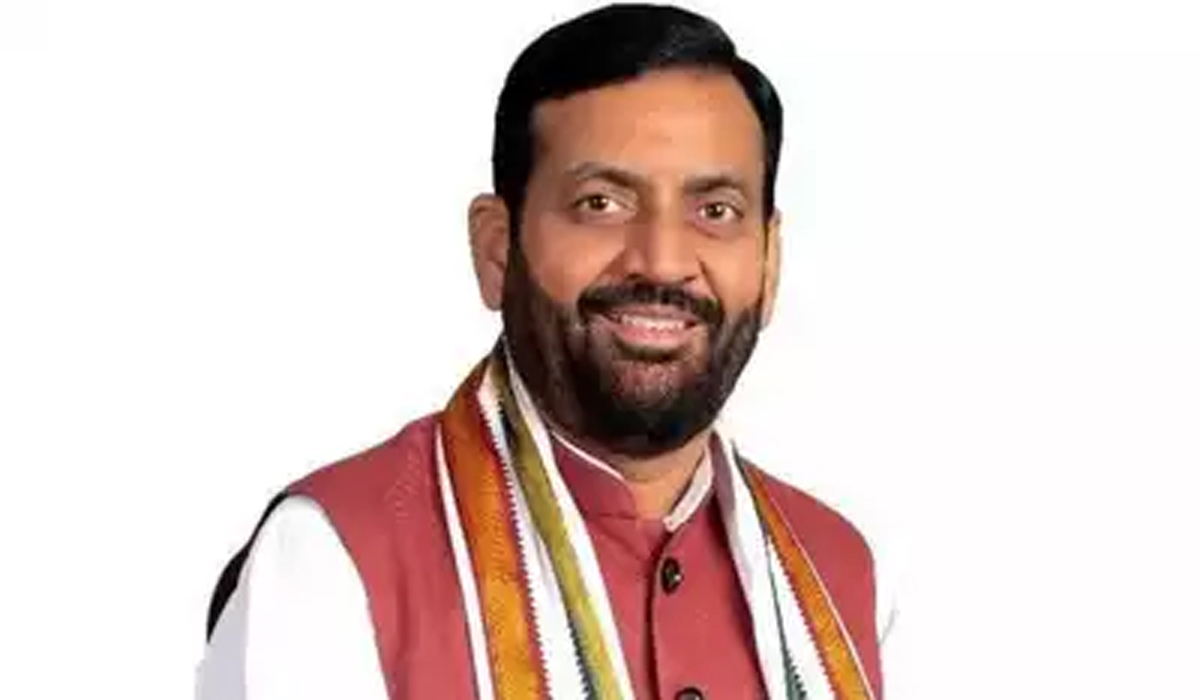
-NAYAB SINGH SAINI
(Chief Minister of Haryana )
They are recorded in history as chapters. Such a chapter has been written in India’s democratic history over the past 12 years. This era represents the awakening of the nation’s consciousness, India’s recognition as a powerful nation on the global stage, and the renaissance of our rich cultural heritage. And this era has been led by a statesman in whom the unshakeable trust, aspirations, and dreams of 140 crore Indians find their reflection. For only a second time since Independence, the people of India have placed their faith — three consecutive times — in a single leader to fulfil their hopes and aspirations. Time and again, the people have reposed confidence in a leadership that has kept ‘Nation First’ at the centre of every decision and every policy. A million salutes to this great leadership.
The completion of 12 years of the government of Hon’ble Prime Minister, Shri Narendra Modi ji, is the saga of India’s reawakening — its self-confidence, self-reliance, and restored global stature. There was a time when India was called ‘a land of potential.’ Today, India stands before the world as ‘a land of achievements.’ This transformation is not confined to any single scheme, any single decision, or any single sector — it is the result of a sweeping and comprehensive process of national reconstruction.
India is a civilisation thousands of years old. This is the land that showed the world the path of yoga, Ayurveda, meditation, philosophy, and human welfare. Yet for a long time, we had confined this invaluable heritage to the pages of history books alone. Under the leadership of Shri Narendra Modi ji, India has reawakened its cultural consciousness. He gave the message that modernity and tradition are not adversaries — they, in fact, complement each other. Today, International Yoga Day is celebrated in more than 190 countries. The redevelopment of Kashi Vishwanath Dham, the Mahakal Lok, the reconstruction of Kedarnath, and the construction of the magnificent Shri Ram Mandir in Ayodhya are not merely religious projects — they are symbols of the renaissance of India’s cultural identity. These initiatives have instilled in the hearts of crores of Indians a renewed pride in their civilisation and culture.
Alongside this cultural renaissance, India has achieved unprecedented milestones in the economic arena as well. In 2014, India was the 11th largest economy in the world. Today, India is advancing toward becoming the fourth largest economy globally. This achievement is a testament to the improvement in the living standards of crores of Indians. Despite formidable challenges — a global pandemic, wars, economic slowdowns, and supply chain crises — India remained among the world’s fastest-growing major economies.
Transformative reforms such as the Goods and Services Tax (GST), the Production Linked Incentive (PLI) scheme, and Ease of Doing Business initiatives have played a pivotal role in establishing India as a premier destination for investment and manufacturing.
Among the greatest achievements of these 12 years, if one transformation deserves to be especially highlighted, it is India’s digital revolution. There was a time when the benefits of government schemes would be lost in the cracks of the system before reaching the intended beneficiary. Corruption and the role of middlemen were the subject of everyday conversation. Today, the power of Jan Dhan and technology has completely transformed this reality. With more than 53 crore Jan Dhan accounts and the world’s highest volume of UPI transactions, India has become a global model of digital governance. Through Direct Benefit Transfer (DBT), more than ₹51 lakh crore has been directly deposited into the accounts of beneficiaries — bringing transparency and ensuring that the poor receive what is rightfully theirs.
The most significant success of Modi Government’s 12 years has been the welfare of the poor. Giving practical expression to Pandit Deendayal Upadhyaya’s philosophy of ‘Antyodaya’ — uplifting the last person in line — the government has ensured that the stream of development reaches the most marginalised. Under the Pradhan Mantri Awas Yojana, 4 crore families have been given pucca homes.
The Ujjwala Yojana liberated nearly 11 crore poor mothers from the smoke of traditional chulhas. The Swachh Bharat Mission constructed more than 12 crore toilets, protecting the dignity and health of women. The Jal Jeevan Mission brought piped water to villages across the country. Ayushman Bharat extended health security to 60 crore poor families. These schemes have infused dignity, security, and self-confidence into the lives of crores of people.
In 2020, when the entire world was in the grip of the COVID-19 pandemic, India too faced daunting circumstances. But under the able leadership of Shri Modi ji, India turned adversity into opportunity and demonstrated its capacity and resolve to the world. A country that once imported vaccines became the world’s largest vaccine producer and supplier. Through the ‘Vaccine Maitri’ initiative, India extended assistance to nearly 60 countries, bearing witness to its commitment to humanity. It was this very moment when the resolve of ‘Aatmanirbhar Bharat’ began to take shape as a national movement. In sectors such as defence production, electronics, mobile manufacturing, semiconductors, green energy, and manufacturing, India took historic strides toward self-reliance.
On the world stage too, India’s role is today far more influential and decisive than ever before. There was a time when India was considered a mere observer of global events. Today, India leads global discourse. The successful presidency of the G-20, the message of ‘One Earth, One Family, One Future,’ amplifying the voice of the Global South on the world stage, and forging strong relationships with diverse global powers through a balanced foreign policy — all of this stands as testament to our Hon’ble Prime Minister’s global statesmanship and India’s growing international stature. Shri Modi ji has ensured that India is no longer a nation that follows others, but a self-assured nation that partners with the world on its own terms.
The most vital foundation of India’s development journey is its youth. Today’s young Indian aspires to be a job creator, not merely a job seeker. Initiatives such as Start-up India, Skill India, Digital India, and Make in India have opened new frontiers of opportunity for the youth. India today has the third largest start-up ecosystem in the world. Young people from small towns and villages are driving innovation at a global scale.
These 12 years have also witnessed another significant transformation — the empowerment of cooperative and competitive federalism. Prime Minister Modi ji has made the states partners in India’s development. The new working model of NITI Aayog, greater participation and innovation opportunities for states, and development-driven competition have together cultivated a new culture of positive change across the nation. Haryana, along with many other states, has leveraged this model to make remarkable strides in infrastructure, industry, agriculture, education, and digital services.
Viewed through the lens of Haryana, Shri Modi ji’s vision of ‘Viksit Bharat’ has given fresh inspiration to the state’s development. The launch of air services and the laying of the foundation stone of a new terminal building at Maharaja Agrasen Airport in Hisar marks a significant step in strengthening the state’s connectivity. The foundation stone of a new 800 MW unit at Deen Bandhu Chhotu Ram Thermal Power Plant in Yamunanagar and a Compressed Biogas (CBG) Plant will provide renewed strength to the energy sector. In addition, the Dwarka Expressway, Gurugram Metro Rail Project, AIIMS Rewari, the Jyotisar Anubhav Kendra, railway infrastructure upgrades, and various national highway projects are giving new direction to the development of modern infrastructure across the state.
Haryana’s 22 national highways spanning 1,390 kilometres, industrial investment of nearly ₹3 lakh crore, winning more than two-thirds of the country’s medals in sports, and farmers receiving ₹9,888 crore under the Pradhan Mantri Fasal Bima Yojana — these set a new benchmark for public service and development. Beyond these, nearly 15 lakh women receiving free gas connections under PM Ujjwala Yojana, 1,93,000 solar tubewells installed under PM KUSUM Yojana, ₹5,337 crore transferred to workers under VIBES, and more than 27 lakh people receiving ₹4,148 crore in free medical treatment under Ayushman Bharat Chirayu Yojana — these are but a few of the countless initiatives that cannot be fully captured in a single account.
Today, India has entered its Amrit Kaal and the goal of Viksit Bharat-2047 stands before us. This goal is the national resolve of 140 crore Indians. A Viksit Bharat will mean not only a larger economy, but an India that is free from poverty, and is technologically empowered, environmentally conscious, equal in opportunity — and a nation that sets the direction for the world.
The journey of 12 years of the Modi Government instils in us the deep conviction that when leadership is clear, intent is pure, policy is effective, and national interest is paramount — then transformation is not merely possible, it is inevitable. These 12 years are the story of the rise of a new India. They are the proclamation of the golden future of a Viksit Bharat.
YouTuber Dhruv Rathee was released after being detained ahead of the CJP protest at Jantar Mantar. Police had...

YouTuber Dhruv Rathee was reportedly detained at his Gurugram residence ahead of the CJP protest in Delhi. Several...

A 24-year-old priest, Sachin, was allegedly beaten to death at a Devi temple in Kathura village, Sonipat. His...
The Emperia Marathas continued their impressive run in the Volleyball Champions League (VCL) as they registered another victory,...

Protests against SIR intensified in Panchkula as Congress leaders staged a road sit-in and police moved to remove...
Narnaul: After several days of October heat, Haryana is likely to see a change in weather conditions. The...

Aries: The day will be auspicious...