


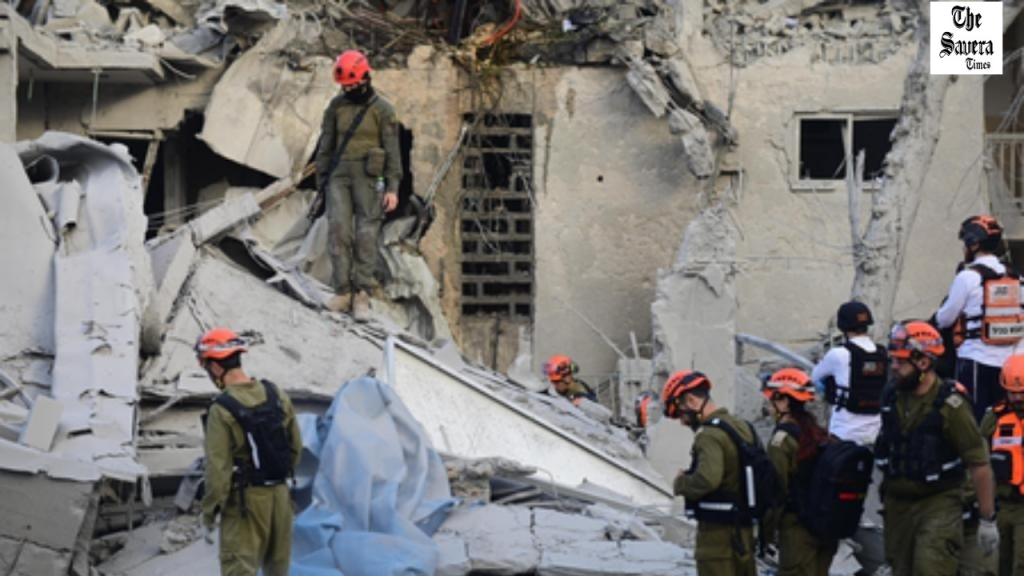
The ongoing conflict involving Iran, the United States, and Israel has intensified, with Iran claiming heavy civilian casualties and widespread destruction of infrastructure. Iran’s ambassador to the United Nations said that more than 1,300 Iranian civilians have been killed and nearly 10,000 civilian facilities destroyed in the ongoing military strikes carried out by US and Israeli forces.
The statement was delivered during a briefing at the UN, where Iran accused the two countries of targeting populated areas and civilian infrastructure during the ongoing military campaign.
Iran’s UN Envoy Raises Alarm
Iran’s UN ambassador Amir Saeid Iravani said the attacks have caused massive destruction across the country since the conflict escalated in late February. According to the envoy, 9,669 civilian sites have been damaged or destroyed during the strikes.
He claimed the damaged sites include thousands of residential homes, commercial buildings, medical facilities, and schools. Iran described the strikes as “horrific crimes” and urged the international community to condemn the attacks.
The envoy also warned that continued bombardment of civilian areas could worsen the humanitarian situation in the region.
Large-Scale Damage to Civilian Infrastructure
Iranian officials said the destruction includes about 7,943 residential houses, more than 1,600 commercial and service centers, and several healthcare and educational institutions.
Emergency organizations reported that dozens of medical centers and schools were also damaged in the attacks. Several ambulances and emergency response facilities were destroyed while rescue teams were trying to assist injured civilians.
The extensive damage to civilian infrastructure has raised concerns among humanitarian groups about the safety of civilians and access to healthcare and essential services.
Escalating Middle East Conflict
The military strikes are part of a broader escalation in the Middle East conflict, which began intensifying in late February. Reports indicate that thousands of military and strategic targets across Iran have been attacked during the campaign.
Explosions have been reported in several Iranian cities, including the capital Tehran, where residents described some of the heaviest bombardment since the start of the war.
The conflict has also triggered missile and drone attacks across the region, raising fears of a wider regional war.
Global Concerns Over Humanitarian Impact
The high number of civilian casualties and the destruction of residential areas have sparked concern among international observers and humanitarian organizations. Many experts warn that continued military escalation could lead to a severe humanitarian crisis.
The conflict has also affected global markets and energy security, as tensions around key shipping routes such as the Strait of Hormuz threaten oil supplies and international trade.
Diplomatic efforts are ongoing, but so far there has been little sign of immediate de-escalation.
Rising Tensions in the Region
With civilian casualties continuing to rise and both sides exchanging accusations, tensions remain extremely high. Iran has repeatedly condemned the strikes and warned of retaliation, while the US and Israel maintain that the operations are aimed at weakening Iran’s military capabilities.
As the conflict continues, the humanitarian and geopolitical consequences are likely to have far-reaching effects across the Middle East and beyond.