Last Updated: October 21, 2026
Last Updated: October 21, 2026





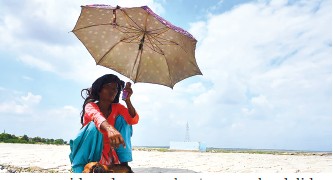
Seasons have long served as nature’s compass, guiding human activity and societal development. Their predictable rhythms have allowed agriculture, festivals, and daily life to align with environmental cycles. But this pattern is now unraveling. The Earth is entering a new climate regime, with atmospheric greenhouse gas levels reaching unprecedented heights. One of the earliest signs of this shift is the erosion of familiar seasonal patterns, with their distinct identities blurring and merging. This disruption is accompanied by an increase in extreme weather events, both in intensity and in unexpected timing and locations.
Monitoring over recent years has revealed that India now experiences nearly daily extreme weather events, including heatwaves, cold spells, floods, cloudbursts, storms, and heavy rainfall. Events once considered rare are occurring in unusual regions: cloudbursts in southern cities, floods in desert areas, and record-high temperatures in hill stations. The traditional markers of seasons are fraying, with winter temperatures resembling early summer and monsoon rains extending into late months. Agricultural cycles are being disrupted, leading to crop losses, while shifts in rainfall and temperature affect flowering, fruiting, and sowing calendars.
Extreme events have become widespread geographically. Over consecutive months, nearly all states report occurrences of floods, heatwaves, landslides, and cold waves. Pre-monsoon months are seeing heavy rainfall and flooding in places that previously experienced hail or moderate precipitation. Heatwaves now coincide with monsoon months, compounding risks to human health, agriculture, and water management. Winter, once marked by cold and frost, now experiences heavy rainfall alongside intermittent heat events, challenging long-held assumptions about seasonal weather.
These climatic shifts are altering human behaviour and societal planning. Farmers adjust cropping patterns, often delaying or skipping traditional sowing periods. Educational institutions declare holidays earlier in the year, while heavy rains in post-monsoon months force temporary closures. Ecosystems are also affected, with changes in flowering and fruiting cycles disrupting local biodiversity and agricultural productivity.
For millennia, human civilisation thrived under stable climatic conditions. The current instability, however, presents a new set of challenges. As seasonal predictability disappears, human adaptation becomes increasingly urgent. The blending and unpredictability of seasons is no longer just a meteorological concern—it is a challenge to livelihoods, food security, and societal resilience. Without urgent interventions, these changes threaten to undermine the structures that have allowed human civilisation to flourish for thousands of years.
The Ayushman Bharat Pradhan Mantri Jan Arogya Yojana (PMJAY) is proving to be a significant relief for poor...

Rescue teams recovered the bodies of four youths from the Kotri canal in Kota on Wednesday morning, after...

A balloon containing a suspected flammable chemical burst during a stage play in Siwan, injuring around 10 spectators....

State Bank of India has confirmed that 3,897 customer records containing personal information were found on the dark...

A fire in a hut in Nonapar village of Deoria district claimed three lives, including those of a...

Amit Shah paid tribute to police personnel who died in the line of duty at the National Police...

Aries: The day will be auspicious...