Last Updated: October 20, 2026
Last Updated: October 20, 2026





Abhishek Vij
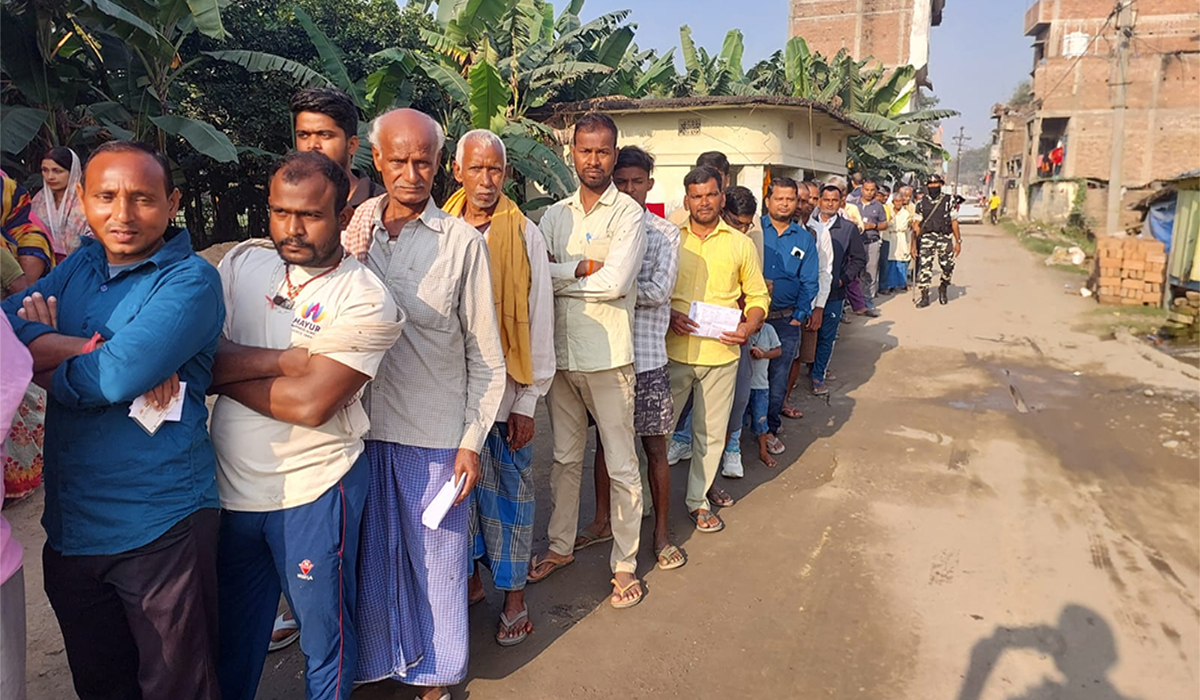
The first phase of voting for the Bihar Assembly elections has concluded. Voting was held for 121 seats in this phase. The people of the country are so committed to the electoral process and democracy that, despite the opposition’s criticism of the entire election campaign, they turned out in large numbers to cast their votes. A voter turnout of around 65 percent is not uncommon.
Voting for 122 seats will be held in the second phase on November 11th. To ensure that elections are not a game of two alliances, Prashant Kishore is also contesting as a third party. Candidates from his Jan Suraj Party are contesting all 243 seats. This first phase was crucial as Chief Ministerial candidates Nitish Kumar and Tejashwi Yadav cast their votes in their respective constituencies. Both Deputy Chief Ministers Samrat Chaudhary and Vijay Kumar Sinha, Mukesh Sahni, and Union Ministers Giriraj Singh and Rajiv Ranjan Singh Lallan also cast their votes in the first phase.
For now, the people of India, committed to the electoral process, voted peacefully, barring a few isolated incidents. There were incidents of stones and cow dung being thrown at Deputy CM Vijay Sinha’s convoy. It’s impossible to predict anything before both phases of voting, but the mood suggests a peaceful vote for democracy in Bihar. Political parties, in their election manifestos and pledges, made exaggerated promises to the people, showcasing compassion.
People were hoping for some change this time, a constructive election agenda that would outline realistic paths to building the common man’s future. But those who hoped for such a thing were bound to be disappointed. One thing that was very prominent in this election was that while the NDA distributed rs10,000 per woman under the Women’s Employment Scheme, the Grand Alliance announced rs2,500 per month.
This move was so appreciated by women voters that long queues of women were seen at the polling booths. When the media inquired about the impact of the Nitish government’s rs10,000 scheme and where women’s votes would be directed, the answer was, “You have to pay your dues.” Even in Bihar, the number of women voters is half that of men. Previously, the principle of “where there is a husband, there is a wife,” but now in Bihar, efforts have been made to specifically woo women voters. Another example of this is that a 35% reservation for women in government jobs has been implemented in Bihar since 2016. We believe the central issue in this election is the use of welfare schemes as a means to attract voters, particularly women, through financial incentives and promises of free services. Economic analysts argue that such schemes should be announced only after assessing the state’s finances and debt burden. Although the Constitution emphasizes public welfare, this approach raises serious questions about the intent behind these promises. In Bihar, while the opposition has challenged Nitish Kumar’s party, campaign strategies on both sides seem overly focused on immediate favors rather than long-term solutions. This trend overshadows genuine efforts for sustained development and undermines the democratic process.
Good Evening Viewers! Catch up on the day's biggest stories with The Savera Times Evening Bulletin. Get the...

Congress leaders continued their protest outside the Jaipur Police Commissionerate on Tuesday, demanding the registration of a zero...
On the auspicious occasion of Vijayadashami, Prime Minister Narendra Modi on Tuesday called on the countrymen to unite...
A historic milestone was achieved on Tuesday in the expansion of Chhattisgarh's rail networkA historic milestone was achieved...
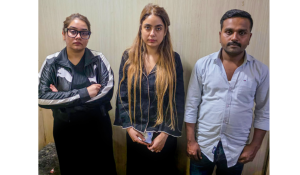
Model Shraddha Dubey, one of the main accused in the death of Lucknow businessman Shiv Sharma, has been...
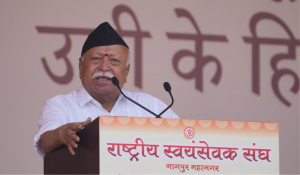
Rashtriya Swayamsevak Sangh (RSS) chief Mohan Bhagwat on Tuesday called for strengthening national unity, social harmony, indigenous practices...
Aries: The day will be auspicious...